
Should I Remodel My Home Or Move In 2026?
If you’re asking whether to remodel your home or move, the answer depends on three numbers: what your remodel will cost, what your home is worth after the work, and what it costs to sell and buy somewhere else. Most homeowners underestimate that last number. Selling a home typically eats 9–10% of the sale price once you add up agent commissions (roughly 5.5%), closing costs (2–4%), and moving expenses. On a $400,000 home, that’s $36,000 to $40,000 gone before you unpack a single box.
The decision to remodel your home or move is a math problem wrapped in an emotional one. Roughly 26 million owner-occupied households completed home improvements in 2023, according to the Harvard Joint Center for Housing Studies. The ones who came out ahead didn’t just pick a project they liked. They picked the project that matched their timeline, their market, and their budget.
This article won’t tell you what paint color to pick or which countertop is trending. It covers the financial framework for choosing between remodeling and relocating, based on 2025-2026 cost and ROI data.
How Do You Decide Whether to Remodel or Stay?
Start with what your home is worth relative to your neighborhood. If you’re already at the top of your market, a $50,000 remodel won’t push your value much higher because buyers compare your home to everything else on the street. But if comparable homes sell for $50,000 to $100,000 more than yours, a well-targeted remodel can close that gap and then some.
I’ve watched homeowners pour money into projects that feel good but return almost nothing. The 2025 Cost vs. Value Report from Zonda (published September 2025, covering 119 U.S. markets) puts hard numbers on this, and some of the results surprise people.
What Does Your Remodel Cost vs. Your Home’s Value?
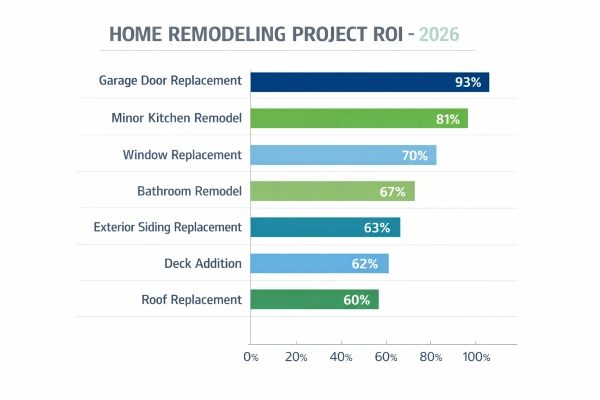
A minor midrange kitchen remodel costs about $28,458 on average and recoups roughly 113% at resale. That’s one of the few projects where you actually make money. A major midrange kitchen remodel? That runs $82,793 and recoups just 51%. Go upscale ($164,000+) and you’re looking at 36% back. The gap between “minor” and “major” isn’t just price. It’s whether the math works in your favor or against it.
Here’s a quick comparison based on 2025 national data from the Cost vs. Value Report:
| Project | Average Cost | Resale Value | ROI |
| Garage Door Replacement | $4,672 | $12,507 | 268% |
| Steel Entry Door | $2,435 | $5,270 | 216% |
| Manufactured Stone Veneer | $11,702 | $24,328 | 208% |
| Minor Kitchen Remodel (midrange) | $28,458 | $32,141 | 113% |
| Fiber-Cement Siding | $21,485 | $24,420 | 114% |
| Bathroom Remodel (midrange) | $26,138 | $20,915 | 80% |
| Major Kitchen Remodel (midrange) | $82,793 | $42,130 | 51% |
Which Projects Actually Pay for Themselves?
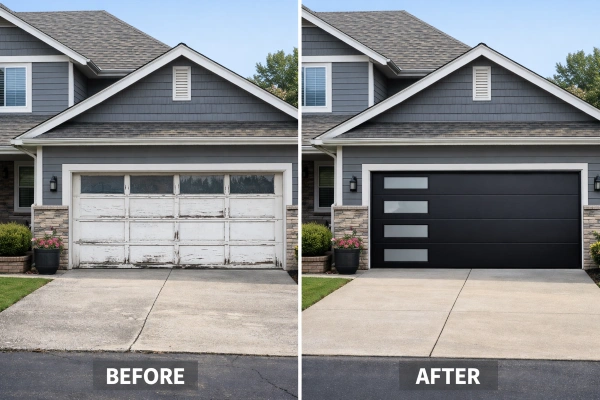
Exterior projects dominate the top of the ROI list. Garage doors, entry doors, stone veneer, siding. Not the exciting stuff homeowners dream about, but the stuff that makes financial sense for anyone thinking about resale within five years.
Adding bedrooms, bathrooms, or finishing a basement can also perform well because buyers see those as core features, not upgrades. A fourth bedroom moves you into a different search filter on every real estate site. That’s worth more than a spa bathroom most buyers will never use.
The contrarian take nobody wants to hear: pools almost never pay for themselves in most of the country. And removing a bedroom to expand another room (going from four to three, for example) or converting garage space into a home theater actually reduces your home’s value. You’ve taken away something buyers expect and replaced it with something they didn’t ask for.
Permits, Lot Lines, and What Everyone Forgets
If your remodel involves adding square footage, you need to think about your lot. Expanding a home on a small lot can make the house look out of place compared to neighbors, and buyers notice. Tight setbacks and reduced yard space can actually hurt your return more than the addition helps.
Permits are the other piece homeowners skip. Cosmetic updates (paint, flooring, fixtures) usually don’t require permits. But adding bedrooms, bathrooms, or garage space almost always does. Skipping permits to save money is a terrible trade. Unpermitted work can tank a future sale, void insurance claims, and create code violations that cost more to fix than the original project. Before you start any structural work, talk to your contractor about permitting and check with your local building department.
Here’s what contractors complain about that homeowners rarely hear: remodeling projects run 20–50% over budget more often than not. Living through a renovation with kids or pets adds stress that most people underestimate. I’ve seen families move into temporary housing during major kitchen remodels, spending $3,000 to $5,000 on short-term rentals they hadn’t budgeted for.
When Does Buying a Different Home Make More Sense?
If the cost to remodel your current home exceeds the cost of selling, buying, and moving into a home that already has what you need, moving wins. But that calculation has changed dramatically in the last three years.

The Mortgage Rate Trap
Most homeowners sitting on mortgages from 2020–2021 locked in rates under 4%. Some got below 3%. Selling that home and buying a new one at today’s rates (hovering around 6.5–7% as of early 2026) means your monthly payment could jump by hundreds of dollars, even if you buy the same-priced home. The Harvard Joint Center for Housing Studies flagged historically low homeowner mobility as a direct result.
And mortgage payments aren’t the only number climbing. Property taxes and homeowners insurance have both increased, which adds another layer to the monthly cost comparison. Run the full numbers before assuming a new home is more affordable than a remodel.

Must-Haves vs. Wish-List Items
If you’re leaning toward moving, separate what you need from what you’d like to have. Extra bedrooms for a growing family, a different school district, more yard space for kids or pets. Those are needed. A pool, a gourmet kitchen, a three-car garage. Those are wants. When you find a home that covers your needs, compare its total cost (purchase price + closing + moving + any rate increase) against what a targeted remodel on your current home would run.
Sometimes the new home still needs work too. If a house checks 80% of your boxes and you can remodel the rest at a reasonable ROI, that might beat remodeling a home that only checks 50%.
Actually, the better way to think about it is this: how long do you plan to stay? If you’re planning to be somewhere for 10+ years, the math shifts toward buying what you want (or building it). For a 3–5 year window, remodeling with high-ROI projects almost always wins because you avoid that 9–10% transaction hit.
Is Building a New Home Worth the Premium?
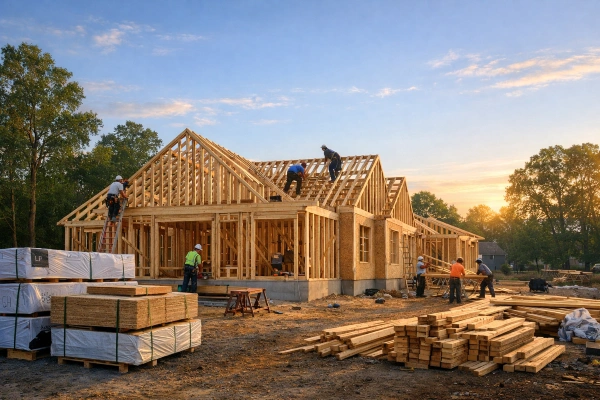
When no existing home on the market meets your needs, new construction becomes an option. But it’s the most expensive one. New builds typically cost more than comparable existing homes, and the customization that makes new construction appealing can also hurt resale if you go too far. I’ve seen homeowners spend $50,000 on features a future buyer would rip out.
Cookie-cutter developments offer less flexibility but better resale predictability. Custom builds with an architect give you exactly what you want at a premium. Either way, compare the total cost against remodeling and factor in construction timelines, which remain stretched. Skilled labor shortages persist across the trades, with average construction wages hitting $40.55 per hour in January 2026 according to BLS data reported by the National Association of Home Builders. That labor market pressure means delays are common and bids keep climbing.
Talk to a Realtor before committing to anything overly custom. They’ll tell you which features local buyers value and which ones narrow your future buyer pool to almost nobody.
The One Question That Settles the Remodel-or-Move Debate
Every remodel-or-move decision comes down to one question: where will your money go further over the time you plan to own the home? If you’re staying put for years, remodeling with projects that return 80%+ keeps your equity growing while you enjoy the upgrades. If your home is fundamentally wrong for your life (wrong size, wrong location, wrong layout), no remodel fixes that. Move.
Run the numbers both ways with professionals who don’t have a stake in only one outcome. A remodeling contractor will always recommend remodeling. A real estate agent will always recommend selling. Find someone who can look at your full picture and help you make the call based on data, not gut feeling. The owner-occupied remodeling market is projected to hit $522 billion by the end of 2026 (per JCHS data), and a big chunk of that spending comes from homeowners who did the math and decided staying made more sense.
FAQs
How much does it actually cost to sell a home and move in 2026?
Selling a home typically runs 9–10% of the sale price when you combine agent commissions (averaging 5.44–5.70%), closing costs (2–4%), and moving expenses. On a $400,000 home, that’s roughly $36,000 to $40,000 in costs you don’t recover, regardless of your sale price.
Should I remodel my home or move if I have a low mortgage rate?
If you locked in a mortgage rate below 4% during 2020–2021, remodeling almost always makes more financial sense. Selling and buying at today’s rates (6.5–7%) could increase your monthly payment by hundreds of dollars, even on a similarly priced home. The Harvard Joint Center for Housing Studies noted historically low homeowner mobility tied directly to this rate gap.
Which home remodeling projects have the best ROI in 2026?
Exterior projects lead the list. Garage door replacements return roughly 268%, steel entry doors about 216%, and manufactured stone veneer around 208%, according to Zonda’s 2025 Cost vs. Value Report. Minor kitchen remodels (midrange) recoup about 113%. Major and upscale interior projects typically return less than 60%.
Is a major kitchen remodel worth it for resale?
A minor midrange kitchen remodel ($28,458 average) recoups about 113% at resale. But a major midrange kitchen ($82,793) only returns 51%, and an upscale kitchen ($164,000+) returns just 36%. If resale value matters to you, keep kitchen remodels modest and targeted.
How do I know if my remodel will over-improve my home?
Compare your planned post-remodel value to the highest-priced homes in your neighborhood. If your home would be priced well above the top of your market, buyers won’t pay the premium because they’re comparing your home to everything else on the block. A $50,000 remodel on a $300,000 home in a $300,000 neighborhood won’t return much.
Do I need permits for a home remodel?
Cosmetic updates like paint, flooring, and fixtures typically don’t require permits. Structural changes, added bedrooms or bathrooms, garage expansions, and electrical or plumbing work almost always do. Skipping permits can void insurance claims, create code violations, and hurt your home’s resale value.
How long should I plan to stay in my home to make remodeling worth it?
For a 3–5 year ownership window, focused high-ROI remodeling projects (exterior upgrades, minor kitchen work) usually beat the 9–10% transaction cost of selling and buying. For 10+ years, you have more flexibility to invest in comfort-driven projects where personal enjoyment matters more than strict resale math.

Michael Vale has over 5 years of experience helping clients improve their business visibility on Google. He combines his love for teaching with his entrepreneurial spirit to develop innovative marketing strategies. Inspired by the big AI wave of 2023, Michael Vale now focuses on staying updated with the latest AI tools and techniques. He is committed to using these advancements to deliver great results for his clients, keeping them ahead in the competitive online market.