
Dining Room Remodel Costs In 2026: What You’ll Actually Spend
A dining room remodel costs most homeowners around $20,000 for a full-room update, according to Angi’s March 2026 data. The realistic range runs from $1,000 for cosmetic refreshes (paint, trim, new light fixtures) up to $50,000 for a gut-to-studs rebuild with premium finishes. Labor eats 40–50% of every dollar you spend, which is the single biggest line item most people underestimate.
A dining room remodel is a renovation project that updates the design, layout, materials, or functionality of your dining space. Costs depend on the room’s size, the scope of changes, the quality of materials you pick, and whether structural work is involved. Most projects fall between $7,000 and $25,000 nationally.
This article covers pricing by tier, the factors that shift your budget up or down, and when it makes sense to go with a design/build firm versus managing the project yourself. We won’t cover furnishing costs here (tables, chairs, rugs). That’s a separate budget entirely, and lumping it in distorts the remodeling numbers.
Should You Open Up Your Dining Room to the Kitchen?
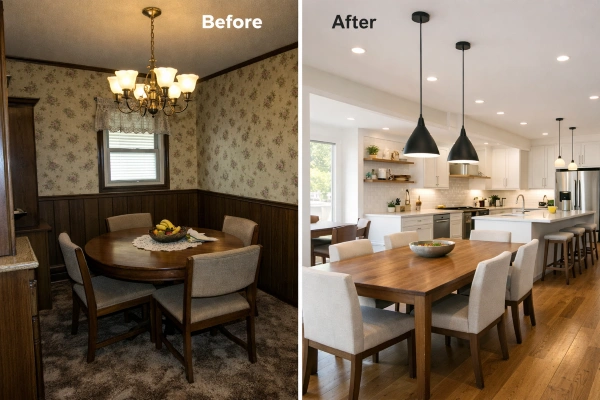
A lot of homeowners walk into this project wanting an open-concept dining area that connects to the kitchen. I get the appeal. But 71% of designers surveyed in the NKBA’s 2026 Kitchen Trends Report said formal dining rooms are shrinking or disappearing altogether to make room for larger kitchens. That trend matters for your budget and your resale value.
What Happens When You Remove a Wall?
If the wall between your kitchen and dining room is load-bearing, you’re looking at structural engineering fees, beam installation, and permits. On older homes, this single change can tack on $10,000–$30,000 in costs you didn’t see coming. NAHB data shows that homes built before 1980 run 15–25% higher in overall remodel costs because of hidden electrical, plumbing, and structural issues behind the walls.
Non-load-bearing walls? Much simpler. Budget $1,500–$5,000 for demo, patching, and finishing.
How Do You Blend Two Rooms Into One?
Matching flooring, lighting, and trim between a kitchen and dining space sounds easy until you’re staring at two different subfloor heights or mismatched ceiling lines. Plan for this early. Your flooring choice alone averages $12.50 per square foot (Angi, 2026), and the wrong material transition between rooms can make a $20,000 remodel look like a weekend DIY job.
Will an Open Layout Actually Work for You?
Not always. Open plans look great on TV, but they kill storage and create noise problems. If you host often, great. If your household is loud and you like separation between cooking and eating, a defined dining room might serve you better.
What Drives Dining Room Remodel Costs Up or Down?
Remodeling spending keeps climbing. Harvard’s Joint Center for Housing Studies projects owner-occupied home improvement spending will hit roughly $524 billion in early 2026. Your dining room project sits inside that larger market, and the same forces pushing overall costs up (labor shortages, material inflation, aging housing stock) affect your budget too.
Room Size
Angi’s 2026 per-square-foot data tells the story: a 100 sq ft dining room averages around $14,000, while a 200 sq ft space jumps to roughly $23,000. Bigger rooms need more flooring, more paint, more lighting, and more labor hours.
How Big Is Your Project Scope?
Repainting walls and swapping a light fixture? You’re in the $1,000–$7,000 range. Moving walls, rerouting electrical, pulling permits, and installing custom built-ins? Now you’re pushing $25,000 or higher. The scope question is where most remodel budgets start to stretch beyond what homeowners originally planned.
Materials and Finishes
Hardwood flooring runs $6–$22 per square foot installed. Laminate drops to $3–$10. Custom cabinetry costs $500–$1,200 per linear foot versus $60–$100 for prefabricated options (HomeAdvisor). Your finish choices will swing the final number more than almost any other factor.
Structural Changes
Permits, engineering, and skilled trades for wall removal or load redistribution add real money. Budget $400–$2,000 just for the permits depending on your municipality.
Labor and Professional Expertise
General contractors typically charge 40–50% of total project cost (Angi, 2026). NAHB Chief Economist Robert Dietz said in late 2025 that labor remains the biggest single driver of remodeling costs, a point reinforced in NAHB’s February 2026 remodeling forecast. Non-supervisory residential worker wages jumped 9.2% in one stretch during 2025 alone. That cost gets passed directly to you.
Dining Room Remodel Costs by Tier
Here’s what each level of remodel actually includes and costs:
| Remodel Tier | Cost Range | What’s Included |
| Budget/Cosmetic | $1,000–$7,000 | Paint, new trim, basic flooring, updated light fixtures |
| Mid-Range | $7,000–$20,000 | New flooring throughout, upgraded lighting, minor layout changes, built-in storage |
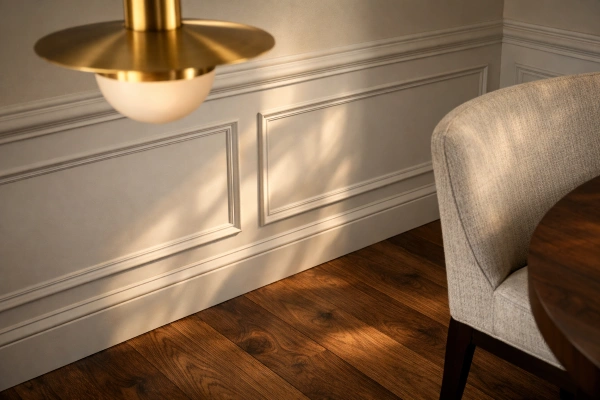
| High-End | $25,000–$50,000+ | Gut to studs, custom millwork, premium finishes, structural changes, smart lighting |
One contrarian point worth raising: most homeowners don’t need a mid-range remodel. I’ve seen dozens of dining rooms where $3,000 in paint, a new chandelier, and refinished floors completely changed the space. The industry pushes you toward bigger projects because bigger projects mean bigger margins. But a Houzz 2025 survey showed the median dining room spend was actually $2,100, down 16% from the prior year. Most people are choosing smaller, smarter updates, and that’s the right call for a room that doesn’t return strong ROI at resale on its own.
Does a Design/Build Firm Make Sense for a Dining Room?
They Run the Whole Project
A design/build firm handles planning, permits, material selection, trade coordination, and construction under one contract. You deal with one team instead of juggling a designer, a GC, an electrician, and a flooring installer separately. The 2025 NARI Remodeling Impact Report found that 57% of remodelers saw project scale increase in recent years, which means coordination matters more now than it did five years ago. For projects over $15,000 where structural changes are involved, this model saves money through fewer mistakes and schedule delays.
When Is DIY the Better Move?
Cosmetic updates. Painting, swapping fixtures, and installing floating floors are all reasonable DIY projects if you’ve done them before. You can shave 40–50% off labor costs, which on a $5,000 project means $2,000–$2,500 in real savings. But anything structural, electrical, or involving permits should go to a licensed pro. Botched structural work doesn’t just cost more to fix. It makes your home harder to insure and harder to sell.
They Prevent Scope Creep
The most expensive phrase in remodeling is “while we’re at it.” GC markups on subcontractor work can add 20–30% to your costs, and scope changes mid-project are where budgets fall apart. A design/build team locks in a plan before the demo starts. That constraint is actually a feature.
Your Dining Room, Your Budget
Dining room remodel costs in 2026 range from $1,000 to $50,000, with most homeowners landing near $20,000 for a full update. The smartest move is to start with a clear budget, define your scope before you pick up a single paint swatch, and get at least three bids from licensed contractors. And be honest about your dining room’s real role in your home. If you eat there twice a month, a $3,000 cosmetic refresh will feel just as good as a $25,000 gut job. Save the big money for your kitchen remodel, where the ROI actually follows the investment. Working with a team that understands the remodeling industry from the inside makes every dollar stretch further.
FAQs
How much does a dining room remodel cost per square foot?
Based on Angi’s 2026 data, dining room remodel costs run roughly $100–$167 per square foot. A 150 sq ft room averages around $20,000, while a smaller 100 sq ft space comes in closer to $14,000. Labor accounts for 40–50% of that total, and your location will push those numbers higher or lower.
Is remodeling a dining room worth it for resale?
On its own, a standalone dining room remodel has a lower return on investment than kitchens or bathrooms. No major cost-vs-value report tracks dining rooms specifically. The exception: integrating your dining room into an open kitchen layout tends to perform better at resale because buyers in 2026 overwhelmingly prefer open floor plans over formal separated rooms.
Can I DIY a dining room remodel to save money?
You can handle cosmetic work like painting, installing floating floors, and swapping light fixtures. That saves 40–50% on labor costs. But structural changes, electrical rerouting, and anything requiring permits should go to licensed professionals. DIY structural work can void manufacturer warranties and create code violations that hurt your home’s insurability and resale value.
What are the hidden costs in dining room remodels?
Demolition and prep work runs $4–$17 per square foot. Permit fees range from $400 to $2,000. Electrical and plumbing reroutes when opening walls can add thousands. Homes built before 1980 cost 15–25% more overall due to outdated wiring, lead paint, or structural surprises behind drywall, according to NAHB data.
How long does a dining room remodel take?
Professional remodels typically take 2–8 weeks depending on scope. A cosmetic refresh (paint, flooring, lighting) can wrap in under two weeks. Projects involving wall removal, structural engineering, and permit approvals run 6–8 weeks or longer. DIY timelines stretch significantly because you’re fitting work around your regular schedule.
Should I combine my dining room with the kitchen or keep them separate?
That depends on how you use the space. The NKBA’s 2026 survey found 71% of design professionals reported formal dining rooms shrinking in favor of expanded kitchens. Open layouts work well for entertaining and families who cook together. But if you value noise separation or use the dining room for homework, remote work, or projects, keeping the wall might serve you better.
Do I need permits for a dining room remodel?
You won’t need permits for cosmetic updates like paint, flooring, or lighting fixture swaps. But any structural changes (wall removal, new window openings), electrical work, or plumbing modifications require permits in most municipalities. Permit costs run $400–$2,000 depending on your location and scope.

Michael Vale has over 5 years of experience helping clients improve their business visibility on Google. He combines his love for teaching with his entrepreneurial spirit to develop innovative marketing strategies. Inspired by the big AI wave of 2023, Michael Vale now focuses on staying updated with the latest AI tools and techniques. He is committed to using these advancements to deliver great results for his clients, keeping them ahead in the competitive online market.