
How Much Does An Exterior Home Remodel Cost In 2026?
An exterior home remodel cost ranges from roughly $6,000 for a basic paint-and-trim refresh to over $90,000 for a full siding, roofing, and window overhaul. The national midpoint for a cosmetic exterior remodel (painting, new doors, trim updates, railings, and landscaping) lands between $15,000 and $30,000, according to HomeGuide and Angi data updated in late 2025. Your actual number depends on the size of your home, which projects you bundle, your region, and whether you hire professionals or DIY portions of the work.
An exterior home remodel is any combination of projects that updates the outside of your house to improve curb appeal, protect the structure, and boost resale value. Common projects include siding replacement, exterior painting, window and door upgrades, porch and railing work, landscaping, and decorative improvements. According to the 2025 Cost vs. Value Report from Zonda and the Journal of Light Construction, eight of the top ten highest-ROI home improvements are exterior projects.
I’ve helped remodeling companies market these services for years, and the single biggest mistake homeowners make is treating exterior work as one lump-sum decision. It’s not. It’s a menu. And picking the right items off that menu (in the right order) is what separates a $15,000 project that adds $30,000 in value from a $15,000 project that barely breaks even.
This article won’t cover interior remodeling, full additions, or pool construction. Those are different budgets with different ROI math. We’re staying focused on what most people mean when they say “curb appeal overhaul.”
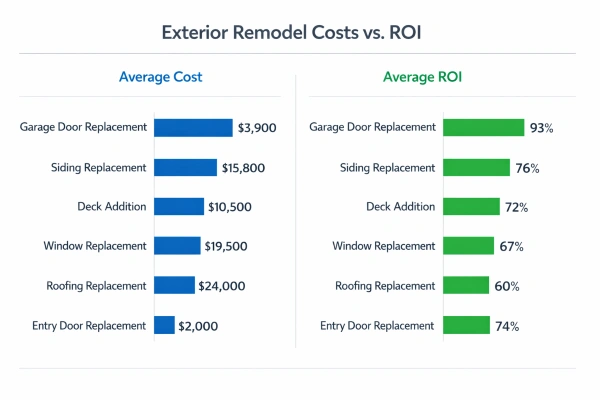
What Does an Exterior Home Remodel Actually Cost in 2026?
The honest answer: it depends on scope more than anything else. A paint job and new front door is a different planet from new siding and a roof.
Here’s how the numbers break down by project type using 2025 national mid-range data from the Cost vs. Value Report and consumer platforms:
| Project | Average Cost | ROI (Resale Value Recouped) |
| Garage door replacement | $4,672 | 268% |
| Steel entry door | $2,435 | 216% |
| Manufactured stone veneer | $11,702 | 208% |
| Fiber-cement siding | $21,485 | 114% |
| Vinyl siding | $17,950 | 97% |
| Asphalt shingle roof | $31,871 | 68% |
| Metal roof | $51,865 | 50% |
| Exterior painting | $3,000–$5,000 | 100–141% (varies by market) |
For a rough budgeting framework on a typical 2,000 square foot home:
- Budget tier (vinyl siding, basic windows, asphalt roof): $40,000–$60,000
- Mid-range tier (fiber-cement siding, mid-grade windows, architectural shingles): $60,000–$90,000
- High-end tier (stone veneer, premium windows and doors, metal roof, hardscaping): $100,000+
Regional spending matters too. The Joint Center for Housing Studies at Harvard (JCHS) reports that homeowners in the West and Northeast spend $5,200–$5,400 annually on improvements, while Midwest and South homeowners average $4,200–$4,400. Coastal and high-wind zones can add 20–40% to exterior project costs because of impact-rated materials and enhanced anchoring requirements.
Which Exterior Renovations Give You the Best Return?
Not all exterior projects pull their weight equally. The 2025 Cost vs. Value Report surveyed contractors and real estate agents across 119 U.S. markets, and the results surprised a lot of people.
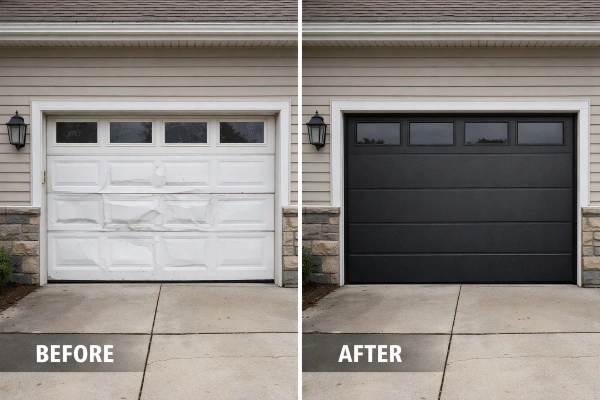
Garage Door Replacement
A new garage door costs about $4,672 and returns a staggering 268% at resale. That’s the single highest ROI of any remodeling project, interior or exterior. If you only have a budget for one upgrade, this is it. Most homeowners overlook the garage door because it feels boring. That’s exactly why it works. Buyers notice a beat-up garage door instantly, and a new one removes a major objection.
Steel Entry Door
At $2,435, a steel entry door returns 216%. It’s one of the cheapest exterior upgrades with one of the highest paybacks. The NARI 2025 Remodeling Impact Report pegged steel front doors at 100% cost recovery, and members gave new front doors some of the highest satisfaction scores in the survey.
Manufactured Stone Veneer
Adding stone veneer to a portion of your facade runs about $11,702 and returns 208%. This is the project that makes a builder-grade home look custom. It works best on the lower third of the front elevation or around the entry.
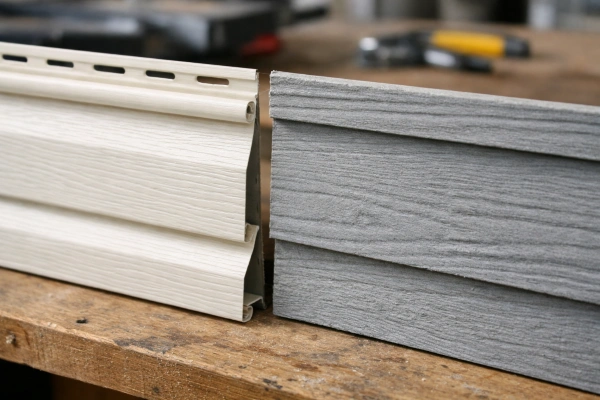
Siding: Vinyl vs. Fiber-Cement
Here’s where I’ll push back on the conventional wisdom. A lot of articles tell you vinyl siding is the safe, affordable choice. And it is, at $17,950 with a 97% return. But I’ve watched dozens of remodeling clients deal with faded, chalky vinyl within 15–20 years. Fiber-cement costs more upfront ($21,485) but returns 114%, lasts 30–50+ years, and holds up in harsh climates where vinyl falls apart. If you’re staying in the home more than a decade, fiber-cement is the better bet.
Window Replacement
New windows run anywhere from $800 to $1,200 per window installed. Vinyl windows return around 68.5% while wood windows trail at 61.2%. The ROI numbers look modest compared to garage doors and entry doors, but windows affect energy bills every single month. The real payback includes lower heating and cooling costs, especially if you’re looking for ways to reduce long-term remodel expenses.
Deck Addition
Wood decks return about 50.2% and composite decks around 39.8%. These numbers look weak on paper, but decks create usable outdoor living space that buyers emotionally respond to. The ROI calculation misses the lifestyle value if you plan to stay in the home.
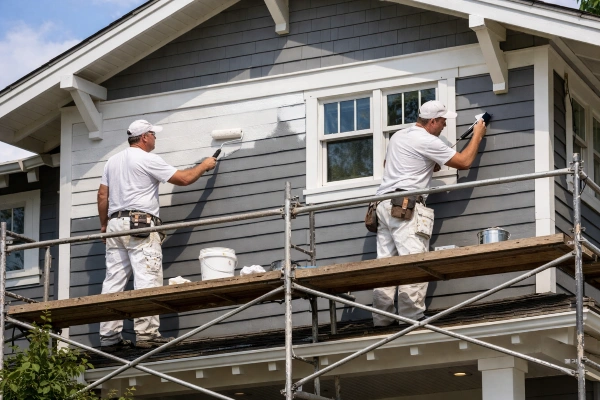
How Much Does Exterior Painting Cost?
Exterior painting averages $3,000 to $5,000 nationally, with most pros charging $3–$4 per square foot. High-quality paint pushes that above $4 per square foot, but premium coatings last longer and protect your siding from UV damage and moisture.
Two things drive painting costs up fast. First, homes with lots of windows and detailed trim require more prep and cutting-in time. Second, any peeling, cracking, or bare wood needs scraping and priming before new paint goes on. A contractor who skips prep work is giving you a paint job that’ll fail within 2–3 years.
Should you DIY exterior painting? For a single-story ranch with easy access, maybe. For anything two stories or higher, hire a pro. The safety risk isn’t worth saving $1,500, and uneven lines on a sun-facing wall are impossible to hide. I’ve seen homeowners spend more fixing a botched DIY paint job than the professional quote they rejected.
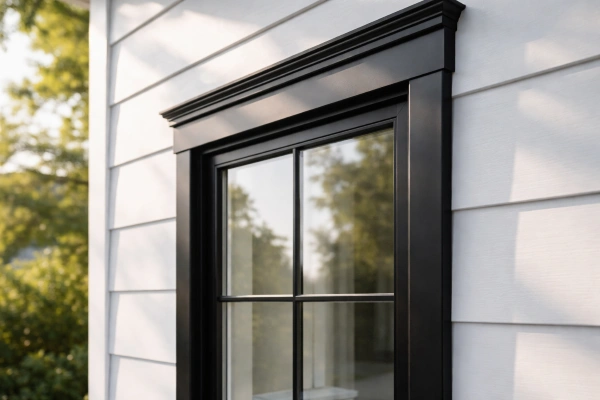
What Do Door and Window Trim Updates Cost?
Trim replacement runs about $150 per door or window for materials, with labor adding $100–$200 per opening depending on your market. It sounds small, but on a home with 15 windows and 3 exterior doors, that’s $4,500–$6,300 for a project that completely changes how the house reads from the street.
Fresh trim paired with a contrasting color is one of the fastest ways to modernize an older home. The trending combinations right now: warm white siding with black window trim, or greige siding with bright white trim and a bold-colored front door.
Don’t overlook window style when budgeting your exterior home remodel cost. Swapping vertical panes for wider horizontal ones gives a midcentury modern feel. Going with larger, fewer windows opens up a facade and works well on contemporary and transitional designs. Installing new exterior doors averages around $1,100–$2,500 depending on materials, and full window replacement for a home with 10–15 windows can run $8,000–$18,000. The material choices create a massive range, so get at least three bids and ask the right questions before hiring.
How Much Do Front Porch Railings Cost?
Porch railing replacement averages $93 per linear foot nationally, with the full range running from $15 to $850 per linear foot based on materials.
Standard wood railings are the cheapest option, but they’re also the most forgettable. If your budget allows, consider cable rail, horizontal metal, or composite materials. These cost more but age better and require less upkeep.
Here’s a contrarian take: wrought iron railings, while beautiful on the right house, date a home more often than they help. In traditional, French country, or Victorian-style homes, they work. On anything built after 1990, they usually feel heavy and old-fashioned. If you’re weighing options, match the railing style to the architectural era of your home.
A budget-friendly alternative to full replacement: stain your existing wood railing a darker shade or paint it to match your shutters. That creates a pulled-together look for under $200 in materials and a weekend of work. It’s the kind of small detail that most homeowners overlook but buyers notice.
What Should You Budget for Exterior Decorations and Lighting?
Decorations and lighting are the finishing layer of any exterior remodel. Furniture for a front porch runs $500–$2,000. Exterior light fixtures (sconces, path lights, lamp posts) range from $200 for basic builder-grade to $3,000+ for a full landscape lighting package. Planters, throw pillows, house numbers, and a quality welcome mat add $100–$500.
Think about how you actually use the space. If you want morning coffee on the porch, invest in comfortable seating and a small side table. If you entertain on a back patio, a fire pit ($300–$1,500 for portable, $5,000–$15,000 for built-in gas) and string lights do more for the atmosphere than any other single purchase.
Even if you’re not planning to stay, decorations help potential buyers picture themselves in the space. Staged exteriors sell faster. And exterior lighting (specifically porch lights and path lighting) makes a home feel secure, which is a huge emotional trigger during evening showings.
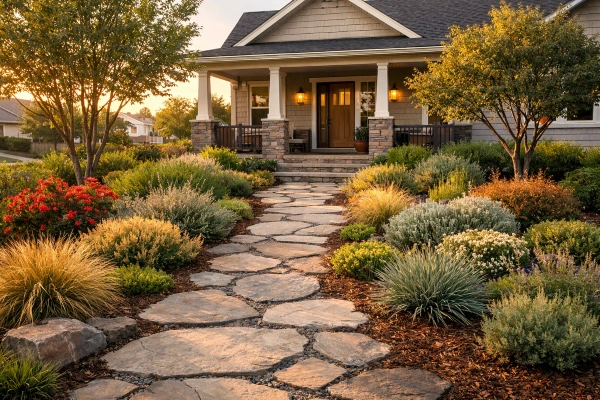
Is Professional Landscaping Worth the Investment?
Americans spend an average of $3,200 on new landscaping according to HomeAdvisor data. The American Society of Landscape Architects estimates that landscaping returns 100–200% of its cost in added home value. That makes it one of the best ROI moves you can make on the exterior of your home.
But here’s what most cost guides won’t tell you. Cheap landscaping that isn’t matched to your climate zone will cost you more within 5 years than if you’d done it right the first time. Plants that die need to be replaced. Irrigation systems that weren’t properly designed waste water and money.
Choose plants native to your USDA hardiness zone. They’ll need less water, survive seasonal swings, and fill in faster. Before you dig anything, contact your state’s 811 underground utility locator service. Hitting a gas line while planting a tree isn’t just dangerous. It’s a five-figure mistake.
For anyone planning to sell within 2–3 years, invest in landscaping now. Plants need time to mature. A freshly planted yard looks thin. A yard planted two years ago looks established, and that’s what actually adds value when buyers pull up.

How Much Value Does an Exterior Remodel Add to Your Home?
The short answer: more than almost any interior project dollar-for-dollar.
The 2025 Cost vs. Value Report found that exterior replacement projects remain the strongest category for resale value. JLC Chief Editor Clay DeKorne noted that eight of the top ten projects were exterior work. That’s not a coincidence. Buyers form opinions about a home within seconds of seeing the front, and those first impressions directly affect what they’re willing to pay.
Here’s a quick breakdown of returns on common exterior remodel projects:
- Garage door: 268% recouped (you get back $2.68 for every $1 spent)
- Steel entry door: 216% recouped
- Stone veneer: 208% recouped
- Fiber-cement siding: 114% recouped
- Vinyl siding: 97% recouped
The remodeling market itself keeps growing. NAHB Chief Economist Robert Dietz projected in February 2026 that residential remodeling activity will increase 3% in 2026 and an additional 2% in 2027, driven by aging housing stock and strong homeowner equity. The JCHS estimates total owner-occupied remodeling spending at $509 billion in 2025. Exterior replacements (roofing, windows, doors, siding) alone accounted for roughly $81 billion of that, according to the JCHS Improving America’s Housing 2025 report.
One more thing most articles skip: timing matters. If you’re remodeling in a low-inventory housing market, even modest exterior upgrades attract more buyers and stronger offers. The ROI data from the Cost vs. Value Report reflects average markets. In competitive metro areas, some projects (particularly garage doors) exceed 300% returns. Remodeling companies that invest in their online presence through a team experienced in the remodeling industry tend to publish better project portfolios and transparent pricing, which makes your vetting process easier as a homeowner.
What Do Exterior Design Services Cost in 2026?
Hiring a traditional exterior designer typically runs $100–$200 per hour. For a project that takes 15–20 hours of design time, you’re looking at $1,500–$4,000 before any construction begins. Most traditional designers also steer you toward their preferred contractors, which means you lose the ability to comparison shop for labor.
Virtual design services have changed this. Online exterior design platforms charge $200–$1,000 for renderings, color consultations, and product recommendations. You get a visual of what your home will look like before spending a dime on materials, and you keep full control over which contractor does the work.
The biggest hidden cost in exterior remodeling isn’t any one project. It’s the lack of a plan. Homeowners who tackle projects one at a time without a cohesive design end up with mismatched siding, trim that clashes with the front door, and landscaping that fights the architecture. I’ve seen this cycle cost people $5,000–$15,000 in do-overs.
If you’re planning a full exterior remodel, spend the $500–$1,000 on a design plan first. It’s the cheapest insurance against expensive mistakes. And when you’re ready to move forward, building a realistic remodel budget keeps the entire process from going sideways.
The most expensive mistake in exterior remodeling isn’t picking the wrong siding color. It’s skipping proper flashing and insulation during install, which leads to moisture damage that can cost $5,000–$15,000+ to repair within a decade. Always ask your contractor about their flashing and weather barrier methods. If they can’t explain it clearly, find someone who can.
FAQs
Does doing windows and siding at the same time save money?
Yes, and it’s not just about the labor discount. Coordinating windows and siding avoids air gaps between old and new materials that lead to energy loss and moisture problems. Fixing those gaps after the fact typically costs $2,000–$5,000. The JCHS notes that homeowners frequently bundle exterior replacements for this reason.
How long do exterior remodel warranties actually last?
Manufacturer warranties on materials like siding and roofing often say “lifetime,” but the fine print matters. Labor warranties from installers typically cover just 1–2 years. Around 80% of exterior project failures are installation-related (bad flashing, improper nailing), not material defects. Always ask for the labor warranty in writing, separate from the manufacturer’s material warranty.
What hidden costs do contractors leave out of exterior remodel bids?
The three biggest surprises: permitting fees ($500–$2,000 depending on your municipality), debris disposal ($300–$1,000), and matching existing materials when doing partial replacements. Homeowners on contractor forums regularly report final costs running 10–20% over the initial quote because of these line items.
Is an exterior remodel worth it if I’m not selling soon?
Absolutely. Exterior projects like roofing and siding protect the structure of your home. Delaying them leads to water damage, mold, and insulation problems that cost far more to fix. The NARI 2025 Remodeling Impact Report found that homeowners gave new roofing a perfect 10 out of 10 satisfaction score, regardless of whether they planned to sell.
How do wildfires or hurricanes affect exterior remodel costs?
If you live in a coastal, high-wind, or wildfire-prone area, expect to pay 20–40% more for exterior projects. Impact-rated windows, noncombustible siding, and enhanced anchoring systems are often required by the 2024 ICC building codes now being adopted across many jurisdictions. Some insurance carriers also require code-compliant exterior upgrades before they’ll renew coverage in high-risk zones.
Can I DIY an exterior remodel to save money?
Partially. Painting, landscaping, and decorative updates are reasonable DIY projects. But siding, roofing, and window installation require professional skills. DIY exterior work voids most manufacturer warranties, risks code violations, and produces lower resale value. The JCHS found that professional installations account for 84% of all improvement spending ($340 billion of $405 billion) for good reason.
How much does labor shortage add to exterior project timelines in 2026?
Expect weeks to months of added wait time, depending on your market. The JCHS 2025 report found that 59–64% of remodelers reported skilled-trade subcontractor shortages. NAHB’s remodeling market sentiment index improved to 64 in Q4 2025, but labor and customer price sensitivity remain the top two challenges contractors cite.

Michael Vale has over 5 years of experience helping clients improve their business visibility on Google. He combines his love for teaching with his entrepreneurial spirit to develop innovative marketing strategies. Inspired by the big AI wave of 2023, Michael Vale now focuses on staying updated with the latest AI tools and techniques. He is committed to using these advancements to deliver great results for his clients, keeping them ahead in the competitive online market.