
What Part Of Your House Is Most Worth Remodeling In 2026?
The kitchen. That’s the answer most contractors and real estate agents will give you, and they’re mostly right. But they’re leaving out the part that actually matters.
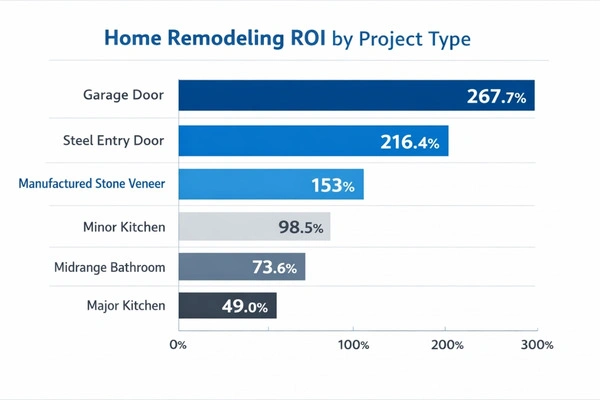
A whole home remodel starts with knowing where your money goes the furthest. And the project with the highest ROI in the country right now isn’t a kitchen renovation. It’s a garage door replacement, recouping 267.7% of its $4,672 average cost at resale according to the 2025 Cost vs. Value Report from Zonda Media. A minor kitchen remodel recovers 96–107%. A major kitchen overhaul? Roughly 49%.
The most valuable remodeling projects in 2026 depend on your goals: daily comfort, resale value, or both. A whole home remodel that targets the right rooms in the right order can recover more than 80% of total project costs, while a poorly planned one leaves money behind in every room.
So which rooms actually deserve your budget? I’ve watched homeowners pour $80,000 into a kitchen and skip a $4,700 garage door swap that would’ve added more to their appraised value. The data supports a smarter order of operations.
The Kitchen Still Wins, But Not the Way You Think
A minor or midrange kitchen remodel ($15,000–$25,000 for updated cabinets, countertops, and appliances) returns 96–107% of what you spend. That’s a solid investment. But a major kitchen gut job running $40,000–$80,000 brings back roughly 49%.
The gap is enormous, and most people don’t know it exists.
I’ve seen homeowners assume “any kitchen remodel pays for itself.” That advice is outdated. It applies to minor refreshes, not full-scale redesigns with custom cabinetry and imported tile. If your budget is $60,000, you’ll often get more total value by splitting it: $20,000 on a midrange kitchen update and the rest spread across bathrooms, curb appeal, and that garage door nobody thinks about.
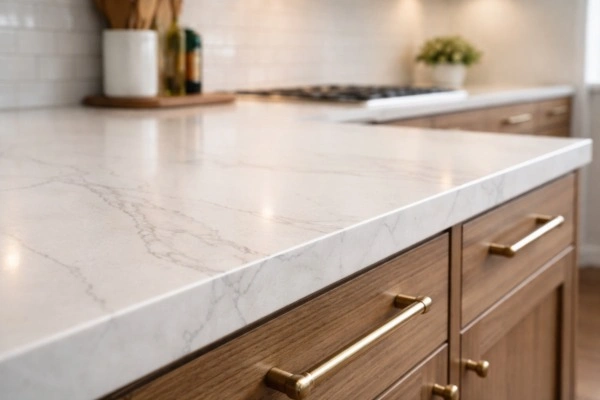
Smart kitchen upgrades for 2026 include quartz countertops ($60–$100 per square foot with a 20–25 year lifespan), wood-grain cabinetry (trending upward over painted finishes according to NKBA’s 2026 industry outlook), and energy-efficient appliances that today’s buyers treat as standard equipment.
Bathroom Remodels Rank Second in ROI and First in Popularity
Bathrooms were the most common remodeling project in 2025. NAHB survey data shows 73% of remodelers rated bathroom work a 4 or 5 out of 5 in demand, beating kitchens at 3.9.
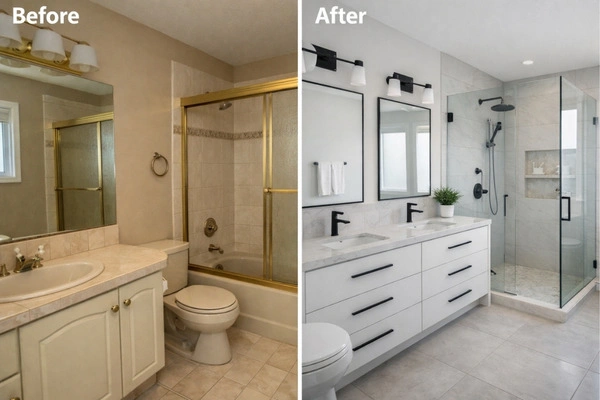
A midrange bathroom remodel runs $12,000–$25,000 nationally and recovers 73–80% at resale. That’s lower than a minor kitchen on paper. But bathrooms affect your daily quality of life more than almost any other room. You use them multiple times a day. A cramped vanity, weak water pressure, or cracked tile drags down the entire feel of your home.
The upgrades that move the needle: double vanities in master baths, walk-in showers replacing outdated tub/shower combos, heated flooring (less expensive to install than most people assume), and updated ventilation meeting 2024 IRC code requirements now enforced in many jurisdictions.
One thing to watch. Upscale bathroom remodels at $40,000 or more drop to about 42% ROI. Same pattern as kitchens. The more you spend on luxury finishes, the less you get back at sale.
Are Living and Dining Room Updates Worth Your Budget?
These rooms don’t generate the headline ROI numbers that kitchens and bathrooms do. But they shape how a home feels, and that drives buyer decisions more than most sellers realize.
Opening up a cramped living and dining layout is one of the most effective changes in a whole home remodel. Removing a non-load-bearing wall between the kitchen and living area can cost $3,000–$10,000 and completely change how the house flows.
Smaller updates add up fast. New flooring, updated lighting fixtures, and a refreshed fireplace surround can modernize a living space for under $10,000 without a heavy construction project.
I wouldn’t put living room work ahead of kitchens, bathrooms, or exterior improvements if resale is the goal. But if you’re staying in the home for five-plus years, this is where your family actually spends its time. Don’t treat it as an afterthought.
Curb Appeal Delivers the Highest Dollar-for-Dollar Return
Most “best rooms to remodel” articles barely mention the exterior. That’s a mistake, because exterior projects consistently beat interior ones on ROI.
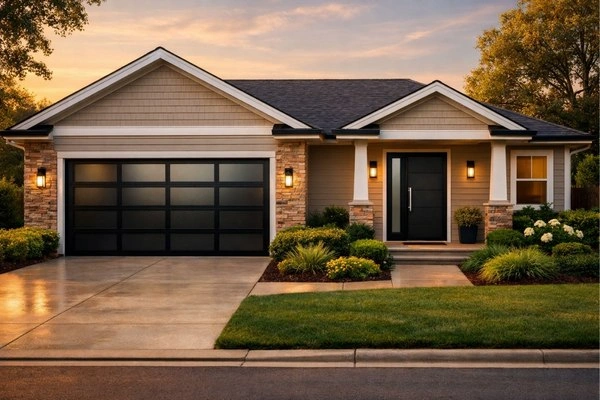
Garage door replacement recoups 267.7%. A steel entry door replacement costs $2,435 on average and adds $5,270 at resale (216.4% ROI). Manufactured stone veneer returns 150–200%. These numbers come from the same 2025 Cost vs. Value Report that everyone cites for kitchen data, yet they rarely make the headline.
Fresh paint, updated landscaping, and a modern front door are the lowest-cost, highest-return changes you can make. If you’re planning a whole home remodel on a tight budget, start outside. Buyers form their opinion of your home in the first few seconds of pulling into the driveway. You don’t get a second chance at that first reaction.
Should You Finish That Basement or Attic?
Unfinished square footage is either wasted space or unrealized value.
Converting a basement into a bedroom, office, or media room adds usable square footage without the cost of building an addition. Finishing a basement typically costs $20,000–$50,000 depending on scope, and ROI varies by region. In markets where finished basements are standard (the Midwest, parts of the Northeast), buyers expect it. In warmer climates, it carries less weight.
Attic conversions follow a similar pattern. The question is whether your local market rewards the added space enough to justify the build-out cost. If comparable homes in your ZIP code have finished lower levels and yours doesn’t, that’s value sitting idle.
This is where working with a team that knows your specific market matters. National averages only tell part of the story, and regional labor costs can swing project totals by 20–50% between the West Coast and the Southeast.
When a Whole Home Remodel Beats Room-by-Room Upgrades
A whole home remodel makes sense when your house has problems across multiple rooms, or when it was last updated 20-plus years ago and feels dated in every direction. Doing everything at once lets you coordinate design choices, reduce total contractor costs, and avoid living through three separate construction timelines over five years.
Homeowner spending on improvements is projected to hit $522 billion by the end of 2026, according to Harvard’s Joint Center for Housing Studies. Pro-led renovation spending is growing at 4.4% while DIY grows at just 0.6% (NKBA 2026 outlook). That gap tells you something: homeowners are choosing professionals for bigger, more coordinated projects rather than piecemeal weekend work.
If you’re planning a whole home remodel, the smartest order is exterior first (highest ROI, protects the structure), then kitchen, bathrooms, and finally living spaces. Budget roughly 35–40% for the kitchen, 20–25% for bathrooms, and spread the rest across everything else.
The real mistake isn’t picking the wrong room. It’s hiring the wrong contractor. Ask for proof of current licensing, bonding, and workers’ comp insurance for your state. Ask for photos of completed projects in your area from the last 12 months. Those two questions alone weed out most of the problems homeowners face during a remodel. And if you’re a remodeling company trying to attract those homeowners, having a marketing partner who understands your industry is how you show up when they search.
FAQs
Which home remodel has the highest ROI in 2026?
Garage door replacement leads nationally at 267.7% ROI, costing $4,672 on average and adding $12,507 in resale value per the 2025 Cost vs. Value Report. Steel entry door replacement follows at 216.4%. Minor kitchen remodels recover 96–107%, which is strong but far below exterior projects on a dollar-for-dollar basis.
Does a bathroom remodel still pay off if I’m not selling soon?
Yes. Bathrooms were the most common remodeling project in 2025, with 73% of remodelers rating demand at 4–5 out of 5 per NAHB data. A midrange bathroom remodel recovers 73–80% at resale, but the daily comfort improvement is the bigger win for homeowners staying put.
Why do contractors say major kitchen ROI is lower than advertised?
Because the national data shows it. Major and upscale kitchen remodels recoup only 34–50% according to the 2025 Cost vs. Value Report. The “kitchens always pay for themselves” line applies to minor refreshes in the $15,000–$25,000 range, not $80,000-plus gut renovations.
How much does the labor shortage add to remodeling costs in 2026?
The skilled trades shortage costs the construction industry $10.8 billion annually per HBI data. Residential construction wages rose 3.5% year-over-year to $39.4 per hour as of mid-2025. Expect that pressure to show up in your project bids, especially for specialized plumbing and electrical work.
Is a whole home remodel cheaper than doing rooms one at a time?
Usually, yes. A whole home remodel reduces total contractor mobilization and coordination costs. You also avoid design mismatches between rooms renovated years apart. Pro-led renovation spending is growing at 4.4% annually (NKBA 2026 data), which reflects the shift toward larger coordinated projects over piecemeal DIY.
What questions should I ask before hiring a remodeling contractor?
Two questions filter out most problems: “Can you show proof of current licensing, bonding, and workers’ comp insurance for this state?” and “Can you provide photos of three completed projects in my ZIP code from the last 12 months?” Unlicensed work is the most expensive mistake in remodeling, often costing 20–50% more in rework and code violations.
Do West Coast remodeling costs really change the ROI math?
Yes. Labor and material costs in markets like the Bay Area and Los Angeles run 20–50% higher than the Midwest or Southeast. That compresses ROI on every project type. National averages from the Cost vs. Value Report cover 119 metro areas, so always check the data for your specific region before planning your budget.

Michael Vale has over 5 years of experience helping clients improve their business visibility on Google. He combines his love for teaching with his entrepreneurial spirit to develop innovative marketing strategies. Inspired by the big AI wave of 2023, Michael Vale now focuses on staying updated with the latest AI tools and techniques. He is committed to using these advancements to deliver great results for his clients, keeping them ahead in the competitive online market.