
Kitchen Remodel Tips: 11 Things I Wish I Knew Before Starting (2026 Guide)
A kitchen remodel is the most common renovation project in the U.S., and it’s where homeowners blow the most money on avoidable mistakes. I’ve worked on dozens of kitchen projects, and the same regrets show up every time. People pick finishes before they have a plan. They move plumbing they didn’t need to move. They skip permits because a friend said it’d be fine. These are the 11 things I wish every homeowner understood before ripping out a single cabinet.
A kitchen remodel is a renovation project that updates the layout, materials, appliances, or design of your kitchen to improve function, appearance, and home value. The national median spend is $22,000 according to the Houzz 2025 U.S. Kitchen Trends Study, though major projects with new cabinets and appliances run $55,000–$60,000. Minor midrange remodels currently return roughly 113% at resale per the 2025 Cost vs. Value Report.
Start With Your “Why” Before You Start Shopping
Your first move isn’t picking tile. It’s writing down why you’re doing this.
Do you need more counter space? Better lighting? A layout that doesn’t force three people to squeeze past each other? A clear “why” list keeps you from getting seduced by a $14,000 range you don’t need or a backsplash pattern that has nothing to do with your actual goals. I’ve watched homeowners blow 30% of their budget on features that weren’t on their original list. Scope creep is so common that contractor forums treat it as inevitable. It doesn’t have to be.
Write your list. Tape it to the fridge. Refer to it every time you’re tempted to add something shiny.
How Do You Plan a Kitchen Remodel Step by Step?
Make one master list of every decision before you make any of them.
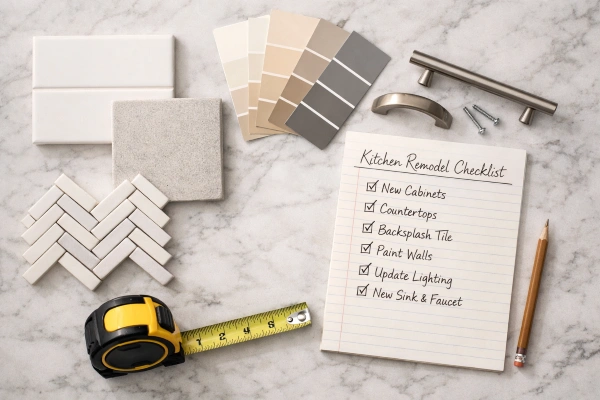
That list includes flooring, cabinets, countertops, backsplash, hardware, fixtures, sinks, appliances, lighting, and paint colors. If you’re changing the floor plan, that decision comes first because it affects every other choice. The order you tackle a kitchen remodel matters more than most people realize.
Here’s the part nobody talks about: your appliances need to be selected (not just browsed, selected) before your cabinets get built. The entire kitchen is framed around appliance dimensions. I’ve seen projects delayed by weeks because a 36-inch fridge was actually 36.5 inches with the door handle, and the cabinet opening was built to spec sheet measurements. Get your appliances delivered and physically measured before cabinets go in. The NKBA 2026 Kitchen Trends Report backs this up: 91% of professionals now recommend finalizing appliance selections during planning, not after.
What Are the Most Timeless Kitchen Materials in 2026?
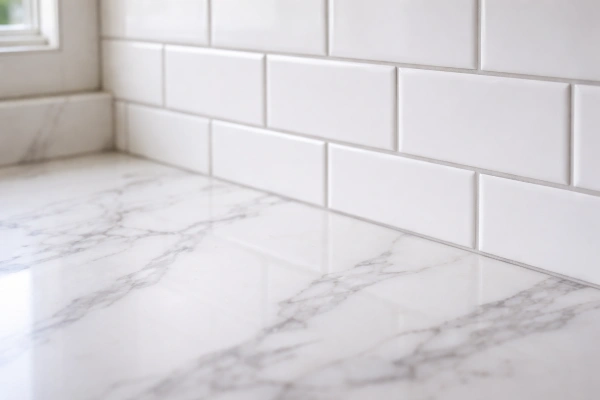
White subway tile and marble (or marble-look) countertops. That combination has survived every design trend for over a century.
If you want to play it safe, pair white subway tile with quartz countertops that mimic marble veining. That kitchen won’t look dated in 15 years. Stock cabinets last 10–15 years on average. Custom cabinets go 20+. Quartz and granite countertops outlast both at 25+ years with minimal maintenance.
But here’s my contrarian take: “timeless” is overrated if you’re not selling soon. If you love bold tile and plan to stay for a decade, install what makes you happy. I’d rather you love your kitchen than hedge for a buyer who might not show up for years.
What’s the Biggest Mistake People Make During a Kitchen Remodel?
Going all-white because their old kitchen was dark, and ending up with a space that feels like a hospital.
I get the appeal. You want bright and airy. But a kitchen with white cabinets, white countertops, white backsplash, and white walls has zero personality. Layer in contrast. A painted island in deep green or navy. Butcher block on one section of counter. Open shelving in reclaimed wood. You need texture to make a white kitchen feel like a room and not a showroom.
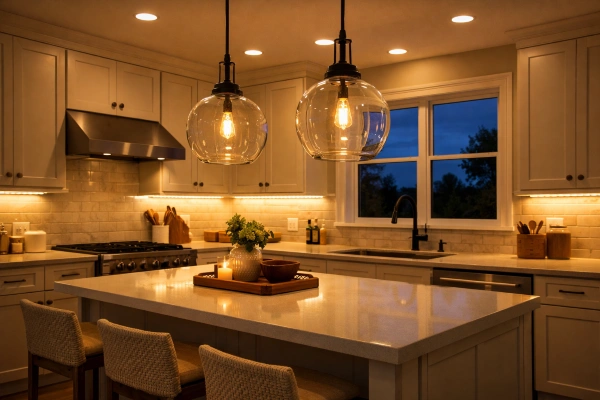
The other mistake I see constantly? Pendant lights over the island that are way too small. If the fixture isn’t bigger than your head, it’s going to look like an afterthought. Go bigger than you think you need.
Marble Looks Great Until You Actually Live With It
Marble is the worst “good idea” material in a kitchen. I put honed marble countertops in my own kitchen and spent years chasing guests around with coasters.
Natural stone etches from lemon juice, wine, and tomato sauce. It stains from coffee. Every dinner party became a damage-control operation. We eventually found a UV coating that brought our marble close to quartz-level durability, but that’s an extra cost and step most people don’t know about going in.
If you love the marble look, porcelain slabs and quartz both offer convincing alternatives with almost none of the maintenance. Quartz in particular has become the go-to countertop for mid-range kitchen remodels because it handles heat, scratches, and stains without sealing.
Plumbing Moves Are Permanent. Think Before You Relocate.
Once you move a sink or dishwasher, that plumbing stays put. On a slab foundation (which most homes in the Southwest and Southern California sit on), relocating plumbing means cutting into concrete. That’s $3,000–$8,000 you won’t get back if the new layout doesn’t actually improve your workflow.
Before signing off on any plumbing relocation, go back to your “why” list. Does moving the sink accomplish something on that list? If the answer is “not really,” save the money. Hidden soft costs like plumbing changes, electrical upgrades, and permit fees add 15–30% beyond initial quotes.
Does a Kitchen Remodel Pay for Itself at Resale?
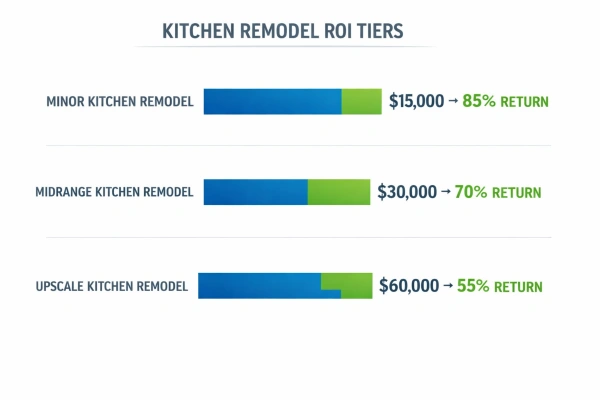
A minor midrange kitchen remodel returns about 113% of its cost at resale. That’s the best ROI of any interior project in the 2025 Cost vs. Value Report. But here’s what the “kitchens always pay for themselves” crowd leaves out: major remodels return only about 51%, and upscale projects drop to 36%.
| Remodel Level | Average Cost | Resale Value | ROI |
| Minor midrange | $28,458 | $32,141 | 113% |
| Major midrange | $82,793 | $42,130 | 51% |
| Major upscale | $164,104 | $58,561 | 36% |
Source: 2025 Cost vs. Value Report (Zonda Media / JLC Online, 119 U.S. markets)
So the advice isn’t “remodel your kitchen and you’ll make money.” The advice is: keep your remodel proportional. Don’t drop $40,000 into a $120,000 house. Don’t drop $40,000 into a $3.2 million house either.
Your kitchen should also match your home’s style. A sleek, ultra-modern kitchen inside a Spanish Colonial feels wrong, and buyers notice. Keep the design cohesive with your bathrooms too.
If you show your favorite backsplash to five people and four of them say it’s too much, listen. You can add personality with towels, art, and accessories. The tile is permanent.
Always Hire Licensed Pros for Plumbing and Electrical
This isn’t an opinion. It’s a safety issue.
Plumbing and electrical work require permits and licensed contractors in every state. I’ve seen DIY electrical jobs that were genuine fire hazards and unpermitted plumbing that caused $25,000 in water damage two years later. The questions you ask before hiring a remodeling contractor can save you from these situations.
The construction industry also faces a labor shortage costing roughly $10.8 billion annually according to the NAHB and HBI’s Fall 2025 labor report. That means fewer qualified workers and higher wages. Book your licensed subs early.
What Single Change Makes the Biggest Difference in a Kitchen?
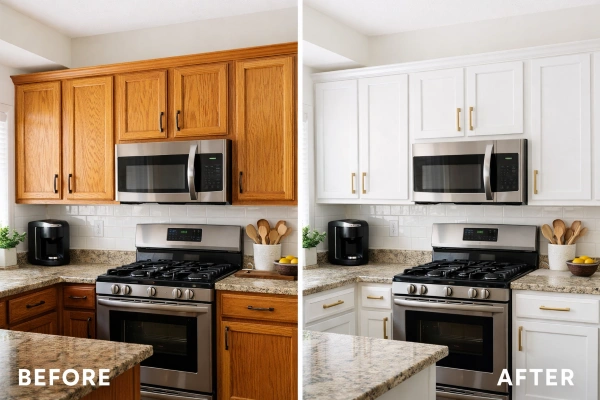
Paint or reface your cabinets. It’s the highest-impact, lowest-cost change you can make.
Cabinet painting runs $3,000–$7,000 for a professional job. Refacing (where a company replaces your doors and drawer fronts but keeps the existing boxes) sometimes costs less than painting and looks like a brand-new kitchen. Either option transforms the room without touching plumbing, electrical, or your floor plan.
If you can only afford one upgrade, this is it. New countertops are a close second, but they won’t change the room as dramatically as going from dated oak to a clean painted finish. The changes that add the most value to a kitchen remodel are almost always cosmetic, not structural.
The Details Most People Forget
Lighting. Don’t just replace what’s there. Layer it. Recessed ceiling lights for general coverage. Pendants over the island for task and style. Under-cabinet strips so your countertops and backsplash aren’t in shadow every evening. You use your kitchen more in the dark hours than the daylight ones.
Hardware is another overlooked detail. Handles on drawers and cabinet doors give the whole room a finished, intentional look. You don’t need a single knob if you prefer pulls.
And before you commit to anything, gather photos of kitchens you love. Figure out what draws you to each one, write notes, and hand them to your contractor. A picture communicates what 30 minutes of verbal description can’t. Every successful kitchen remodel starts with clear communication, and professionals who work with a team that understands your project goals will tell you the same thing.
FAQs
How much does a kitchen remodel cost in 2026?
The national median spend is $22,000 for a typical kitchen remodel according to the Houzz 2025 U.S. Kitchen Trends Study. Minor midrange remodels average around $28,458, while major midrange projects average $82,793 per the 2025 Cost vs. Value Report. Regional costs vary significantly, with Northeast homeowners paying $10,800–$40,400 and Southeast homeowners paying $12,000-$32,200.
How long does a kitchen remodel take?
A professional midrange kitchen remodel typically takes 6-12 weeks. DIY projects often stretch to 3-6 months or longer. Supply chain issues and labor shortages in 2025–2026 have added delays of 2-4 weeks on many projects, so build buffer time into your schedule.
What is the best ROI kitchen remodel?
A minor midrange kitchen remodel returns approximately 113% of its cost at resale, making it the highest-ROI interior project in the 2025 Cost vs. Value Report. Major and upscale remodels return significantly less (51% and 36% respectively). Focus on cabinet updates, countertops, and lighting for the strongest returns.
Should I remodel my kitchen before selling my house?
Yes, but keep it proportional. A minor kitchen remodel is one of the few renovation projects that can return more than its cost at resale. Don’t over-improve for your neighborhood, and avoid trendy finishes that narrow your buyer pool. Stick to clean, neutral upgrades that appeal to the broadest range of buyers.
Can I live in my house during a kitchen remodel?
You can, but most contractors recommend planning around 4-8 weeks without full kitchen access. Set up a temporary cooking station with a microwave, toaster oven, and portable cooktop in another room. If the remodel involves structural, plumbing, or electrical work, temporary relocation may reduce stress and speed up the project timeline.
What kitchen remodel mistakes cost the most to fix?
Poor layout planning and skipping permits are the two most expensive mistakes. Inadequate layout decisions can cost $10,000-$30,000+ in later corrections. Unpermitted work can result in failed inspections, insurance claim denials, and mandatory rework. Hidden costs from structural surprises, outdated wiring, and disposal fees typically add 15-30% beyond initial quotes.
Are smart appliances worth it in a kitchen remodel?
About 63-65% of renovating homeowners now choose specialty appliance features according to the Houzz 2025 study. Smart appliances cost 20-40% more upfront but can reduce long-term energy costs. Whether they’re worth it depends on your budget and how long you plan to stay. If you’re selling within two years, buyers may not pay a premium for smart features.

Michael Vale has over 5 years of experience helping clients improve their business visibility on Google. He combines his love for teaching with his entrepreneurial spirit to develop innovative marketing strategies. Inspired by the big AI wave of 2023, Michael Vale now focuses on staying updated with the latest AI tools and techniques. He is committed to using these advancements to deliver great results for his clients, keeping them ahead in the competitive online market.