
When Remodeling A Kitchen What Comes First In 2026: Floors Or Cabinets?
Install your base cabinets before the flooring in most kitchen remodels. That’s the sequence roughly 70% of contractors follow, and for good reason. Cabinets anchor the entire layout (countertop height, appliance placement, plumbing connections), so the floor covering gets cut to fit around them. But “most cases” isn’t “all cases.” Your flooring material changes the answer completely, and getting the order wrong can add $2,000–$10,000 in rework costs.
I’ve seen homeowners blow their budget on this single decision. The kitchen renovation experts at This Old House agree that material type drives the decision more than any blanket rule. Below are the material-specific rules most articles skip.
Why Do Most Contractors Install Cabinets Before Flooring?
Cabinets go in first because they set the countertop height at 36 inches (the U.S. standard) and create fixed reference points for appliances, counters, and plumbing.
Advantages of a Cabinets-First Approach
You save on flooring material. Why run $8–$12 per square foot hardwood under cabinets nobody will see? A mid-size kitchen has 30–50 square feet of cabinet footprint. That’s $240–$600 in material you don’t need to buy.
The 2025 Cost vs. Value Report shows minor kitchen remodels averaging $28,458 nationally, returning 113% at resale. Every dollar saved on hidden flooring goes toward finishes buyers notice.
Drawbacks of Putting Cabinets in First
You’re locked into your current layout. The flooring gets cut to fit around each cabinet, so moving anything later means tearing up floors too. It’s worth planning your full renovation scope before committing to a sequence.
Cutting flooring around cabinets and appliances takes precision. Measurements need to be exact, and the labor adds 4–8 hours to the install. Your flooring installer will charge for that time.
Should You Ever Lay Flooring Before Cabinets?
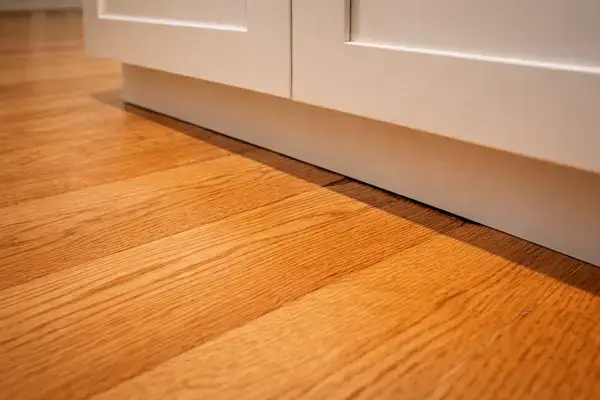
Yes, when you need to raise the overall floor height or when you’re using rigid flooring like solid hardwood or tile.
When Floors-First Makes Sense
If your countertops are coming in under 36 inches, installing flooring first adds height. Floor coverings run anywhere from 3/8 inch (LVP) to 2 inches (thick tile with mortar bed). That height gain can fix short appliances, uneven counters, or cabinets that sit too low.
Floors-first also means no cutting around cabinets. The finished floor runs wall to wall, simplifying future layout changes. The NKBA’s 2025 market outlook shows repair and remodeling spending up 2.6% last year. Homeowners are investing more and expecting flexibility.
Risks of Installing Floors Before Cabinets
You’ll pay for flooring nobody sees. That same 30–50 square feet under cabinets? Now you’re buying material for it.
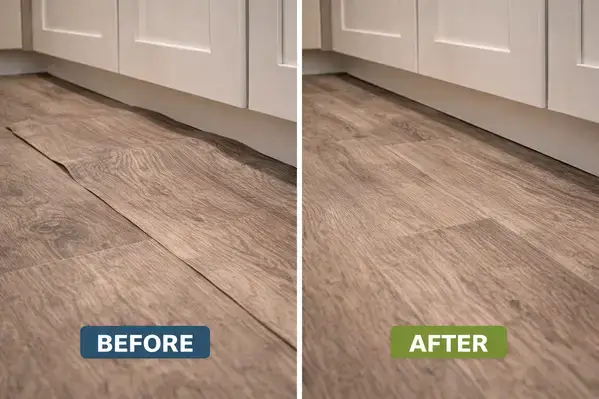
Floating floors (LVP, laminate, engineered hardwood) need room to expand and contract. Heavy cabinets sitting on top pin the floor in place. Over time, this causes buckling, gaps, or seam failure. Contractors on major renovation planning forums report fixing this problem costs $2,000–$5,000 after the fact.
And here’s the part most articles skip. Replacing flooring later means pulling out every cabinet and appliance. If you don’t plan on changing your layout for 15–20 years, that’s fine. But if you might, talk to a team that offers full-scope remodeling services before you lock anything in.
Which Flooring Type Changes the Answer?
Your flooring material matters more than any general rule.
| Flooring Type | Install Order | Why | Wrong-Order Cost |
| Solid Hardwood | Floors first | Needs expansion space; gaps appear at toe kick if cut around cabinets | $3,000–$10,000 |
| Tile / Stone | Floors first | Rigid material; cutting around cabinets leaves visible seams | $2,500–$8,000 |
| LVP / Vinyl Plank | Cabinets first | Floating floor slides under toe kick; pinning it causes buckling | $2,000–$5,000 |
| Laminate | Cabinets first | Floating floor needs free movement; weight restriction applies | $1,500–$4,000 |
| Engineered Hardwood | Depends on install method | Glue-down: floors first. Floating: cabinets first | $2,000–$6,000 |
The biggest mistake I see: homeowners pick their flooring without telling the general contractor which product they chose. Subcontractors guess, and that guess triggers change orders. An experienced remodeling team always asks for the exact product spec before scheduling installs.
Ask your installer for a written plan that matches the floor material to the install order. NARI’s 2025 remodeling data shows 42% of contractors saw bigger project scopes last year. More moving parts means more chances for sequencing errors.
When remodeling a kitchen what comes first isn’t a coin flip. Pin down your flooring material, confirm the install order in writing, and you’ll avoid the most expensive mistake in kitchen renovation.
FAQs
Should I install cabinets or flooring first when remodeling a kitchen?
In most remodels, cabinets go in first. This saves on flooring material (you won’t waste $240–$600 on hidden square footage) and keeps countertop height at the standard 36 inches. The exception is solid hardwood or tile, which should go down before cabinets to allow for proper expansion.
Does the installation order affect my kitchen remodel cost?
Yes. Choosing the wrong sequence for your flooring material can trigger $2,000–$10,000 in rework labor and wasted materials. The JLC 2025 Cost vs. Value Report puts minor kitchen remodels at $28,458 on average, so a sequencing mistake can eat 7–35% of your total budget.
Can I install LVP flooring before kitchen cabinets?
You can, but you shouldn’t. LVP is a floating floor that needs room to expand and contract. Placing heavy cabinets on top pins it down, causing buckling or gaps over time. Install cabinets first and slide the LVP under the toe kick for a clean, damage-free result.
When remodeling a kitchen what comes first if I’m using hardwood floors?
Solid hardwood goes down before cabinets. Hardwood needs expansion space around walls and obstacles. Cutting it to fit around already-installed cabinets creates visible gaps at the toe kick that are expensive to fix ($3,000–$10,000 depending on kitchen size).
Will installing flooring under cabinets waste money?
It depends on your priorities. Running flooring under cabinets adds $240–$600 in material costs for a mid-size kitchen, but it gives you freedom to change the layout later without tearing up floors. If you plan to keep the same layout for 15+ years, cabinets first saves that money.
How much does a kitchen remodel cost in 2026?
The national average sits at $26,953 according to Angi’s 2025 data, with a range of $14,586–$41,536 for a standard remodel. Major midrange projects run about $82,793, while upscale gut renovations can hit $164,104. Minor kitchen remodels return the highest ROI at 113%.
What’s the most common mistake with kitchen floor and cabinet installation order?
Picking the flooring material without telling the general contractor. When the GC doesn’t know whether you chose LVP, hardwood, or tile, subcontractors guess the install order. That guess often triggers change orders. Get the floor material spec to your contractor in writing before any work starts.

Michael Vale has over 5 years of experience helping clients improve their business visibility on Google. He combines his love for teaching with his entrepreneurial spirit to develop innovative marketing strategies. Inspired by the big AI wave of 2023, Michael Vale now focuses on staying updated with the latest AI tools and techniques. He is committed to using these advancements to deliver great results for his clients, keeping them ahead in the competitive online market.