
7 Best Kitchen Cabinet Color Ideas Worth Your Money In 2026
White kitchens aren’t dead, but they’re no longer the default. According to the Houzz 2026 U.S. Kitchen Trends Study, wood cabinets just overtook white as the number-one choice among renovators (29% vs. 28%). The NKBA/KBIS 2026 Kitchen Trends Report backs this up: while neutrals still dominate at 96%, greens (86%) and blues (78%) are the colors designers actually get excited about.
Kitchen cabinet color ideas in 2026 center on warm, nature-connected tones. Smoky greens, grounded khakis, deep blues, espresso browns, pale creams, buttery yellows, and stained wood finishes are the seven categories pulling ahead. These aren’t fleeting fads. They reflect a larger move away from cool grays and clinical whites toward colors that feel lived-in and specific to each home.
This article won’t cover full kitchen layout planning or appliance selection. Those are separate decisions. What you’ll get here are the seven cabinet color families that have the strongest support from industry data, real designer behavior, and resale performance in 2026.
Why Are Smoky Greens the Top Cabinet Color in 2026?
Green sits at the top of the NKBA’s 2026 kitchen color preferences, and it’s not the bright kelly green you’re picturing. The shades gaining traction are smoky jades and grounded sage tones. Think muted, gray-cast greens that sit halfway between blue and green on the spectrum.
I’ve watched green cabinets go from “risky” to “safe bet” over about 18 months. Paint brands like Behr (Hidden Gem) now position these tones as a neutral family, not an accent. That shift matters. It means you can run smoky green on your entire perimeter without the room feeling like a statement piece.
These greens work best with light oak floors, creamy stone countertops, matte black hardware, and warm white walls. Period homes and modern traditional kitchens get the most mileage here. If your space has good natural light, a full suite of smoky jade cabinets reads calm rather than dark.
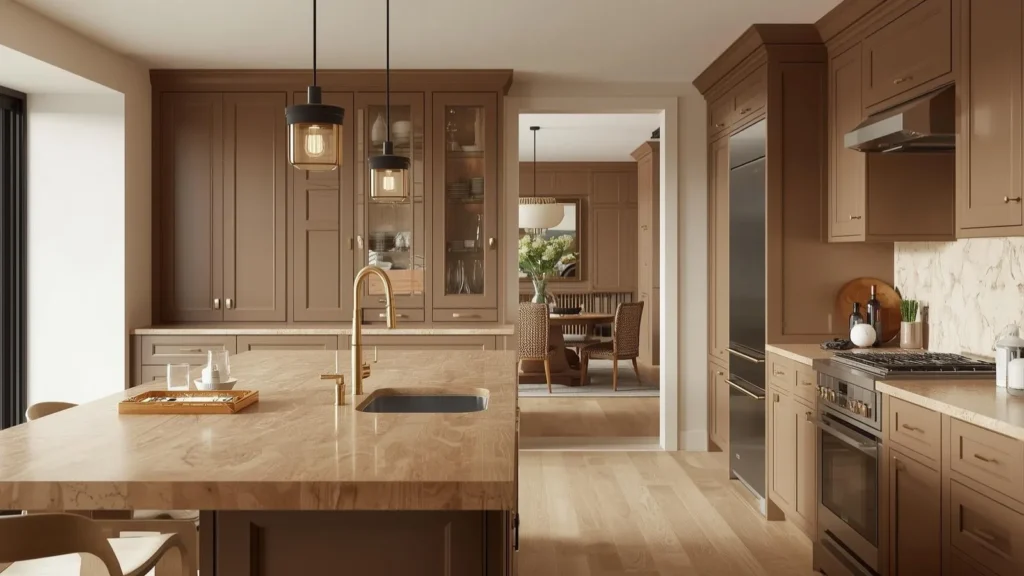
Do Warm Neutrals and Khakis Work Better Than White?
For resale? Probably yes, at this point. White dropped five percentage points year-over-year in the Houzz study, while warm neutrals (mushroom, taupe, sandy khaki) are filling that gap.
The appeal is simple. Warm neutrals read soft in person and photograph well in listing photos. They don’t show grease and fingerprints the way stark white does. And they pair with almost everything, which is why designers call this palette the “not-white” category.
Sherwin-Williams Universal Khaki is a good starting point if you want to plan your remodel budget around a color that won’t need replacing in five years. Pair khaki or mushroom tones with travertine, warm-veined quartz, unlacquered brass hardware, and rift-sawn white oak accents.
One thing most articles skip: warm neutrals perform best in open-plan homes where cabinets flow visually into living and dining areas. A strong color can feel jarring at that transition. A grounded khaki keeps the eye moving.
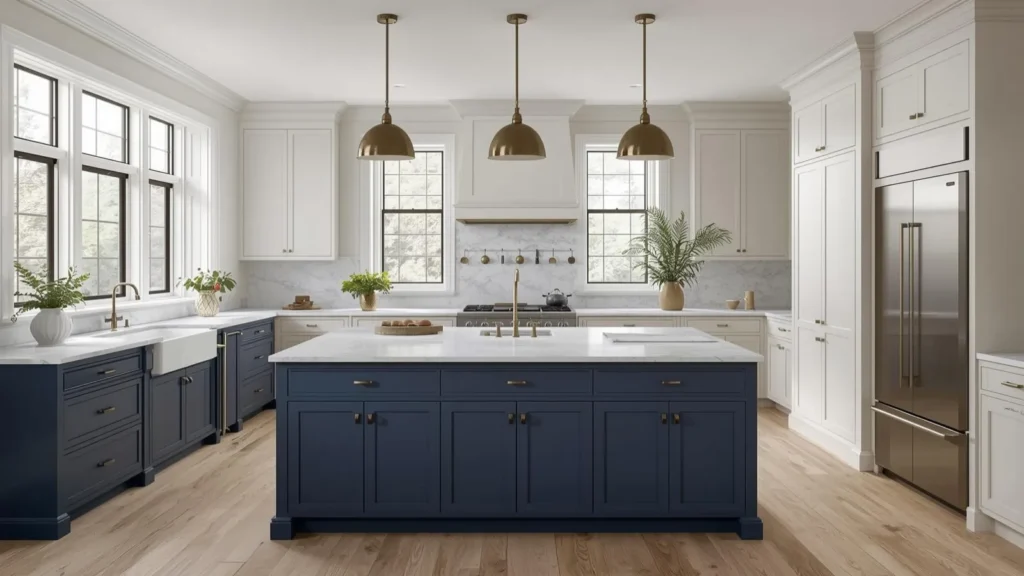
Indigo and Midnight Blues
Deep navy and midnight blue cabinets give a kitchen a tailored, almost suit-like quality. This color group spans from saturated navy through inky, almost-black blues that hold depth without going flat.
Benjamin Moore Hale Navy and Farrow & Ball Hague Blue remain the go-to picks among designers. These aren’t cheap paints, and that’s part of the point. Professional cabinet painting averages $940 nationally (Angi, March 2026), but the finish quality on dark blues matters more than on lighter colors. Dark paint shows every brush stroke, drip, and dust particle. This is not a DIY-friendly color. Contractors say dark cabinets stay tacky longer during curing, which delays reinstallation.
Big kitchens and well-lit rooms handle navy best. A popular approach is dark blue lowers with lighter uppers, or a single navy island against a neutral perimeter. Pair with Shaker doors, cool-veined stone counters, and burnished brass or brushed nickel pulls.
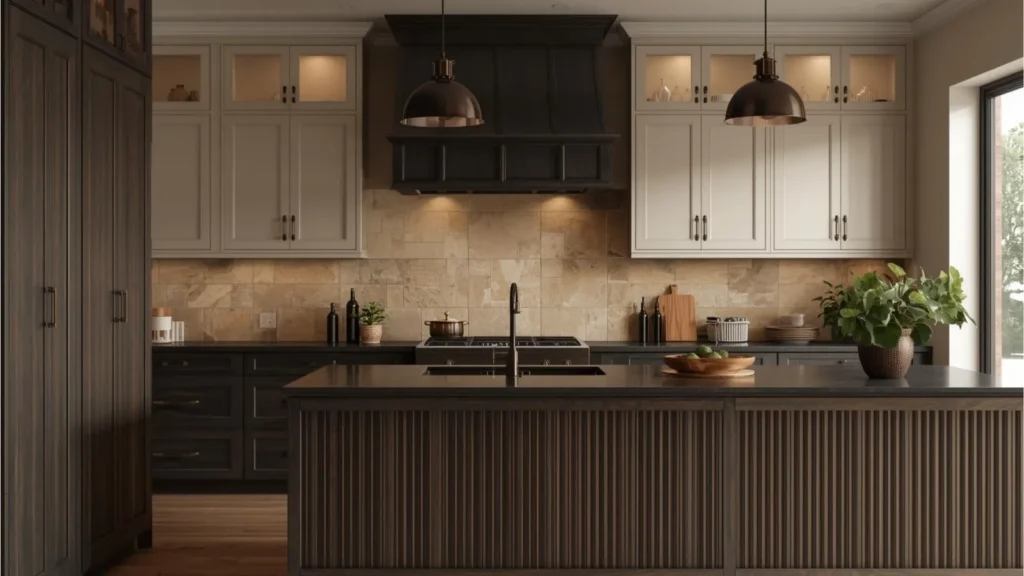
Are Espresso Browns and Burgundies Coming Back?
Yes, and they’re not the same cherry-stained cabinets your parents had. The 2026 version is espresso with charcoal undertones, brownish grays, and aubergine-leaning hues. MasterBrand’s 2026 trend data shows a rich espresso brown among the top Color of the Year picks from major paint companies.
These colors bring drama without the maintenance headaches of pure black. If you’re planning a moody kitchen or an English pantry look, espresso and burgundy work on islands, lower cabinets, or full-height storage walls. Keep upper cabinets lighter so the room doesn’t collapse visually, especially if natural light is limited.
Pair with tumbled limestone, aged bronze hardware, and fluted wood panels. Knowing what adds the most value to a kitchen remodel can help you decide whether investing in a premium dark finish pencils out for your home.
Rich Pale Creams
This is the safe pick, but it’s a smarter safe pick than white. Rich pale creams sit between gallery white and beige, giving cabinets a relaxed warmth that bright white can’t match.
Off-white currently ranks as the second most-preferred cabinet finish in MasterBrand’s 2026 survey, right behind stained wood. The reason? Pale creams reflect light without creating a sterile feel. Small kitchens and low-light rooms benefit the most.If you’re remodeling for resale, cream cabinets paired with warm wood floors and softly veined marble or quartz counters give you the broadest buyer appeal. Brass or brushed nickel hardware picks up the creamy undertones without competing. You can save money on a home remodel with cream-colored stock cabinets that look far more expensive than they are.
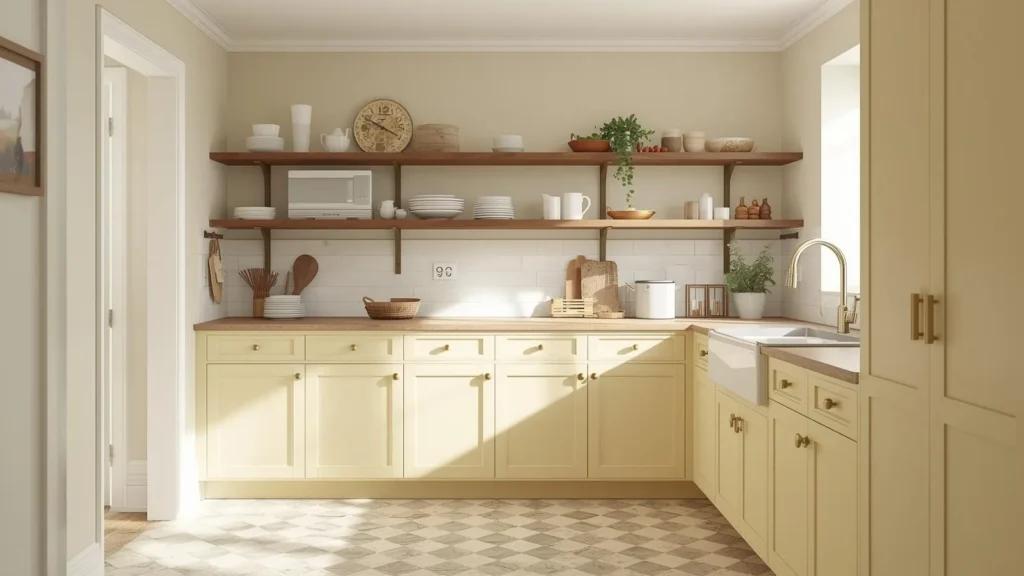
Should You Try Butter Yellows or Ochres?
Butter yellows sit in the warmest corner of the 2026 palette, and they’re polarizing. I’d recommend these only in specific situations: north-facing rooms, low-light kitchens, cottage-style homes, or spaces where you want genuine personality.
Modern versions are soft, not loud. Pale buttercream through honeyed gold works. Deeper mustard gets tricky fast and can date a kitchen within a few years, which is expensive to undo. Cabinet refacing averages $8,250 nationally (Fixr, 2026), and a full repaint runs around $940. Picking a trendy bold color that tanks your resale value is one of the most common remodeling mistakes.
Pair butter yellows with cream walls, walnut or oak details, checkerboard stone floors, or terracotta tile.
Why Is Stained Wood the Fastest-Growing Cabinet Finish?
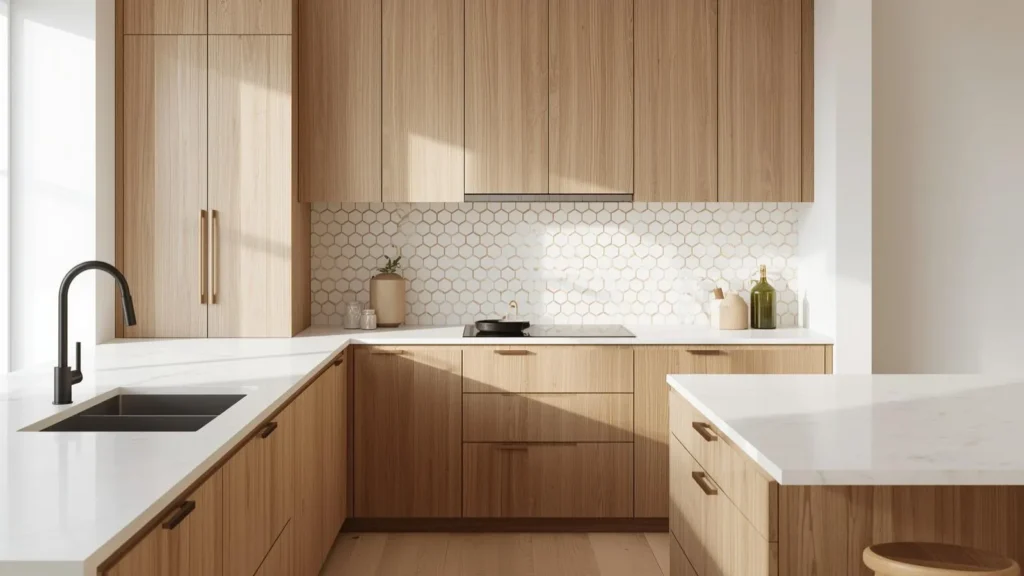
Stained wood is the story of 2026. The Houzz study puts wood cabinets at 29% of renovators, up six points from last year. The NKBA reports 59% of designers say wood grain cabinets are growing in popularity, outpacing painted finishes. White oak is the most-requested wood species at 51%.
The range runs from light, almost-raw finishes to gentle gray-brown washes and mid-tone walnut looks. Deep-penetration stains and hardwax oil finishes keep the grain visible and give kitchens a real-material character that paint can’t replicate. And here’s the contrarian angle most blogs won’t tell you: painted cabinets show every grease mark, scratch, and dust speck. Stained wood hides daily wear far better, which is why pros on contractor forums consistently recommend it over paint for families with kids.
Pair with soft white quartz counters, simple white tile or zellige backsplashes, matte black or brushed brass hardware, and warm white walls. If budget is a factor, pairing stock cabinet boxes with a quality stain finish can look custom at a fraction of the full kitchen remodel cost.
What Do the 2026 Cabinet Color Trends Really Tell Us?
The data points in the same direction. MasterBrand’s survey shows light-stained wood as the most-preferred finish, with off-white second and white third. Designers report a 15% increase in color on perimeter cabinetry. White and off-white are playing supporting roles now, not carrying the whole room.
Every major paint company’s 2026 Color of the Year falls within warm, nature-linked families. A khaki neutral, a smoky jade, an espresso brown, and an indigo blue. Not a single icy gray or stark white in the bunch.
The real takeaway for homeowners? A minor kitchen remodel (which includes cabinet color updates) returns roughly 113% of its cost at resale, per the 2025 Zonda Cost vs. Value Report. That’s the highest ROI of any interior upgrade. But the ROI only holds if you pick colors with staying power. Warm neutrals and medium wood tones lead the resale conversation right now. Trendy bold colors that date quickly can cost $3,000–$10,000+ to redo.
Working with a team that understands both design trends and ROI makes the difference between a cabinet color you love now and one that still works when you sell.
Frequently Asked Questions About Kitchen Cabinet Color Ideas
Should I paint my kitchen cabinets or replace them in 2026?
If your cabinet boxes are solid, professional painting ($940 average) or refacing ($8,250 average) saves 50–70% compared to full replacement ($8,000–$35,000+). The NKBA 2026 report shows wood-grain finishes are now preferred over painted for long-term durability. Painting makes sense for a color refresh, but many homeowners who try the DIY route end up paying again for professional correction within a year.
What kitchen cabinet colors have the best resale value?
Warm neutrals and medium wood tones lead for resale in 2026, according to both the Houzz and NKBA trend studies. A minor kitchen remodel that includes a cabinet color update returns roughly 113% of its cost, per the 2025 Zonda Cost vs. Value Report. Bold or trendy colors can hurt resale if they date quickly.
Do painted kitchen cabinets hold up over time?
Professional paint jobs last 5–10 years with proper prep and maintenance. DIY painting often fails within months due to chipping and peeling. Dark colors show wear fastest because every grease mark, scratch, and dust particle is visible. Contractors report that 70–80% of a quality cabinet paint job is prep work, not the actual painting.
How much does it cost to change kitchen cabinet color in 2026?
Professional cabinet painting averages $940 nationally (range $425–$1,465) as of March 2026, per Angi. Cabinet refacing, which gives you new doors and a new finish while keeping the existing boxes, averages $8,250 (range $3,000–$13,500). Full cabinet replacement with a new color runs $8,000–$35,000+ depending on stock vs. custom.
Are two-tone kitchen cabinets still popular in 2026?
Yes. The NKBA 2026 report found 57% of designers support two-tone or accent-color cabinets. The most common approach is a statement color on the island with a lighter or neutral perimeter. Sage greens and navy blues on islands paired with warm whites or creams on surrounding cabinets are among the most requested combinations.
What’s the most popular kitchen cabinet finish for 2026?
Light-stained wood is the number-one preferred finish in MasterBrand’s 2026 survey, followed by off-white in second and white in third. The Houzz 2026 study confirms wood cabinets now lead at 29% of renovators, while white dropped to 28%. White oak is the most-requested wood species at 51% per the NKBA.
What questions should I ask a contractor about cabinet paint or finish?
Ask about the full prep and curing process, the specific sheen they recommend for daily grease and heat exposure, and whether the finish carries a transferable warranty beyond one to two years. Contractors say most homeowners skip these questions and regret it. Also ask how the color will photograph in listing photos for your specific market if resale is a factor.

Michael Vale has over 5 years of experience helping clients improve their business visibility on Google. He combines his love for teaching with his entrepreneurial spirit to develop innovative marketing strategies. Inspired by the big AI wave of 2023, Michael Vale now focuses on staying updated with the latest AI tools and techniques. He is committed to using these advancements to deliver great results for his clients, keeping them ahead in the competitive online market.