
Bath Vs Shower: Costs, Resale Value & Which One Wins In 2026
A bath vs shower decision comes down to three things most homeowners underestimate: what it actually costs to install, how it affects your home’s resale price, and whether you’ll regret the choice five years from now. Showers cost less to install (roughly $6,000–$12,000 for a walk-in, per Angi’s 2026 data), use less water per session, and work better in tight layouts. Bathtubs cost about $2,000–$10,500 installed (Fixr, August 2025), use 35–50 gallons per fill, and still carry weight with buyers who have kids. Neither option is universally “better.” The right pick depends on your bathroom size, who lives in the house, and what the buyers in your market actually want.
A bath vs shower comparison boils down to this: showers prioritize speed, accessibility, and lower water bills, while bathtubs prioritize relaxation, family bathing, and buyer appeal in resale. The gap between them is narrowing fast as curbless showers gain ground in both new builds and remodels.
This article won’t cover decorative style preferences or color trends. That stuff changes every 18 months. What we’re covering here, cost data, ROI numbers, and conversion pricing, stays useful.
How Do Walk-In Showers and Bathtubs Actually Compare?
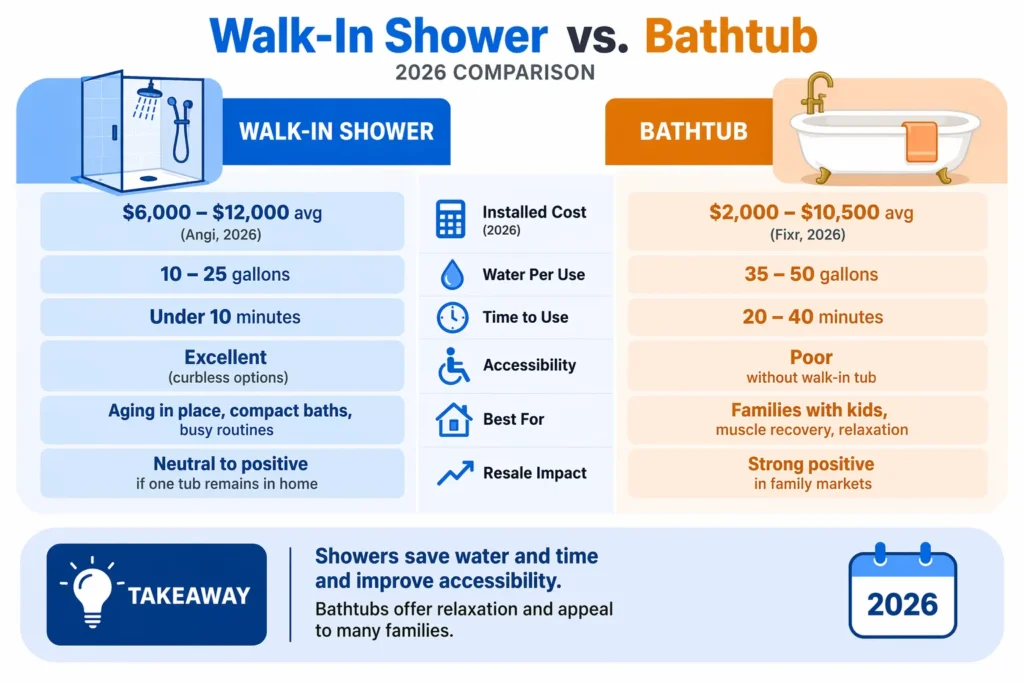
Showers win on efficiency. Bathtubs win on comfort and kid-friendliness. But the split goes deeper than that surface-level framing.
| Feature | Walk-In Shower | Bathtub |
| Installed Cost (2026) | $6,000–$12,000 avg (Angi) | $2,000–$10,500 avg (Fixr) |
| Water Per Use | 10–25 gallons | 35–50 gallons |
| Time to Use | Under 10 minutes | 20–40 minutes |
| Accessibility | Excellent (curbless options) | Poor without walk-in tub |
| Best For | Aging in place, compact baths, busy routines | Families with kids, muscle recovery, relaxation |
| Resale Impact | Neutral to positive if one tub remains in home | Strong positive in family markets |
Most articles treat this like a coin flip. It’s not. The NKBA’s 2026 Bath Trends Report (based on roughly 700 designer surveys, released November 2025) found that 55% of designers say clients now prioritize enlarging the shower over including a bathtub. That’s a shift. Five years ago, that number would’ve been inverted.
What Are the Pros and Cons of a Walk-In Shower?
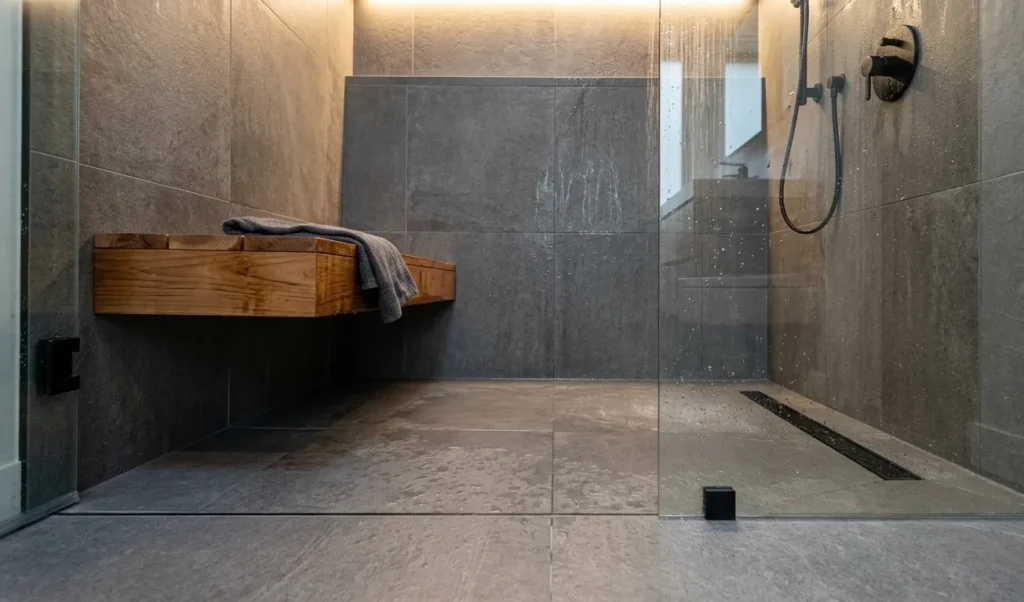
Walk-in showers are the faster, cheaper, and more accessible option for most households.
On the upside: they fit smaller bathrooms without cramping the layout, they’re safer for aging homeowners (no tub wall to climb over), and they support add-ons like rain heads, steam systems, and body jets. A curbless shower, in particular, checks both the modern-design and accessibility boxes. The 2024 International Plumbing Code even reduced the max showerhead flow rate to 2.0 GPM, which means newer models use even less water than the 2.5 GPM standard most people are used to.
The downside? You can’t bathe a toddler in a shower without a fight. And if your home has only one full bathroom and you rip out the tub, you might lose buyers when you sell. I’ve seen this play out dozens of times with clients. Glass enclosures also demand more upkeep (water spots and grout grime build up fast).
What Are the Pros and Cons of a Bathtub?
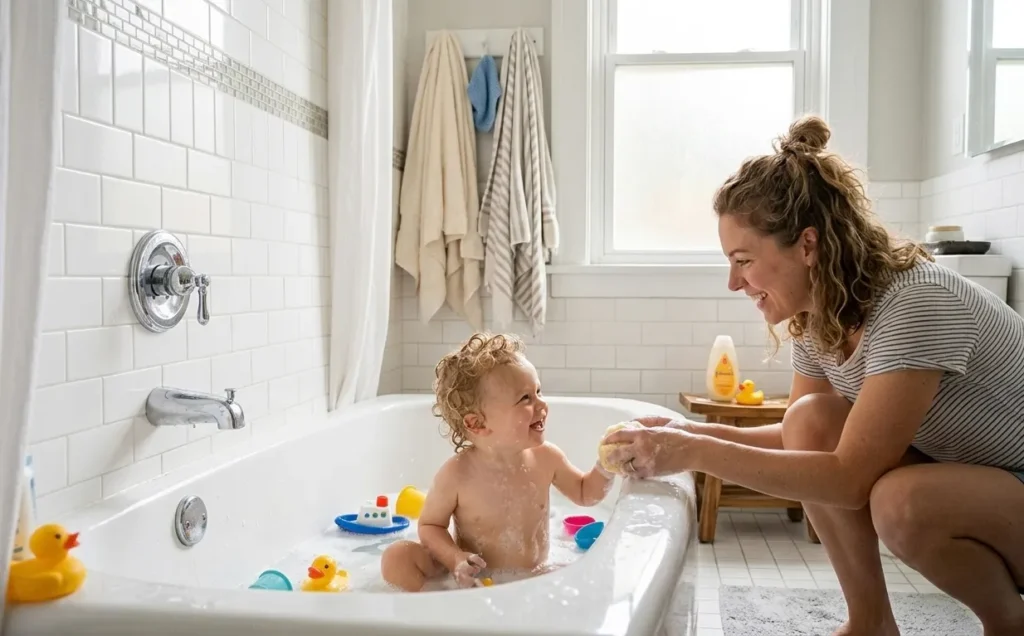
Bathtubs still own two categories: family bathing and relaxation.
For households with kids under six, a tub isn’t a luxury. It’s a daily tool. Soaking tubs and whirlpool models also serve real therapeutic purposes for people dealing with joint pain or muscle recovery. Freestanding tubs can anchor a primary bath visually, and they carry real resale weight in family-heavy markets.
But they eat space. A standard tub takes up about 13 square feet versus 9 for a shower. They use significantly more water. And for anyone with mobility concerns, stepping over a 14-to-16-inch tub wall is a fall risk that doesn’t get enough attention. Walk-in tubs solve the mobility problem but add $4,000–$15,000 to your budget and a bigger footprint to your floor plan. Bathrooms and kitchens are the two rooms where costs spiral fastest, and the reasons are similar. The same hidden cost drivers that inflate kitchen remodels (plumbing, cabinetry, labor) hit bathroom projects just as hard.
How Much Does a Bath vs Shower Cost in 2026?
Here’s where the “showers are cheaper” advice falls apart a little.
A basic bathtub replacement runs about $6,000 on average nationally (Fixr, 2025 data). A walk-in shower installation averages $9,000, with a typical range of $6,000–$12,000 (Angi, updated April 2026). Custom tiled walk-ins can push past $20,000.
The JLC/Zonda 2025 Cost vs. Value Report puts a full midrange bathroom remodel (which includes fixture replacement in a standard 5×7-foot bath) at $26,138 nationally. Universal-design remodels focused on accessibility average $42,183. Upscale bath remodels hit $81,612.
Where people get burned is the conversion. A tub-to-shower conversion averages $3,000–$4,000 according to Angi, Fixr, and HomeAdvisor. But contractors on Reddit and trade forums consistently report $2,000–$5,000 in hidden plumbing costs alone. Upsizing the drain, rerouting the trap arm, cutting into the main stack. None of that shows up in the “$3,000 kit” ads from national one-day remodel companies.
Actually, that framing isn’t quite right. The “one-day bath remodel” industry is the contrarian angle nobody writes about. Multiple 2025–2026 contractor threads document $10,000+ remediation bills after acrylic overlay systems installed by national brands (you know the ones) failed within 2–3 years from skipped waterproofing and poor substrate prep. If a company promises “one day” and a “lifetime warranty,” ask who’s installing it and whether they’re following full IPC waterproofing specs. Most aren’t.
| Project | National Average | Typical Range |
| Bathtub replacement | $6,000 (Fixr) | $2,000–$10,500 |
| Walk-in shower install | $9,000 (Angi) | $6,000–$12,000 |
| Tub-to-shower conversion | $3,000–$4,000 (Angi/Fixr) | $1,200–$15,000 |
| Midrange full bath remodel | $26,138 (JLC/Zonda 2025) | Varies by region |
Regional pricing matters too. Northeast and West Coast markets run 20–40% above these national averages due to permitting, union labor, and access constraints. Midwest and Southeast quotes typically land 15–25% below. If you’re watching the bottom line, there are proven ways to reduce remodeling costs without cutting corners on waterproofing or materials.
Does a Bathtub or Shower Add More Resale Value?
This is the question I get asked most, and the honest answer has changed.
The JLC/Zonda 2025 Cost vs. Value Report shows a midrange bath remodel recoups about 80% at resale ($20,915 on a $26,138 job). A universal-design bathroom (often shower-focused) recoups 61%. Upscale remodels only return 42%, which mirrors the same diminishing-returns pattern you see when deciding what adds the most value in a kitchen remodel.
For years, the standard advice was “always keep a tub for resale.” And there’s still truth to it. An older NAHB survey found that over 50% of buyers preferred a primary bath with both a tub and shower. But newer NKBA data shows the tide turning. More than half of designers report clients now choosing bigger showers over tubs.
Here’s the practical rule I’d give anyone: keep at least one bathtub somewhere in the home (ideally a secondary bathroom), and put the money into a well-built shower in the primary suite. That hybrid approach satisfies family buyers, aging-in-place buyers, and the growing group of people who just want a great shower. Homes that balance form and function in every room tend to perform best across buyer types.
If your home has only one bathroom, don’t remove the tub. Period. You’ll shrink your buyer pool by as much as 40% in family-oriented neighborhoods.
What Should You Know Before Converting a Tub to a Shower?
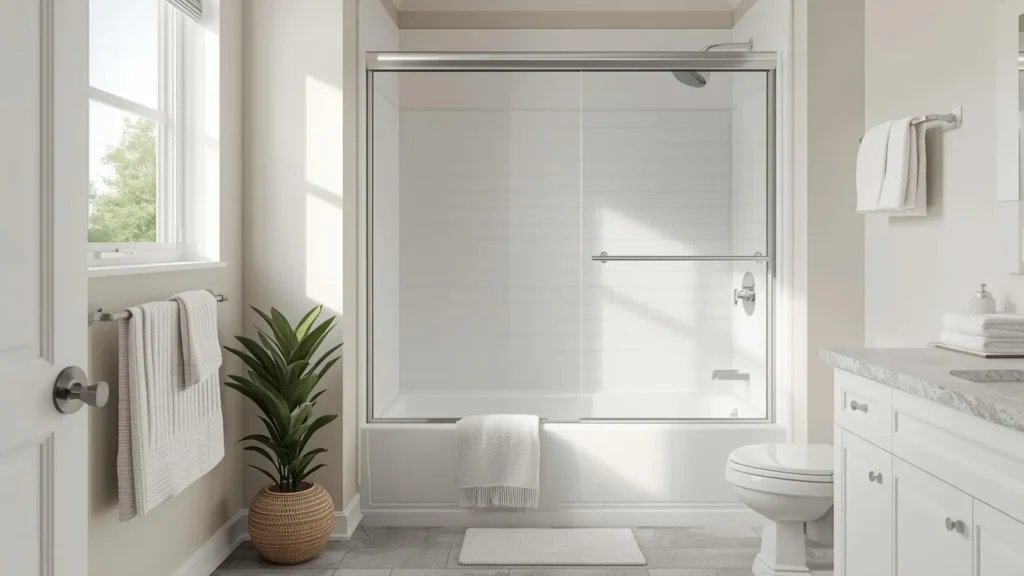
The simplest path is a tub-shower combo. You keep the tub footprint, add a showerhead and controls, and install a curtain or glass enclosure. It’s practical, it’s relatively affordable, and it preserves your resale safety net.
Going full walk-in shower is a bigger project. You’re looking at tub demolition, wall and floor retiling, full waterproofing, and potentially moving the drain. That drain relocation is the part most homeowners don’t plan for. Shower drains require a different trap-arm size and slope than tub drains, and skipping that step violates plumbing code and causes backups. Contractors who’ve handled complex remodeling projects will tell you the plumbing is where budgets blow up.
Budget at least $5,000–$8,000 for a professional tub-to-shower conversion with proper waterproofing. The $1,200 quotes you see online are for prefab kits installed over existing surfaces, and they’re the ones that fail.
What Does It Take to Switch from a Shower to a Bathtub?
This is the harder direction. A shower-to-tub conversion means demolishing the existing shower, reinforcing the subfloor (tubs filled with water are heavy), and rerouting plumbing to accommodate a different drain and overflow configuration. At a certain point, the scope starts to resemble a full gut, and you’re weighing whether to remodel or start fresh.
Drop-in tubs need a framed enclosure or platform built around them. Freestanding tubs need verified floor support and dedicated supply lines. Either way, you’re looking at a bigger footprint and a higher price tag than the reverse conversion.
In primary suites with enough space, many homeowners keep both. That’s the move if your remodeling budget allows it. But if you’re choosing one or the other in a single-bath home, a tub-shower combo gives you the most flexibility without the full teardown.
Frequently Asked Questions About Bath vs Shower
How much does it cost to convert a bathtub to a shower in 2026?
A tub-to-shower conversion averages $3,000–$4,000 nationally according to Angi and Fixr (2025–2026 data). But hidden plumbing costs (drain upsizing, trap-arm rerouting, subfloor work) add $2,000–$5,000 in many cases. Budget $5,000–$8,000 total for a professional job with proper waterproofing.
Will removing my bathtub hurt resale value?
It depends on your home’s bathroom count. Removing the only tub in a single-bath home can turn off up to 40% of buyers in family markets. But if you have two or more bathrooms, converting one tub to a walk-in shower is often a net positive. The NKBA’s 2026 report found 55% of designers say clients now prefer larger showers over tubs.
Do showers or bathtubs use more water?
Bathtubs use significantly more. A standard bath fills with 35–50 gallons. A 10-minute shower at 2.0 GPM (the 2024 IPC maximum for new showerheads) uses about 20 gallons. Over a year, switching from daily baths to showers can cut your water use by 40–60%.
What’s the ROI on a bath vs shower remodel?
A midrange bathroom remodel recoups about 80% of its $26,138 cost at resale, per the JLC/Zonda 2025 Cost vs. Value Report. Universal-design (shower-focused) remodels return 61%. Upscale bath remodels return only 42%. The best ROI comes from mid-range projects, not luxury buildouts.
Should I keep a bathtub if I have young kids?
In most cases, yes. Bathing children under six in a shower is difficult and impractical. Many families now install the tub in a secondary bathroom and put a larger shower in the primary suite. The NKBA’s 2026 trends data confirms this hybrid approach is growing among designer-led remodels.

Michael Vale has over 5 years of experience helping clients improve their business visibility on Google. He combines his love for teaching with his entrepreneurial spirit to develop innovative marketing strategies. Inspired by the big AI wave of 2023, Michael Vale now focuses on staying updated with the latest AI tools and techniques. He is committed to using these advancements to deliver great results for his clients, keeping them ahead in the competitive online market.