
How Long Should You Live In Your House Before Remodeling In 2026
You just got the keys. Boxes are stacked in the hallway. And you’re already mentally ripping out that kitchen. I get it. But how long should you live in your house before remodeling? For most homeowners, the sweet spot is 4 to 6 months. That window gives you time to learn how you actually use the space, rebuild savings after a down payment, and plan a project that solves the right problems instead of the obvious ones. According to the Joint Center for Housing Studies at Harvard, 26 million owners made home improvements in 2023, and recent movers spent 51% more than long-term owners on discretionary projects. That extra spending isn’t always smarter spending. Rushing in before you’ve lived with the house almost always means you’re fixing what bugs you today instead of what will matter a year from now.
This article won’t cover cosmetic updates like painting or swapping light fixtures. Those are fine to do on day one. We’re talking about major remodeling projects where you’re moving walls, replacing kitchens, or gutting bathrooms.

Why Living in Your Home First Changes Everything
The biggest risk of remodeling too soon isn’t the money. It’s solving the wrong problem.
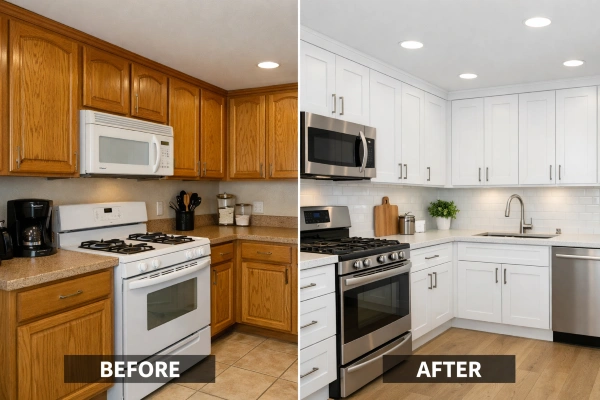
Here’s what I’ve seen play out dozens of times. A homeowner closes on a house with a dated kitchen. They hate the cabinets, so they schedule a remodel within a month. New cabinets go in. New countertops. Looks great. Then six months later, they realize the layout is the actual issue. The dishwasher should be on the other side of the sink. There’s no prep space near the stove. The kitchen is walled off from the living room, and they can’t see their kids while cooking. They spent $27,000 (the national average for a mid-range kitchen remodel, per Fixr 2026 data) to make a bad layout look prettier.
Living in the house for a few months changes what you prioritize. You might walk in thinking the kitchen is the problem and discover six weeks later that your family actually needs a bathroom remodel more. Or that a basement office would change your daily routine. The NARI 2025 Remodeling Impact Report found that functionality drives 28% of remodeling decisions, more than any other single reason. But you can’t evaluate function until you’ve lived with the space.
One more thing. If you’re planning to stay fewer than 7 years, I’d rethink any major interior project entirely. The Zonda/JLC 2025 Cost vs. Value Report shows that mid-range kitchen remodels recoup only about 49–51% at resale. You need years of personal enjoyment to make that math work.

Does Rushing a Remodel Cost You More?
Almost always, yes. And not just because of bad design decisions.
Good remodeling projects take time to plan. You need to meet with multiple contractors, compare written estimates, evaluate design options, and pull permits. Skipping that process because you “just want it done” is one of the most common remodeling mistakes I see. Contractor forums are full of horror stories where homeowners skipped permits or hired a cash-only handyman to save time. The fix-it costs later? Anywhere from $10,000 to $50,000, plus potential insurance denial if something goes wrong.
There’s a labor component too. The Home Builders Institute reported in October 2025 that the skilled labor shortage costs residential construction $10.8 billion per year. That translates to real delays for homeowners. If you start planning during your first week in the house, you’re competing for contractor time without a clear scope, and you’ll pay for that chaos.
A reputable design-build firm will introduce ideas you wouldn’t have considered on your own. Knowing the right sequence for a kitchen remodel, for example, can save thousands in avoided rework. But that collaboration takes time to develop, and it works better when you know what you actually need.
Also, if you’re doing a major remodel (full kitchen, multiple bathrooms, or an entire floor), most contractors will ask you to move out during construction. That’s a safety issue, not a preference. Moving into a new house and immediately needing temporary housing adds stress and cost. Waiting a few months lets you save for a rental during the remodel and build a contingency fund for the surprises that show up behind every wall.
Give Yourself a Break After Buying
Buying a home is exhausting. Months of searching, securing financing, packing, cleaning, negotiating, closing. Then the moving day itself. The NAR 2025 report shows that sellers lived a median of 10 years in their previous home before going through that process again. It’s a big deal.
Starting a remodel on top of that is stacking one of the most stressful life events on top of another. I’ve watched homeowners burn out hard trying to manage a renovation while still unpacking boxes. The projects drag, decisions get made out of frustration instead of intention, and the results show it.
Give your brain a few months. Let the adrenaline of the purchase fade. You’ll make better choices with a clear head and a settled household.
How Long Should You Actually Wait?
For most homeowners, 4 to 6 months hits the right balance. Here’s why that timeline works.
The first two months are about settling in. You’re unpacking, learning the house’s quirks, figuring out traffic patterns. Months three and four are when the real observations start. You notice the morning light never reaches the kitchen. You realize the master bath layout wastes space. You feel the draft from those old windows every time the heat kicks on. By month five or six, you’ve got a clear picture of what needs to change and (just as important) what doesn’t.
Smaller projects like a bathroom refresh might only take a couple months of thought. But a kitchen remodel or home addition? That’s 6+ months of planning and permitting before construction even starts. Timing your remodel to the right season can also affect contractor availability and pricing.
Here’s a quick breakdown of what can wait and what’s fine to tackle right away:
| Do Right Away | Wait 4-6 Months |
| Paint, light fixtures, hardware swaps | Kitchen remodel |
| Smart thermostat or doorbell install | Bathroom gut renovation |
| Landscaping and curb appeal fixes | Basement finishing |
| Weather stripping and caulking | Room additions or open-concept conversions |
| Minor safety repairs (smoke detectors, handrails) | Whole-home electrical or plumbing upgrades |
The industry consensus, backed by JCHS data showing average owner tenure at 16.1 years, is that the longer you plan to stay, the more a major remodel pays off. If you’re looking at 7 to 10+ years in the home, that waiting period is a small price for a much better outcome.

What to Look for When You’re Ready to Hire
Once you’ve lived in the space and know what you want, finding the right contractor becomes the priority. Don’t just go with the first bid. Get at least three written estimates. Ask who their subcontractors are, whether those subs carry their own insurance, and what their change-order policy looks like. These are questions most homeowners never ask, and they’re the ones that matter most when things go sideways.
Look for a contractor who specializes in your type of project. A firm that does high-value home remodels will approach the work differently than a general handyman. Check online reviews, ask for references from projects similar to yours, and verify permits were pulled on past jobs.
The remodeling market is big. NAHB reports 128,000 remodeling firms were operating at the start of 2025, up from 69,000 in 2000. You have options. Working with a team that pairs strong project management with clear communication makes the difference between a remodel you love and one you regret.
FAQs
How long should you live in a house before remodeling the kitchen?
Most homeowners benefit from waiting at least 4 to 6 months before starting a kitchen remodel. The national average for a mid-range kitchen remodel is roughly $27,000 (Fixr, 2026). Spending a few months cooking and living in the space helps you identify layout problems you wouldn’t notice during a walkthrough.
Does remodeling right after buying a home hurt your return on investment?
It can. The 2025 Zonda/JLC Cost vs. Value Report shows mid-range major kitchen remodels recoup only 49–51% at resale. If you plan to stay fewer than 7 years, most interior projects won’t break even financially. Waiting helps you pick projects with better long-term payoff.
What remodeling projects are fine to do right away?
Cosmetic updates like painting, swapping hardware, installing a smart thermostat, and fixing minor safety issues (smoke detectors, loose handrails) don’t require a waiting period. These projects cost little, don’t involve permits, and won’t conflict with a larger remodel later.
How does the labor shortage affect remodel timelines in 2026?
The Home Builders Institute reported in October 2025 that the skilled labor shortage drags $10.8 billion annually from residential construction through delays and lost productivity. Homeowners should add 20–50% buffer time to any project estimate and book contractors well in advance.
Should you remodel if you’ve only lived in your house for 2 years?
For most interior projects, 2 years is early unless you plan to stay at least 7 more. Exterior upgrades like garage door replacement (267.7% cost recouped per the 2025 Cost vs. Value Report) or a steel entry door are exceptions. Those pay back quickly regardless of timing.
Can you remodel before moving into a new home?
You can, and for gut renovations it sometimes makes sense. But you lose the benefit of learning how the space functions for your household. Pre-move-in remodels work best when you’re doing structural work (fixing a foundation, upgrading electrical panels) that would be disruptive to live through.
How much should you budget for unexpected costs during a remodel?
Set aside 15–20% of your total project budget as a contingency fund. Moving walls, plumbing, and electrical lines regularly exposes hidden problems like water damage, outdated wiring, or code violations. Contractor forums report fix-it costs of $10,000 to $50,000 when homeowners skip permits or start without a full scope.

Michael Vale has over 5 years of experience helping clients improve their business visibility on Google. He combines his love for teaching with his entrepreneurial spirit to develop innovative marketing strategies. Inspired by the big AI wave of 2023, Michael Vale now focuses on staying updated with the latest AI tools and techniques. He is committed to using these advancements to deliver great results for his clients, keeping them ahead in the competitive online market.