
4 Common Types Of Remodeling Projects In 2026 | Costs & ROI
The four common types of remodeling projects are must-have repairs, curb appeal upgrades, investment remodels, and specialty builds. Must-haves cover structural needs like roofing and plumbing. Curb appeal projects improve exterior appearance and outdoor livability. Investment remodels target kitchens, bathrooms, and additions for maximum resale value. Specialty projects create personalized spaces like home offices or media rooms.
Americans spent roughly $603 billion on remodeling in 2024, according to NARI’s Remodeling Impact Report. Harvard’s Joint Center for Housing Studies projects that spending will reach $522 billion annually by late 2026. The money is flowing. But not every project gives you the same return.
I’ve watched homeowners pour $80,000 into a major kitchen overhaul and recover barely half at resale. I’ve also seen a $12,000 bathroom refresh bring back 80%. The difference comes down to knowing which category your project falls into.
This article won’t cover design trends or DIY tutorials. We’re breaking down each remodel type so you can match your budget to the projects that matter for a remodeling company focused on results.

Must-Have Remodeling Projects You Can’t Ignore
Must-have remodels are the ones you don’t choose. Something breaks, fails inspection, or puts your family at risk. You fix it.
Roofing, siding, and gutters sit at the top. A failing roof doesn’t wait for your renovation wish list. Water gets in, mold follows, and a $15,000 roof replacement balloons into a $40,000 remediation job.
Windows and doors fall here too. Old single-pane windows aren’t just ugly. They’re bleeding energy. The U.S. Department of Energy estimates that heat gain and loss through windows accounts for 25–30% of residential heating and cooling costs. New requirements under the 2024 IRC (adopted across many jurisdictions in 2025–2026) have raised energy performance standards, so upgrades may not be optional much longer.
Flooring is another must-have mistake for cosmetics. If you’ve got kids, dogs, or both, worn-out flooring is a safety issue. Warped boards and loose carpet edges cause falls.
Then there’s the handyman work nobody wants to fund. Electrical panel upgrades, plumbing repairs, ongoing maintenance. NAHB data from early 2026 shows 61% of builders cite labor cost and availability as a top challenge. Waiting only makes these fixes more expensive.
Curb Appeal Projects That Add Real Value
Curb appeal isn’t about impressing the neighbors. It’s about first impressions that translate to dollars at resale, and outdoor space you use while you live there.
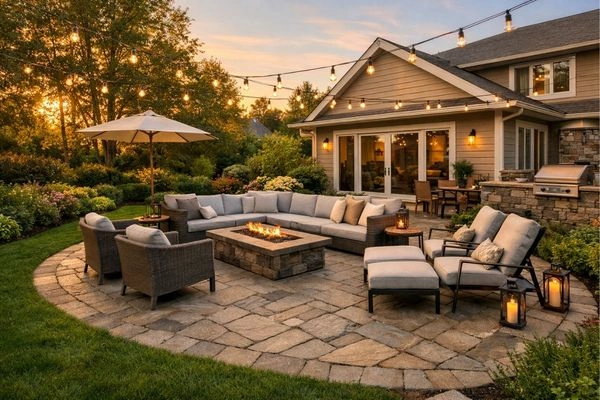
- Hardscaping and patios are one of the better returns in exterior work. Pavers, stone walkways, retaining walls, outdoor living areas. The 2025 Cost vs. Value Report from Zonda shows well-executed exterior projects recouping above 60% in most markets. Pacific and West South Central regions perform even stronger.
- Fences are the one I argue about most. Some people insist they’re a must-have. If your city requires fencing for pools or you have dogs, sure. But most of the time, a fence is a curb appeal play. The material matters less than proper installation.
- Porches and decks sell houses. Built-in seating, good lighting, a heater for cooler climates. The 2025 Cost vs. Value data pegs a composite deck at roughly 63% cost recovery nationally.
My contrarian take: most homeowners overspend on landscaping and underspend on hardscaping. A $20,000 softscape needing $3,000 a year in upkeep is a liability. Spend that on a patio you’ll use for 20 years instead.
Which Investment Remodels Return the Most?
This is where the big money goes, and where the biggest mistakes happen.
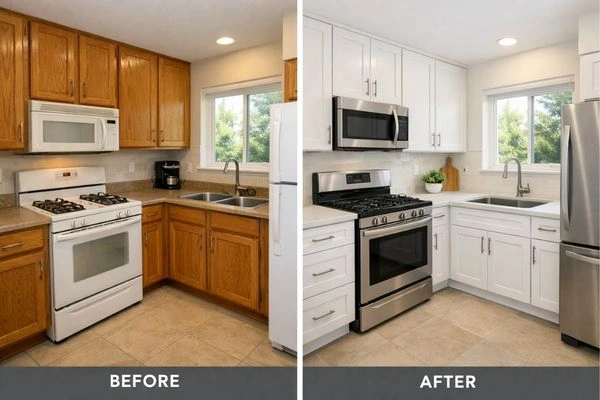
Kitchens and bathrooms are the two most-renovated rooms in American homes. The 2025 Houzz & Home Study (surveying nearly 11,000 homeowners) found both tied at 24% of all renovation activity. NAHB’s Q4 2025 Remodeling Market Index ranked bathroom remodels #1 and kitchen remodels #2 among the most common projects reported by contractors.
But “most popular” doesn’t mean “best return.”
Kitchen remodel costs and ROI (2025 national averages):
| Project Type | Average Cost | Resale Value | % Recouped |
| Minor kitchen remodel (midrange) | $28,458 | $32,141 | 113% |
| Major kitchen remodel (midrange) | $82,793 | $42,130 | 51% |
| Upscale kitchen remodel | $164,104 | ~$59,000 | 36% |
That minor remodel line is the one to circle. You spend less and actually make money back. Go big, and you’re staring at a $40,000 gap.
Bathroom remodel costs and ROI:
| Project Type | Average Cost | % Recouped |
| Midrange bath remodel | $26,138 | 80% |
| Small primary bath (Houzz median) | $17,000 | Varies |
Houzz data shows the median small primary bathroom jumped 13% year-over-year to $17,000 in 2024.
Room additions and whole-house remodels complete this category. Adding square footage boosts value when done with proper permits. NAHB ranks whole-house remodeling #3 and room additions #4 in national frequency. Basement finishes run about $52,012 and return around 71%.
The mistake I see constantly: homeowners picking high-end finishes for a neighborhood that can’t support the price point. Match your spend to your market, not your taste.

Are Specialty Remodeling Projects Worth the Spend?
These are the want-to-haves. You don’t need a home theater. But you might really want one.
Home theaters, wine cellars, dedicated game rooms. These rarely show strong ROI, and most appraisers won’t give you dollar-for-dollar credit. But thinking about them through a resale lens misses the point.
If you’re staying 10+ years, a well-built home office that makes remote work comfortable pays for itself in ways an appraiser can’t measure. Houzz’s 2025 study flags dedicated workspaces and aging-in-place features as growing trends. With hybrid work sticking around, a proper office isn’t a luxury for a lot of families anymore.
Don’t finance specialty projects expecting a return. Pay for them because they improve your daily life. And don’t sacrifice a needed roof replacement or bathroom update to fund a wine cellar. Get the must-haves and investments handled first.
Material costs rose 3.5% year-over-year by late 2025, with metals hit hardest by expanded tariffs (NAHB, January 2026). Lock in pricing early or include an escalation clause.
Find the Right Team for Your Next Remodel
The gap between a remodel that adds value and one that drains your savings comes down to who does the work. Ask the questions most homeowners skip. What’s your change-order process? Who pulls permits? What does the labor warranty cover versus materials only?
Working with a team that knows remodeling inside out means these questions get answered before demolition day. Get a free estimate, stack it against other bids, and don’t default to the lowest number. The cheapest option rarely stays cheap once the project wraps.
Frequently Asked Questions About Types of Remodeling Projects
How much does a typical kitchen remodel cost in 2026?
A minor midrange kitchen remodel averages about $28,458 nationally, according to the 2025 Cost vs. Value Report. Major midrange kitchen remodels jump to $82,793. The minor version recovers 113% at resale, while the major version returns just 51%. Your region matters too. New England minor kitchen remodels cost slightly more ($28,936) but recoup 134%.
What are the most common types of remodeling projects?
The four most common types of remodeling projects are bathroom remodels, kitchen remodels, whole-house renovations, and room additions. NAHB’s Q4 2025 Remodeling Market Index ranked them in that order based on contractor-reported frequency. Bathroom remodeling scored 4.1 out of 5 for how often contractors see the work, with 73% calling it common to very common.
Do curb appeal projects increase home value?
Yes, but the return depends on the project. Composite deck additions recover about 63% of their cost nationally. Hardscaping projects (patios, walkways, retaining walls) tend to perform well because they add usable outdoor space. Softscaping and landscaping, on the other hand, require ongoing maintenance costs that reduce their long-term value.
Which remodeling projects give the best return on investment?
Minor kitchen remodels lead with 113% cost recovery nationally. Midrange bathroom remodels return about 80%. Basement finishes come in around 71%. The worst performer among common projects is the upscale kitchen remodel at just 36% recovery. All figures come from the 2025 Cost vs. Value Report covering 119 U.S. markets.
How do 2024 building codes affect remodeling projects in 2026?
Many jurisdictions adopted the 2024 International Residential Code in 2025 and 2026. Changes include raised minimum ceiling heights (7’6″ in living spaces, up from 7’0″), updated egress window requirements, and stricter standards for additions and ADUs. Denver adopted the new codes in June 2025. Check your local building department before starting any project.
Is a whole-house remodel worth it compared to selling?
It depends on your equity and local market. NAHB ranks whole-house remodeling as the third most common project type nationally, which suggests many homeowners prefer renovating over moving. With the median U.S. home now 41 years old, full renovations often cost less than buying new at current mortgage rates. Run the numbers for your specific situation before deciding.
Should I hire a contractor or DIY my remodel?
For painting and simple cosmetic updates, DIY can save 50% or more. For anything involving plumbing, electrical, or structural work, hire a licensed professional. Houzz’s 2025 data shows 90% of renovating homeowners hire pros. The risk of code violations, voided insurance, and expensive redo work makes DIY a bad bet on complex jobs.

Michael Vale has over 5 years of experience helping clients improve their business visibility on Google. He combines his love for teaching with his entrepreneurial spirit to develop innovative marketing strategies. Inspired by the big AI wave of 2023, Michael Vale now focuses on staying updated with the latest AI tools and techniques. He is committed to using these advancements to deliver great results for his clients, keeping them ahead in the competitive online market.