
How To Remodel A Bedroom In 2026: A Step-By-Step Guide
A bedroom remodel follows five phases: planning and budgeting, demolition, electrical and structural work, surface finishing (drywall, flooring, paint), and furnishing. The national average cost for a professional bedroom remodel is $20,000, with most projects falling between $12,000 and $28,000 according to Angi’s March 2026 data. Timelines range from 3 to 6 weeks for a mid-range project. Cosmetic-only refreshes (paint, flooring, fixtures) can come in under $7,000, while high-end remodels with built-ins and smart systems run $30,000 to $40,000 or more.
If you’re reading this, your bedroom probably bugs you. Maybe it’s the carpet from 2009. Maybe the outlets are all in the wrong spots for how your furniture sits now. Whatever the reason, a bedroom remodel is one of the more satisfying home projects you can take on because you see and feel the results every single day.
I won’t cover ensuite bathroom additions or full bedroom additions here. Those are separate animals with different budgets, permits, and timelines. This guide is about transforming the bedroom you already have.
What Should You Do Before Touching a Single Wall?
The planning phase is where most people either set themselves up for success or start a chain of expensive mistakes. I’ve seen homeowners skip straight to picking paint colors and end up $4,000 over budget by week two.
Clear the Room and Measure Everything
You can’t plan a remodel around furniture. Pull everything out. Every nightstand, every lamp, every piece of wall art. An empty room tells you things a furnished one hides: water stains along the baseboard, cracks in the drywall near the window, outlets hidden behind a dresser for the last decade.
Grab a tape measure and write down the room’s length, width, and ceiling height. Note window and door locations, outlet positions, and any built-in features. These numbers drive every decision that follows, from furniture sizing to flooring quantities.
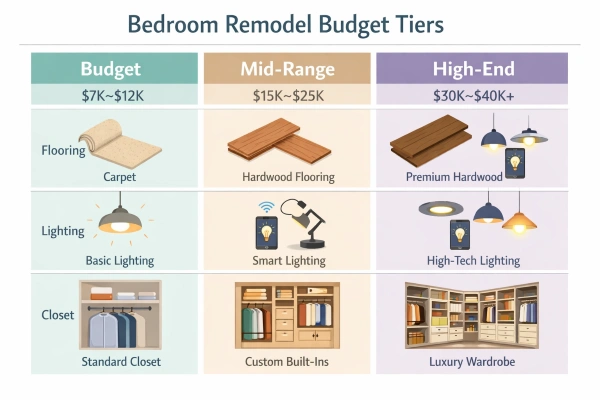
How Much Does a Bedroom Remodel Actually Cost in 2026?
This is the question everyone asks first, and the answer depends almost entirely on scope.
Angi’s 2026 cost data breaks it down by room size for a typical professional remodel:
| Room Size (sq ft) | Cost Range |
| 80 sq ft | $7,800–$11,300 |
| 100 sq ft | $12,100–$14,500 |
| 150 sq ft | $18,000–$22,000 |
| 170 sq ft | $19,400–$25,100 |
| 220 sq ft | $28,000–$34,300 |
| 250 sq ft | $31,800–$41,500 |
Fixr reports a slightly higher national average of $21,000 for a 12×18-foot bedroom with hardwood floors, a custom closet, crown molding, and a new bed frame. Their low-end estimate for a basic 10×10 room with carpet and paint sits around $7,000.
Here’s the part most articles skip. Regional differences are real, and they’re big. Labor and materials run 30–50% higher in the Northeast and West Coast compared to the Midwest and South. A $20,000 project in Houston might cost $28,000 or more in Boston for the same scope.
Build a 15–20% contingency buffer into whatever number you land on. Hidden problems behind walls (old wiring, moisture damage, inadequate insulation) show up in roughly one out of every three bedroom remodels I’ve been involved with. That buffer isn’t optional. It’s the difference between finishing the project and running out of money with your flooring half-installed.
Map Out Your Layout on Paper First
Sketch your room dimensions on graph paper or use a free room planner app. Place your bed first since it takes up the most space. Then figure out where nightstands, a dresser, and any seating will go. Mark outlet and switch locations on your sketch and decide now whether they need to move.
This step sounds basic, but it prevents the most common mid-project headache: realizing your new king-size bed blocks a closet door, or that the only spot for your reading chair has zero nearby outlets.
Collect Inspiration, But Don’t Copy It
Browse design sites and save images that catch your attention. After you’ve saved 15 or 20, look for patterns. You’ll probably notice you keep gravitating toward the same color family, the same flooring type, or the same general feel.
Use those patterns to build a direction, not a blueprint. Copying someone else’s room usually disappoints because their space has different dimensions, different light, and a different budget. According to the Houzz 2026 U.S. Renovation Plans Report, 93% of homeowners planning renovations this year intend to hire professionals. If you’re among them, a curated inspiration folder makes those early conversations with contractors dramatically more productive.
Demolition and Construction: The Messy Middle
Once your plan is locked, you tear out the old stuff and start building toward the new. This phase is loud, dusty, and temporarily makes your house worse before it gets better. But it sets the bones for everything that follows.
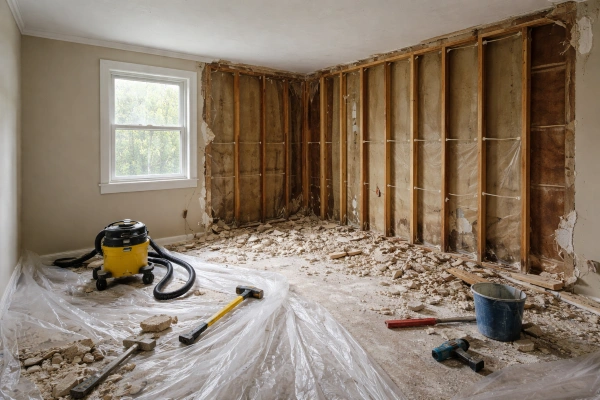
How Do You Strip a Bedroom Safely?
Demo isn’t just swinging a hammer. Peel wallpaper carefully. Remove baseboards and trim in full pieces if you might reuse them (label the backs with painter’s tape so you know which wall they came from). Cover anything staying in the room, including closet interiors, with plastic sheeting.
Dispose of debris responsibly. Most municipalities charge $25–$75 for a dump run, or you can rent a small dumpster for $200–$400. Usable items like old light fixtures or hardware can go to a Habitat for Humanity ReStore instead of a landfill.
One thing I wish more homeowners understood: rushing demolition creates extra work. I’ve watched people rip out baseboards and gouge the drywall behind them, then spend $300 patching damage that didn’t need to happen.
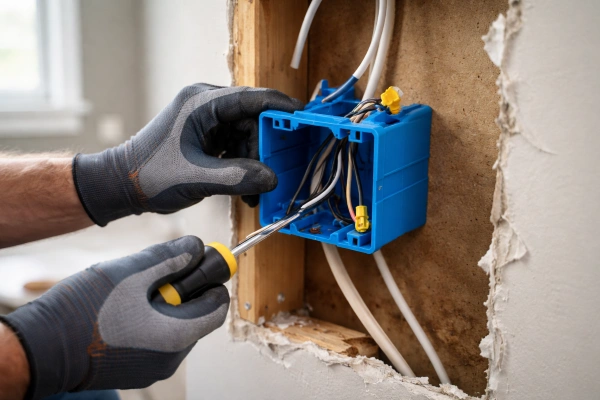
Electrical and Plumbing Work Isn’t DIY
Move outlets and switches now, before new drywall goes up. If your new layout puts the bed on a different wall, you’ll want outlets flanking both nightstands. Ceiling fan or overhead fixture locations should be set during this phase too.
Hire a licensed electrician. Full stop. According to the 2026 NEC (National Electrical Code), which multiple states are now adopting, bedrooms have updated requirements for GFCI protection, receptacle spacing, and load calculations. A homeowner running new wiring without a permit isn’t just risking a bad connection. They’re risking costly mistakes that compound over time and can void your homeowner’s insurance.
Permit costs for electrical work in a bedroom remodel typically range from $450 to $2,800, per Angi’s 2026 data. It’s not cheap. But an insurance claim denied because of unpermitted electrical work costs infinitely more.
When Do Structural Changes Make Sense?
Not every bedroom remodel needs structural work, and I’d argue most don’t. Moving or removing a wall, adding a window, or expanding a closet opening requires a licensed contractor, engineer review (for load-bearing walls), and building permits.
The cost jump is significant. A cosmetic remodel might run $7,000–$12,000, but adding structural changes can push the total past $25,000 quickly. The payoff matters too. The NARI/NAR 2025 Remodeling Impact Report gave closet renovations an 83% cost recovery rate and primary bedroom suite additions a perfect 10 out of 10 “Joy Score” for homeowner satisfaction. But those same additions only recoup 32–54% of their cost at resale.
So structural changes make sense when you plan to stay in the home and they fix a real functional problem. If you’re remodeling to sell, skip the wall removal and focus on finishes.
Drywall Installation and Finishing
Hang new drywall sheets where needed. Apply joint compound and tape at the seams, let it dry at least 24 hours, then sand smooth. Repeat for two to three coats. This process takes patience, and cutting corners shows. Uneven walls telegraph through paint, especially in a room where you’re lying in bed staring at them at eye level.
If your existing walls are in decent shape and you didn’t do structural or electrical work that opened them up, you might not need new drywall at all. A skim coat over minor imperfections is faster and cheaper.
Finishing Work That Makes or Breaks the Room
The heavy construction is done. Now comes the work that people actually see. And honestly, this is where the real value of a remodel shows up.
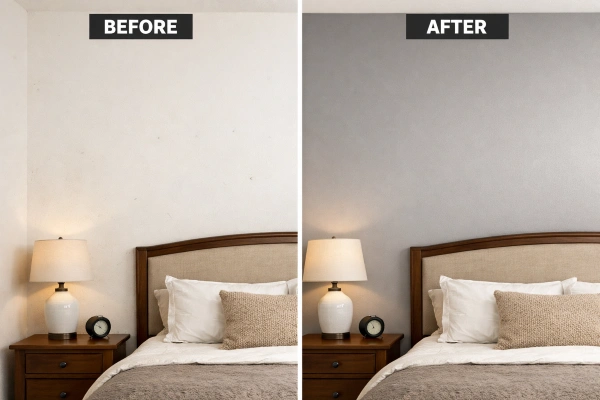
Why Does Paint Matter More Than You Think?
Paint is the highest-impact, lowest-cost change in any bedroom remodel. For a 150-square-foot room, you’re looking at $500–$1,400 depending on whether you DIY or hire a pro (Fixr 2026 data). That’s a fraction of the total budget for something that controls how the entire room feels.
Prime first, always. Primer helps paint stick and keeps colors true, especially if you’re covering a dark color with something lighter. Pick a finish: flat or matte for ceilings, eggshell or satin for walls. Semi-gloss on trim for durability.
Here’s my contrarian take: accent walls are mostly a waste of time in bedrooms. They made sense ten years ago. Now they tend to date a room faster than a consistent color scheme. If you want visual interest on one wall, try a textured plaster or a subtle tone-on-tone treatment instead.
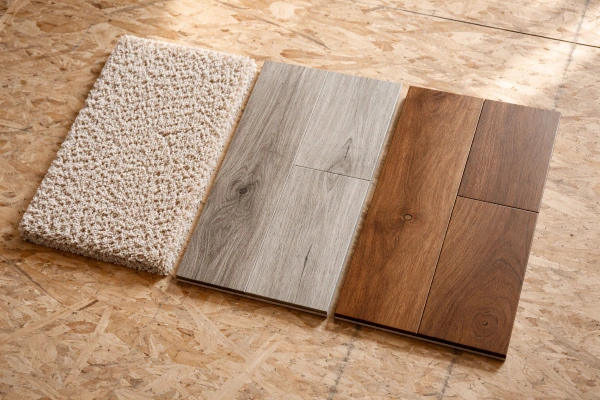
Picking the Right Flooring for a Bedroom
Your flooring choice affects comfort, noise, allergies, and how often you need to replace it. Here’s a cost and lifespan comparison for a 150-square-foot bedroom based on Fixr’s 2026 numbers:
| Flooring Type | Cost (150 sq ft) | Lifespan |
| Carpet | $980–$1,680 | 5–10 years |
| LVP / Vinyl Plank | $600–$2,000 | 10–20 years |
| Hardwood | $2,800–$6,400 | 20–50+ years |
Carpet feels warm and absorbs sound, which matters in bedrooms. But it traps allergens and wears out faster than hard surfaces. LVP has become the workhorse option because it’s waterproof, durable, easy to install, and works in humid climates where cheap carpet can develop mold within a few years.
Hardwood is the long game. Costs more upfront but lasts decades and can be refinished multiple times.
Whatever you pick, check your subfloor first. It needs to be clean, dry, and level. A $5,000 floor installed on a bad subfloor will look worn within a year, and that’s not the floor’s fault.
Trim and Molding: Small Details, Big Difference
Baseboards cover the gap between your walls and floor. Crown molding connects walls to the ceiling and makes a room feel more finished. Fresh trim work is the line between a room that looks professionally remodeled and one that looks like a DIY project.
Paint or stain your trim to coordinate with wall colors and flooring. And take your time with mitered corners. Bad corner joints are visible from across the room and they’ll bother you every time you notice them. The proper sequence for finishing a room puts trim after paint and flooring, which lets you cover any gaps left by those installations.
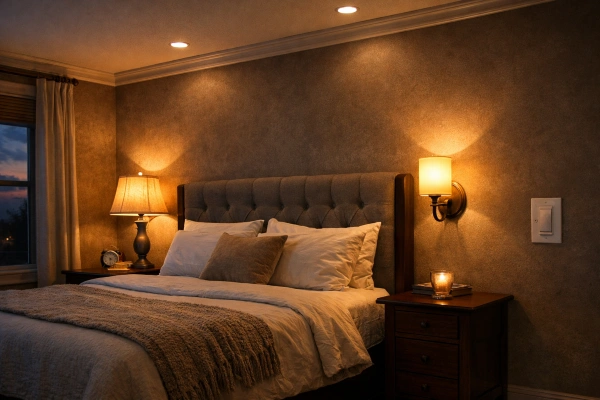
How Should You Layer Bedroom Lighting?
Good bedroom lighting uses multiple sources at different heights. Overhead fixtures provide general brightness. Wall sconces or bedside lamps handle reading and tasks. And dimmer switches let you control intensity throughout the day.
Basic recessed lighting for a bedroom runs $400–$1,100. Smart lighting systems cost $500–$2,200 but can be controlled by phone or voice, adjust color temperature, and save energy over time (Fixr 2026 data). Fair warning on smart lighting: installers report frequent wiring compatibility issues in homes built before 2000, and app connectivity can be unreliable. If your home is older, budget extra for an electrician to troubleshoot integration.
The right lighting setup lets your bedroom shift from bright and energizing in the morning to dim and calm at night. Most people underinvest in bedroom lighting and end up with a single overhead fixture doing all the work. That’s like cooking every meal on one burner.
How Do You Furnish and Style a Remodeled Bedroom?
Construction is done. Now you bring the room to life. This phase is the payoff for all the dust and noise and spending. Take your time with it.
Window Treatments Come First
Hang curtains, blinds, or shades before moving furniture in. It’s easier to work around an empty room, and window treatments set the tone for everything else.
Combine sheer curtains with heavier drapes for daytime flexibility and nighttime light blocking. Match the fabric weight and color to your new wall color and flooring. Window treatments get overlooked, but they’re one of the first things anyone notices walking into a bedroom.
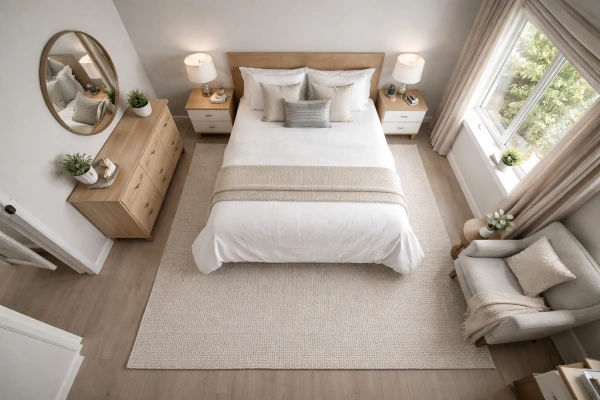
Furniture Placement and Sizing
Your bed goes first. Place it on the wall that gives you the most symmetric access from both sides and doesn’t block a door or closet. Then add nightstands, a dresser, and any seating.
Look for pieces that pull double duty: beds with built-in drawers, nightstands with shelving. In a 150-square-foot bedroom, every square foot of storage matters. Arrange furniture so you can walk around freely. A 36-inch clearance path between the bed and the wall (or other furniture) is the minimum for comfortable movement.
Bad furniture placement makes even a large bedroom feel cramped. If your room is under 120 square feet, skip the oversized dresser and look at a closet organizer system instead. Custom closet organizers run $3,500–$5,000, but they free up floor space and add resale value with that 83% cost recovery rate from the NARI/NAR report.
What Decorative Touches Actually Matter?
Layer rugs over hard flooring for warmth and sound dampening. Hang art or photos that mean something to you (not mass-produced filler from a big box store). Add bedding, throws, and pillows that introduce color and texture.
A bedroom without personal touches feels like a hotel room. And not in a good way.

Build a Reading or Relaxation Nook
If you have even a small corner near a window, put a chair there with a side table and a good lamp. This is one of those “didn’t know I needed it” additions that makes the whole remodel feel more worthwhile.
It gives you a reason to use your bedroom for something other than sleeping. And according to the remodeling industry’s spending trends, homeowners are investing more in rooms that serve multiple functions. The Joint Center for Housing Studies projects owner-occupied remodeling spending will reach $522 billion by end of 2026. A good chunk of that is going toward making rooms work harder.
Your bedroom remodel doesn’t have to happen all at once. You can tackle it in phases as the budget allows. Cosmetic work first (paint, flooring, lighting), then structural or systems upgrades later. But whatever you do, don’t skip the planning. A team that understands the remodeling industry will tell you the same thing: the plan is what separates a $20,000 remodel that feels worth every dollar from one that leaves you frustrated and over budget.
FAQs
How much does it cost to remodel a bedroom in 2026?
The national average for a professional bedroom remodel is $20,000, with most projects ranging from $12,000 to $28,000 according to Angi’s March 2026 data. Basic cosmetic updates (paint, flooring, light fixtures) in a small room can cost as little as $7,000. High-end remodels with custom closets, hardwood, and smart systems run $30,000 to $40,000 or more.
How long does a professional bedroom remodel take?
A mid-range bedroom remodel with professional contractors takes 3 to 6 weeks. Cosmetic-only projects (painting, new flooring, updated fixtures) can wrap in 1 to 2 weeks. Projects involving structural changes, electrical rerouting, or permit approvals can stretch to 8 weeks or longer, especially if supply or labor delays come up.
Can I do a bedroom remodel myself?
You can handle cosmetic work like painting, installing LVP flooring, and hanging curtains on your own. But electrical work, structural modifications, and anything requiring permits should go to licensed professionals. DIY remodels save roughly 40–60% on labor costs upfront, but hidden expenses from mistakes and tool purchases often close that gap. Unpermitted electrical work can void your homeowner’s insurance.
Does a bedroom remodel increase home value?
It depends on the scope. Closet renovations recoup about 83% of their cost according to the NARI/NAR 2025 Remodeling Impact Report. Primary bedroom suite additions scored a perfect 10 out of 10 on homeowner satisfaction but only recover 32–54% at resale. Cosmetic updates like paint, flooring, and lighting typically deliver the best return relative to their cost.
Do I need permits for a bedroom remodel?
You need permits for electrical work, structural changes like removing walls, and window or egress modifications. Cosmetic updates (paint, flooring, trim, furniture) don’t require permits. Permit costs range from $450 to $2,800 based on Angi’s 2026 estimates. Skipping required permits can result in fines, failed inspections, and denied insurance claims.
What flooring is best for a bedroom?
LVP (luxury vinyl plank) is the most popular all-around choice in 2026 because it’s waterproof, durable, and costs $600–$2,000 for a 150-square-foot room. Hardwood costs more ($2,800–$6,400) but lasts 20–50 years and can be refinished. Carpet ($980–$1,680) adds warmth and sound absorption but traps allergens and wears out in 5–10 years. Avoid cheap carpet in humid climates where mold risk is higher.
Should I hire a designer or just a contractor for a bedroom remodel?
A contractor is sufficient for standard bedroom remodels involving demo, drywall, flooring, paint, and fixture installation. A designer (typically charging 10–15% of project cost) adds value for complex layouts, custom built-ins, or rooms where you’re trying to solve a tricky space-planning problem. If your bedroom is a simple rectangle and you have a clear vision, a good contractor is all you need.

Michael Vale has over 5 years of experience helping clients improve their business visibility on Google. He combines his love for teaching with his entrepreneurial spirit to develop innovative marketing strategies. Inspired by the big AI wave of 2023, Michael Vale now focuses on staying updated with the latest AI tools and techniques. He is committed to using these advancements to deliver great results for his clients, keeping them ahead in the competitive online market.