
Bathroom Remodeling ROI In 2026: Which Upgrades Actually Pay You Back?
A midrange bathroom remodel recoups roughly 80% of its cost at resale, according to the 2025 JLC/Zonda Cost vs. Value Report. That makes it one of the strongest returns in home improvement right now. But that 80% number comes with a catch most homeowners miss. It applies to a specific type of project (midrange, $26,138 average job cost) and drops to just 42% once you cross into upscale territory. So the question isn’t whether a bathroom remodel adds value. It’s which upgrades actually earn their money back, and which ones just feel like they should.
Bathroom remodeling ROI depends less on how much you spend and more on where you spend it. A well-planned midrange project returns $20,915 in resale value on average, while an $81,612 upscale remodel only brings back about $34,000. The gap is massive, and most homeowners get it backwards.
Why Does Bathroom Remodeling Have Such Strong ROI?
Bathrooms are the most commonly remodeled room in the country. NAHB’s Q4 2025 Remodeling Market Index found that 73% of remodelers rated bathroom projects as “common to very common” that year. Buyers expect updated bathrooms. When they don’t find them, they mentally subtract from their offer. A remodel that adds real home value almost always starts in the bathroom for that reason.
The catch? Overspending kills your return. I’ve seen homeowners pour $60,000+ into a primary bath and recover less than half. Midrange wins because buyers don’t pay a premium for your imported Italian marble. They pay for a bathroom that looks clean, modern, and move-in ready.
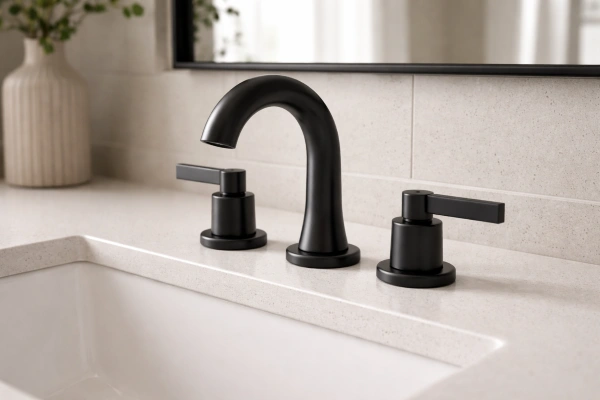
Can New Fixtures Really Move the Needle?
Yes, and it’s one of the cheapest ways to do it. Swapping faucets, showerheads, and cabinet hardware runs $200–$800 in materials for a standard bathroom. Brushed nickel, matte black, or brushed gold finishes signal that someone cared about the details. Buyers pick up on that instantly.
This won’t show up in an appraisal as a line item. But it shifts perception. A bathroom with dated brass fixtures from 2004 reads as “needs work,” even if everything functions fine.
Water-Saving and Energy-Efficient Upgrades
Low-flow toilets, WaterSense-rated showerheads, and LED lighting aren’t just about the environment. They’re about the utility bill conversation that happens during every home showing. The 2024 International Plumbing Code now caps showerhead flow at 2.0 gpm (down from 2.5), so newer bathroom remodel projects will already need to meet this standard.
Cost for these swaps? Usually under $500 combined. ROI? Hard to isolate, but they remove objections during a sale and that’s worth more than most homeowners realize.
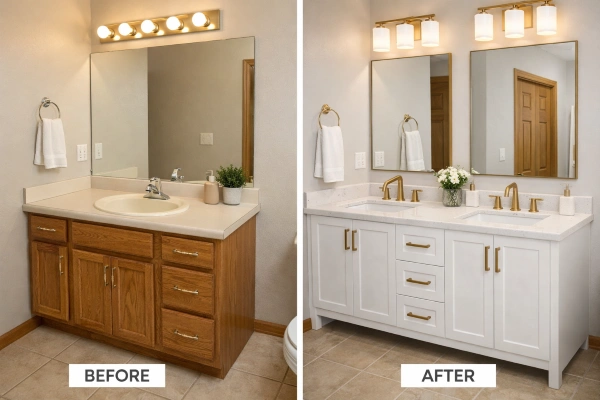
Does Upgrading Your Vanity Pay Off?
The vanity is the first thing people notice. Replacing a builder-grade single-sink vanity with a double-sink quartz-top model runs $1,500–$4,000 installed, and it changes the entire room. Quartz costs $1,000–$3,000 more than laminate but lasts roughly twice as long and resists staining.
For primary bathrooms, this is close to a must. For a half bath, a smaller floating vanity with a stone top can deliver the same effect for under $1,200.
Flooring That Holds Up and Adds Value
Porcelain tile remains the gold standard. It costs $3–$5 more per square foot than vinyl, but it lasts 20+ years versus 10–15 for vinyl planks. Heated flooring systems add $2,000–$4,000 to the total. Contractors report these don’t produce a measurable resale bump unless the buyer specifically wants them, which makes them a lifestyle upgrade, not an ROI play.
If you’re spending on current remodel design trends, put the budget into quality tile before you even think about heated floors.
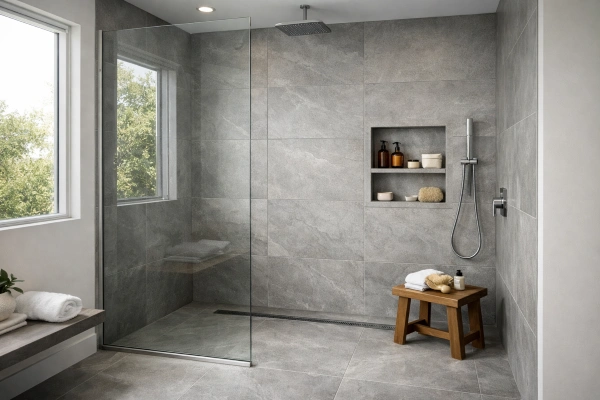
Walk-In Showers vs. Tub-Shower Combos
Curbless walk-in showers are the biggest trend in bathroom remodeling right now, and for good reason. The NKBA’s 2026 Bath Trends Report highlights universal design and zero-entry showers as top priorities among designers. A curbless conversion costs $2,000–$5,000 more than a standard shower, and the JLC data puts universal design bathrooms at 61% ROI.
One thing people don’t talk about enough: if your home only has one bathtub and you remove it for a walk-in shower, some buyers (especially families with young kids) will pass. Keep at least one tub in the house.
Better Lighting on a Budget
Layered lighting (task, ambient, accent) makes a bathroom feel bigger and more polished. A full lighting upgrade runs $300–$1,200 depending on fixture count and whether you need new wiring. It’s not a high-ROI item by itself, but a dark bathroom with a single overhead fixture will drag down the perceived value of every other upgrade you’ve made.
Built-In Storage Buyers Actually Want
Recessed medicine cabinets, shower niches, and under-vanity organizers cost $200–$1,500 per feature. They solve the clutter problem that plagues most types of remodeling projects in older homes. Buyers consistently rank storage as a top-three priority in bathroom surveys, especially in homes under 2,000 square feet.
How to Get the Best Return Without Overspending
Stick to midrange. The JLC data couldn’t be clearer: $26,138 average cost, 80% recouped. Once you push past $40,000, diminishing returns hit hard. Budget 10–15% as a contingency specifically for plumbing surprises. Contractors on Reddit forums consistently report that old pipes, subfloor rot, and vent stack issues add $5,000–$15,000 once walls open up.
Use neutral finishes. Bold tile choices date fast and narrow your buyer pool. And if you’re serious about protecting your investment, working with a team that understands remodeling marketing can help you see what buyers in your area actually search for before you commit to a design.
The single best piece of advice? Spend where buyers look first (vanity, shower, fixtures) and save on what they’ll never notice (premium underlayment, top-of-line rough plumbing). That’s where the 80% comes from.
FAQs
Does a bathroom remodel add enough value to justify the cost in 2026?
For midrange projects, yes. The 2025 JLC/Zonda Cost vs. Value Report shows a midrange bathroom remodel recoups about 80% of its $26,138 average cost at resale. Upscale remodels ($81,612 average) only recover 42%. Sticking to the $12,000–$26,000 range gives most homeowners the best balance between livability gains and resale return.
What single bathroom upgrade adds the most resale value?
No single feature outperforms a well-planned midrange remodel, but if you had to pick one, a curbless walk-in shower with universal design elements ranks highest. The JLC places universal design bathroom remodels at 61% ROI, and NKBA designers consistently rank zero-entry showers as a top buyer priority.
How much of a bathroom remodel cost goes to labor vs. materials?
Labor typically eats 50–70% of the total budget, especially when plumbing relocation is involved. That’s also where surprise costs hit hardest. Contractors report that hidden issues like old pipes, subfloor rot, and vent stack problems add $5,000–$15,000 once demolition starts.
Is it better to DIY a bathroom remodel or hire a professional?
Hire a professional for anything involving plumbing or electrical. JCHS 2025 data shows professional installations now account for 84% of owner-occupied improvement spending. DIY saves 30–50% on materials but risks code violations, voided manufacturer warranties, and a timeline that stretches 2–3 times longer than a professional crew.
Do smart bathroom features like heated floors increase home value?
Marginally. Heated flooring adds $2,000–$4,000 to your project cost, but contractors report little measurable resale lift unless a buyer specifically wants it. NKBA’s 2026 report notes growing wellness appeal for smart features, but the ROI data doesn’t yet support them as a strong financial play over basics like quality tile and fixtures.
What bathroom remodel mistakes cost the most money?
Ignoring hidden plumbing conditions and skipping a contingency budget. Scope creep into full gut remodels without reserves is the most common reason homeowners end up $10,000–$30,000 over budget. Choosing trendy finishes (bold colors, statement tile) that date within 3–5 years is the second biggest mistake, because it narrows your buyer pool at resale.
How long does it take for a bathroom remodel to pay for itself?
A bathroom remodel doesn’t produce a direct “payback” like a solar panel might. At 80% cost recouped, you’re recovering most of your investment at sale, not all of it. The real return comes from daily livability, lower maintenance costs, and a potential 4–7% boost to overall home value that compounds if you hold the property for several years.

Michael Vale has over 5 years of experience helping clients improve their business visibility on Google. He combines his love for teaching with his entrepreneurial spirit to develop innovative marketing strategies. Inspired by the big AI wave of 2023, Michael Vale now focuses on staying updated with the latest AI tools and techniques. He is committed to using these advancements to deliver great results for his clients, keeping them ahead in the competitive online market.