
How To Plan A Home Remodel Budget In 2026 (Without Blowing It)
The average whole-home remodel costs roughly $52,000 in 2026, according to Angi. That range swings from $19,000 on the low end to $88,000 or more for mid-to-high scope work. But those numbers don’t tell you much on their own. Your actual home remodel budget depends on where you live, what you’re changing, and whether your contractor finds surprises behind the walls. This article breaks down what real remodeling projects cost right now, how to build a budget you can stick to, and the mistakes I’ve watched homeowners make over and over again.
A home remodel budget is a detailed spending plan that accounts for materials, labor, permits, and a contingency fund (typically 10–20% of total project cost) before any work begins. Most homeowners who skip this step end up 15–25% over their original number.
We won’t cover new construction, ADU builds, or commercial renovation here. Those are different animals with different cost structures.
What Does a Home Remodel Actually Cost in 2026?
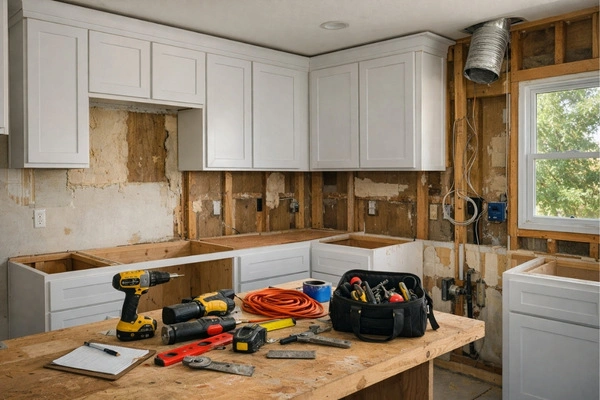
It depends on what you’re touching. A kitchen remodel averages $26,946 nationally (Angi, November 2025), while bathrooms run $10,600–$17,600 depending on scope. But those averages hide massive variation. A budget kitchen refresh with stock cabinets and laminate might land at $15,000. A high-end kitchen gut with custom cabinetry can blow past $60,000 without breaking a sweat.
Here’s what the 2026 numbers actually look like by project tier:
| Project Type | Budget Range | Mid-Range Average | High-End Range |
| Whole-Home Remodel | $19,000–$52,000 | ~$52,000 | $120,000–$250,000 |
| Kitchen Remodel | $14,500–$26,900 | ~$27,000 | $41,500–$60,000+ |
| Bathroom Remodel | $8,000–$10,600 | ~$14,000 | $17,600–$30,000+ |
| Exterior (Roof + Siding) | $18,000–$30,000 | ~$25,000 | $35,000+ |
Sources: Angi (March 2026), HomeGuide (December 2025)
Americans spent $603 billion on home remodeling in 2024 alone, per the NARI 2025 Remodeling Impact Report. That market is projected to hit $509 billion in owner-occupied spending for 2025, with another bump to $524 billion expected in early 2026. People are spending. The question is whether they’re spending smartly.
Start With Priorities, Not a Pinterest Board
I’ve seen dozens of homeowners walk into a remodel with a mood board and no plan. They want the open-concept kitchen, the spa bathroom, the new hardwood floors, and the finished basement. Then the bids come in and reality hits.
Before you price anything, rank your projects by need. A leaking roof comes before a kitchen island. Structural repairs and safety issues always take the top spot. After that, think about what adds the most value versus what just looks nice.
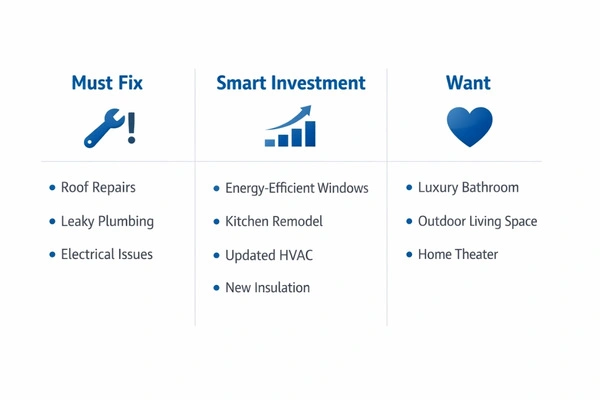
Here’s a framework that works. Split your list into three columns: “must fix” (safety, structural, code issues), “smart investment” (projects with strong resale ROI), and “want” (cosmetic upgrades, personal taste). Fund them in that order. If your budget runs dry after column two, you’ve still made a good decision.
And skip the impulse to do everything at once. Phasing projects across 12–18 months lets you spread cost and catch your breath financially between stages.
What Should Research Look Like Before You Sign?
Get three bids minimum. Not two. Not one from your neighbor’s guy. Three written bids from licensed, insured contractors with verifiable references.
When you compare bids, make sure each one covers the same scope. I’ve seen homeowners pick the lowest number only to discover it didn’t include permits, dumpster fees, or finish materials. That “$22,000 bathroom remodel” quietly becomes $31,000 once you add what was missing.
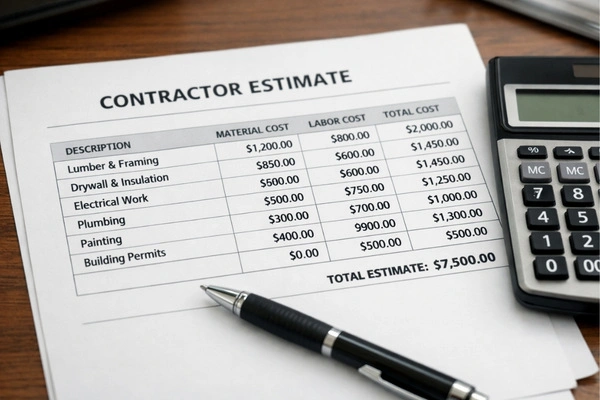
Every bid should break out these line items separately:
- Materials (with specific product names, not “allowances”)
- Labor (with a clear hourly or project rate)
- Permits and inspection fees
- Demolition and disposal
- Contingency or change-order terms
A contractor who won’t itemize is a contractor you don’t hire. Period.
One more thing: labor costs are still elevated. The Home Builders Institute reported a $10.8 billion annual economic loss from skilled labor shortages in their Fall 2025 report. Roughly 88% of construction firms still have open craft worker positions (AGC 2025 Workforce Survey). That means contractors are busy, timelines are longer, and you don’t have much room to negotiate on labor rates right now.
Lock Your Number Before Demo Day
Once you’ve seen the bids and picked your contractor, set your home remodel budget in writing. Not a rough idea. A specific number that includes a 10–20% contingency buffer on top of the contract price.
That contingency isn’t optional. Hidden problems (think mold behind drywall, outdated wiring, pest damage) show up in a huge percentage of remodels. Industry sources consistently peg surprise costs at 10–20% above the original estimate. If you budget $50,000 for a kitchen remodel, put $55,000–$60,000 aside as your true ceiling.
Then comes the hard part. Stick to it.
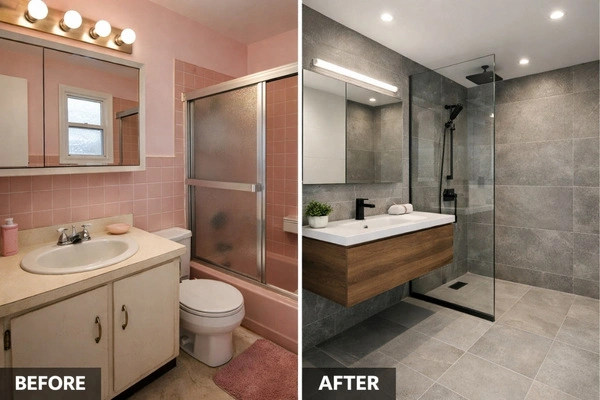
Scope creep is the budget killer nobody talks about. You start with a bathroom refresh and suddenly you’re moving plumbing, adding heated floors, and upgrading to a frameless glass shower. Each change order feels small. Together, they add 20–30% to your total. If something wasn’t in the original plan, it goes on next year’s list.
Which Budgeting Mistakes Cost Homeowners the Most?
The biggest mistakes aren’t dramatic. They’re the quiet ones that bleed money slowly. After years working with remodeling companies on their marketing, I’ve heard the same regrets from homeowners on repeat.
Mistake #1: Guessing at Costs Instead of Getting Data
“We figured it would be around $30,000” is how most budget disasters start. Rough estimates based on what a friend paid three years ago are almost always wrong. Materials costs shifted during the supply chain disruptions of 2021–2023 and haven’t fully settled. Regional differences are real too. Remodeling on the West Coast or in the Northeast can cost 20–40% more than the same project in the Southeast or Midwest. NAHB data from October 2025 shows custom home construction hitting $167 per square foot in Pacific regions versus the $166 national median. Remodel pricing follows similar patterns.
Get actual bids. Use current local data, not national averages from two years ago.
Mistake #2: Ignoring ROI on Your Biggest Spend
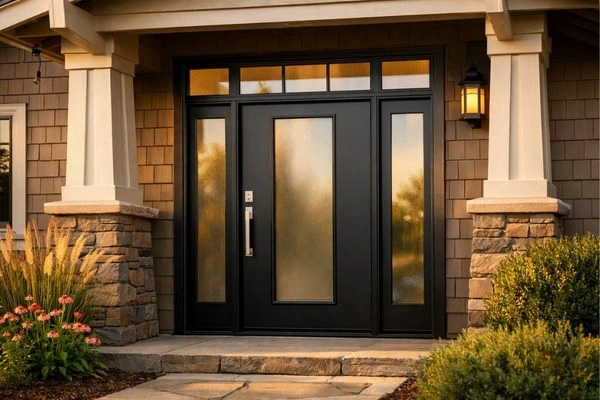
Not every remodel dollar comes back to you at resale. The 2025 Cost vs. Value Report from Zonda and the Journal of Light Construction evaluated 28 project types across 119 markets. The pattern is consistent year after year: exterior projects (garage doors, siding, roofing) deliver the highest cost recovery. NARI’s 2025 data backs this up. A steel front door replacement recovered 100% of its cost. A closet renovation recovered 83%.
Meanwhile, that $60,000 luxury kitchen? You’re likely getting back 50 cents on the dollar.
This doesn’t mean you shouldn’t remodel your kitchen. It means you should understand the trade-off. If resale value matters, put your money on the projects that pay you back before you chase the ones that just feel good.
Mistake #3: Going Cheap on the Wrong Line Items
I’ll push back on something you hear constantly: “Save money by buying the cheapest materials and doing it yourself.”
That advice is backwards for most people. Cheap windows, discount roofing, and bargain-bin fixtures fail faster and cost more in the long run. If you install low-quality windows yourself and they fog, leak, or warp within five years, you’ve paid for the job twice.
Where should you save? Cosmetic finishes you can swap later (hardware, paint colors, light fixtures). Where should you spend? Anything structural, anything that touches water, and anything you’ll live with for 10+ years. The 2026 design trend toward mixed materials actually makes this easier. You can pair a high-end quartz countertop with more affordable open shelving and still get a kitchen that looks like you spent double.

Mistake #4: Hiring Without Checking References
A cheap bid from an unlicensed contractor is the most expensive decision you can make. No license means no recourse if the work is substandard. No insurance means you’re liable if someone gets hurt on your property.
Here’s what actual vetting looks like:
- Confirm active state licensing (check your state’s contractor licensing board online)
- Verify general liability and workers’ comp insurance (ask for certificates)
- Call three past clients and ask about timeline, communication, and final cost versus bid
- Check for complaints with your local BBB or consumer protection office
- Read reviews, but weight the detailed ones over the one-liners
The NARI 2025 Remodeling Impact Report found that homeowners who hired qualified professionals consistently reported higher satisfaction scores. Top-rated projects (primary suites, kitchens, new roofing) all earned perfect 10/10 joy scores when done by vetted pros.
One Takeaway to Walk Away With
Your home remodel budget isn’t a suggestion. It’s a commitment. Build it with real numbers, pad it for surprises, and protect it from scope creep. The homeowners who come out ahead aren’t the ones who spend the most. They’re the ones who plan before they pick up a hammer.
FAQs
How much contingency should I include in a home remodel budget?
Most contractors and industry groups recommend setting aside 10–20% of your total contract price for unexpected costs. Hidden issues like mold, outdated wiring, or structural damage show up frequently during demolition. On a $50,000 remodel, that means budgeting $55,000–$60,000 as your true ceiling.
What is the average cost to remodel a house in 2026?
The national average for a whole-home remodel is approximately $52,000, with a typical range of $19,000–$88,000 depending on scope and location (Angi, March 2026). High-end renovations with luxury finishes can run $120,000–$250,000 or more.
Which home remodel projects have the best return on investment?
Exterior projects consistently deliver the highest ROI. The NARI 2025 Remodeling Impact Report found that a steel front door replacement recovered 100% of its cost at resale, and closet renovations recovered 83%. Interior luxury upgrades like high-end kitchens typically return only about 50 cents per dollar spent.
How do I avoid going over my home remodel budget?
Lock your budget in writing before demolition starts. Get three itemized bids, compare the same scope of work across each, and include a 10–20% contingency. Say no to mid-project change orders unless they involve safety or code issues. Scope creep adds 20–30% to most projects that go over budget.
Is it cheaper to remodel a house yourself or hire a contractor?
DIY saves on labor costs upfront, but the risk is real. Work done without permits or proper licensing can lower your home’s value and void warranties. Professional remodelers consistently deliver higher satisfaction scores and better long-term results, especially for anything involving plumbing, electrical, or structural changes.
How has the labor shortage affected home remodel costs?
The Home Builders Institute reported $10.8 billion in annual economic losses from skilled labor shortages in their Fall 2025 report. Roughly 88% of construction firms still have unfilled positions. This keeps labor rates elevated and extends project timelines, especially in high-demand metro areas.
Do home renovation costs vary by region?
Yes, significantly. NAHB data from October 2025 shows custom construction costs at $167 per square foot in Pacific regions versus $166 nationally. Remodeling follows similar patterns. West Coast and Northeast projects typically cost 20–40% more than comparable work in the Southeast or Midwest due to higher labor rates, permit costs, and material delivery expenses.

Michael Vale has over 5 years of experience helping clients improve their business visibility on Google. He combines his love for teaching with his entrepreneurial spirit to develop innovative marketing strategies. Inspired by the big AI wave of 2023, Michael Vale now focuses on staying updated with the latest AI tools and techniques. He is committed to using these advancements to deliver great results for his clients, keeping them ahead in the competitive online market.