
How Many Quotes Should You Get For A Tub And Shower Remodel In 2026?
You should get at least three quotes for your tub and shower remodel. But the number alone doesn’t matter if you don’t know what you’re comparing. Most homeowners collect quotes, line up the prices from low to high, and pick the middle one. That’s not comparing. That’s guessing.
A tub and shower remodel costs between $2,000 and $15,000 nationally, with the average landing around $7,000 according to Angi’s 2026 cost data. At those price points, picking the wrong contractor based on a vague quote can cost you thousands in rework, water damage, or a warranty that doesn’t actually cover anything.
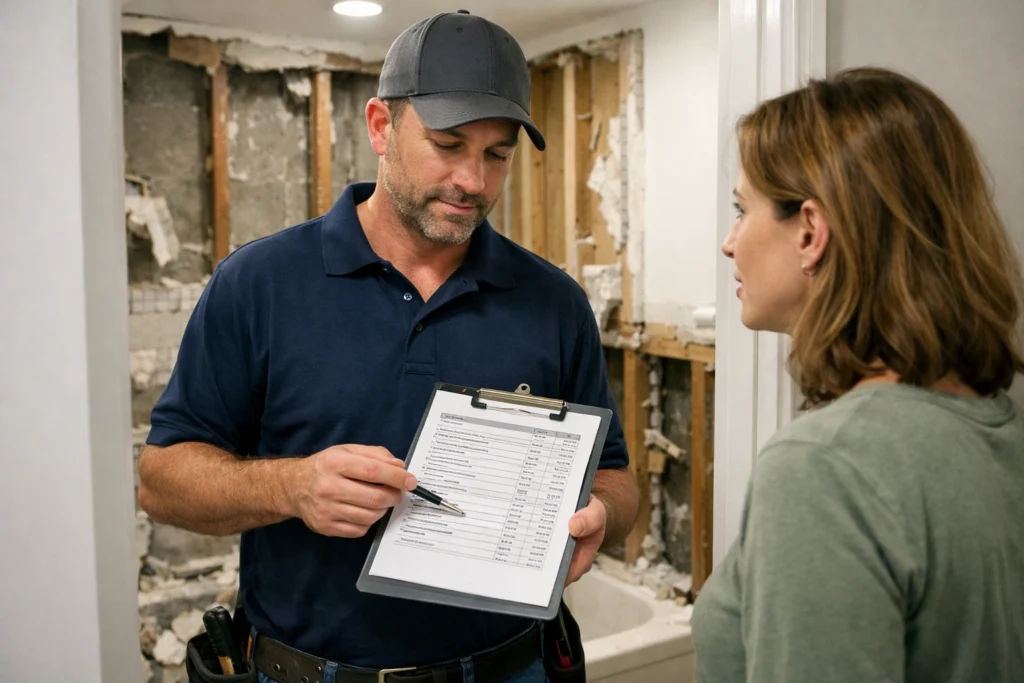
Getting multiple quotes for a tub and shower remodel only works when you treat each consultation as a job interview, not a price check. You’re hiring someone to tear open your walls, reroute plumbing, and waterproof a space that gets hit with water every single day. The quote is just a piece of paper. What matters is what’s behind it.
This article covers what to look for inside each quote, how to tell when a price is fair (and when it’s a trap), and where most homeowners trip up during the comparison process. We won’t cover full bathroom remodels, tub-to-shower conversions involving structural work, or DIY approaches. Those are different animals with different budgets.
Why Should You Get More Than One Quote for a Tub and Shower Remodel?
Multiple quotes don’t just show you different prices. They expose how different contractors think about the same project.
I’ve seen homeowners sit through three consultations and come away with three wildly different scopes. One contractor includes waterproofing membrane and vapor barriers. Another doesn’t mention waterproofing at all. The third bundles permit fees into the total while the first two leave them off. Without multiple quotes, you’d never know the $6,000 bid was missing $2,500 worth of work that the $8,500 bid included.
The real purpose of collecting quotes isn’t to find the cheapest number. It’s to answer three things: Do I trust this company? Do I understand what I’m paying for? And how long do I want this remodel to last? If you can answer all three after meeting with a contractor, you might not need another quote at all.
According to the NAHB Remodeling Market Index from Q4 2025, bathroom remodeling ranked as the most common project for professional remodelers, scoring a 4.1 out of 5 on frequency. That means contractors are busy. Good ones book out 3 to 6 months. You don’t want to waste their time or yours by collecting quotes you can’t evaluate.
Can Too Many Quotes Actually Backfire?
Yes. And I’ll say something the industry won’t: three quotes is usually enough.
The popular advice is “get as many as you can.” Sounds responsible. In practice, it creates decision paralysis. By quote five or six, you’re not gaining new information. You’re just second-guessing everything.
Each in-home consultation takes 60 to 90 minutes. Some run closer to two or three hours. You have to be present for all of them. After the third or fourth, the details blur together and you start making choices based on who was most likable rather than who gave the most complete scope.
If your first three quotes are wildly different in price (more than 30% apart), that’s a sign the contractors aren’t working from the same understanding of the project. Go back and clarify your scope before booking more.
When Does Getting More Quotes Make Sense?
More quotes are useful in three specific situations.
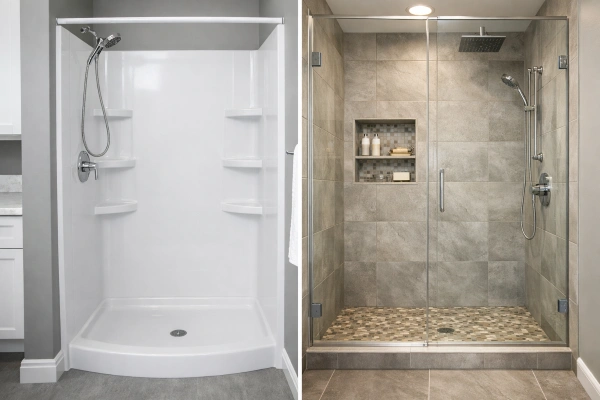
- You don’t like the design options. If you’re going to look at your shower every day for the next 15 to 20 years, you should love it. Prefab shower kits run $600 to $1,800, while custom tile walk-ins land between $4,200 and $8,500 or higher. The spread is huge, and design varies just as much. If a contractor only offers one material line, keep looking.
- You want a lower price and you’re clear on the trade-offs. Going cheaper on a tub and shower remodel usually means thinner materials, shorter warranties, or skipping things like backer board behind the tile. None of that is automatically bad, but you need to know what’s being cut. A prefab kit lasts 10 to 15 years. Custom tile with proper waterproofing lasts 20 to 30. That math matters.
- Something felt off during the consultation. Trust your gut. If a contractor dodged your questions about waterproofing, couldn’t name the membrane system they use, or rushed through the scope to get to the price, those are red flags. Slow down and talk to someone else.
What Should You Check Before Booking a Consultation?
Do 20 minutes of homework before you let anyone into your house. It’ll save you hours later.
Start with online reviews. Google, Yelp, and the BBB all paint different pictures. Star ratings matter less than how the company responds when something goes wrong. A contractor with a 4.5 rating who responds to complaints with specifics and accountability is a better bet than a 5.0 with no reviews.
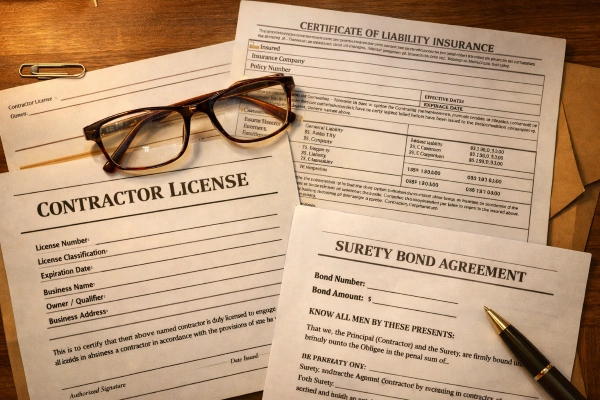
Verify licensing. In California, you can confirm a contractor’s license through the CSLB to make sure they hold both a General Contractor (Class B) license and a plumbing license. Not every state requires both, but a remodeler who has both signals a higher level of qualification. Ask about liability insurance, workers’ comp, and bonding before you schedule anything.
Prepare a question list. The questions that matter most are the ones contractors don’t bring up on their own: What waterproofing system do you use (by brand name)? Who pulls permits and schedules inspections? What’s your plan if you open the wall and find rotten subfloor or outdated plumbing? If they can’t answer those on the spot, they probably haven’t thought about them. Homeowners who skip this kind of prep tend to regret it once the project is underway.
How Many Contractor Quotes Do You Actually Need?
Three. That’s the number most industry groups recommend, and it matches what I’ve seen work in practice.
NAHB and NARI both advise homeowners to collect at least three detailed written bids. The logic is simple. Fewer than three doesn’t give you enough reference points. More than three creates noise without adding clarity. Three lets you spot the outlier (low or high) and compare the two that are close on scope and price.
The question that should guide you isn’t “how many quotes do I need?” It’s “what am I hoping the next quote will tell me that I don’t already know?” If you can’t answer that, you probably have enough information to decide.
One thing to watch for: if all three quotes cluster within 10 to 15% of each other, that’s a good sign the market is pricing your project consistently. If one quote comes in 40% below the others, that contractor is either cutting scope, cutting corners, or doesn’t understand what you’re asking for.
How Can You Tell If a Tub and Shower Remodel Quote Is Fair?
One of the best tools available is the Cost vs. Value Report from Remodeling Magazine. It tracks what homeowners actually spend on projects and how much value gets recouped at resale. Think of it as the Kelley Blue Book for home improvement pricing.
For 2025, a midrange bathroom remodel (which includes the tub and shower area) cost $26,138 nationally and recouped about 80% at resale. High-end versions cost $81,612 and only returned 42%. The takeaway: spending more doesn’t mean getting more back. A smart mid-range tub and shower remodel with the right improvements gives you a better return than going all out on luxury finishes.
Why Going Cheap Costs More Over Time
Some homeowners plan to redo their tub or shower every four to five years, picking the cheapest option each time. On paper, it sounds like they’re saving money.
Run the numbers. A $3,000 budget remodel every five years costs $12,000 over 20 years, not counting the disruption, the time off work, and the risk of water damage between installs. A $9,000 mid-range remodel with proper waterproofing and quality materials lasts the full 20 years. You do it once and forget about it.
The skilled labor shortage makes this worse. The Home Builders Institute reported in late 2025 that plumber hourly rates rose to $85 to $175, up 8 to 10% from the year before. Contractors are booking months out. Every time you redo cheap work, you’re paying higher labor rates and waiting longer. Getting it right the first time with a qualified contractor costs more upfront but less over the life of the project.
What Should You Look for When Comparing Tub and Shower Remodel Quotes?
Price is the first thing everyone looks at. It should be the last.
The real differences between quotes hide in the details. Two quotes that both say “$8,000” can represent completely different projects depending on what’s included. Here’s where to focus.
“Substantial Completion” vs. Actual Completion
Some contracts define the project as done when the contractor says it’s done, not when you’re satisfied. This is called “substantial completion,” and it means you could owe the full balance while a punch list of unfinished items sits untouched.
Your contract should say the project is complete when you sign off on it. If the language is vague, ask for a revision before you sign.
Warranty Fine Print
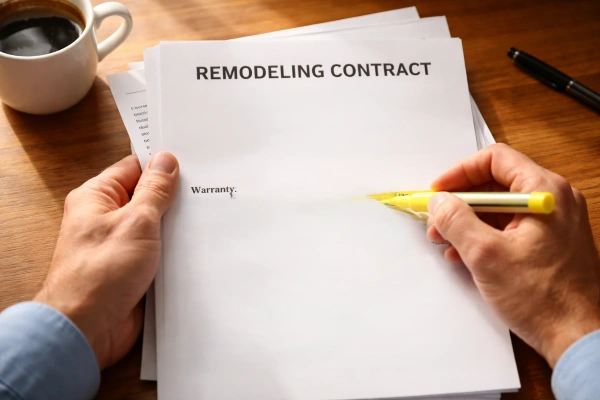
A warranty is only as good as its exclusions. I’ve reviewed contracts where the “lifetime warranty” only covered the acrylic shell but excluded the drain, the valve, and the installation labor. That’s not a warranty. That’s marketing.
Check what voids the warranty. Check whether it’s prorated (meaning coverage shrinks over time). And check whether it covers both materials and labor, because a product warranty without labor coverage means you’re still paying someone $85 to $175 an hour to fix the problem. Homeowners who don’t read the fine print on warranties end up paying for repairs they thought were covered.
Licensing and Who Actually Shows Up
A proper tub and shower remodel contractor should hold a General Contractor (Class B) license at minimum. A plumbing license isn’t always legally required, but it tells you the contractor has a higher skill level with the parts of the job that matter most (drains, valves, water supply lines, and waterproofing connections).
Ask who’s doing the work. Some companies sell the job with an experienced estimator, then send a different crew to do the install. You want to know whether the people in your bathroom have the same credentials as the person who gave you the quote.
Read the Full Contract Before You Sign
This sounds obvious. Most people don’t do it.
Look for a change in language order. Some contracts let the contractor add costs mid-project without your written approval. Look for payment schedules that front-load too much money before work starts (more than 30% upfront is a yellow flag). And look for vague line items like “miscellaneous” or “additional work as needed,” which give the contractor a blank check.
Reading the contract takes 30 minutes. Fixing problems caused by not reading it takes months.
Start With One Good Consultation
Collecting quotes for a tub and shower remodel in 2026 isn’t about getting the most quotes. It’s about getting the right information from each one.
Three quotes gives you enough to compare scope, price, and trustworthiness. Before you schedule, do your homework on licensing, insurance, and reviews. During each consultation, ask about waterproofing systems, permit responsibility, and what happens when surprises show up behind the wall.
The contractors who answer those questions without flinching are the ones worth hiring. The ones who work with a marketing team that understands your industry tend to run more professional operations from estimate to final walkthrough.
Your tub and shower remodel is a 20-year decision. Treat the quoting process like it matters, because it does.
FAQs
How many quotes should I get for a tub and shower remodel?
Get at least three detailed written quotes. Fewer than three doesn’t give you enough comparison points, and more than five usually creates confusion without adding useful information. NAHB and NARI both recommend three as the starting point for any remodeling project.
How much does a tub and shower remodel cost in 2026?
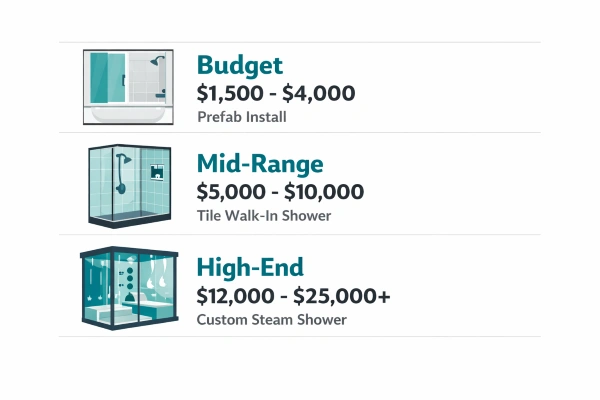
The national average for a shower remodel is about $7,000, with most projects falling between $2,000 and $15,000 depending on materials and scope. Budget prefab kits start around $1,500 to $4,000, mid-range tile walk-ins run $5,000 to $10,000, and high-end custom builds with smart features can exceed $25,000.
Why do tub and shower remodel quotes vary so much?
Quotes vary because contractors include different things. One might bundle permits, waterproofing, and disposal into the price while another quotes only materials and labor. Plumbing reroutes on slab foundations alone can add $3,000 to $8,000 that a low bidder may leave out of the initial quote.
What should a tub and shower remodel quote include?
A proper quote should itemize materials, labor, permits, demolition and disposal fees, waterproofing details (including the brand of membrane used), a projected timeline with start and completion dates, warranty terms, and a clear payment schedule. If any of those are missing, ask for a revised quote before signing.
Are lifetime warranties on shower remodels legitimate?
Some are, but many aren’t. A legitimate lifetime warranty covers both materials and labor without proration. Many so-called lifetime warranties only cover the product shell and exclude installation, drains, valves, and labor. Always read the full warranty document and check what would void coverage.
Do I need permits for a tub and shower remodel?
Yes, if the project involves plumbing, electrical, or structural changes. Permit costs typically run $200 to $1,200. Your contractor should specify in the quote who pulls the permits and who pays for them. Skipping permits can create problems when you try to sell your home or file an insurance claim.
How long does a tub and shower remodel take in 2026?
Most professional tub and shower remodels take 5 to 8 weeks from start to finish. Due to ongoing skilled labor shortages, many contractors are currently booking 3 to 6 months out. Plan ahead and schedule consultations early, because waiting until the last minute limits your options.

Michael Vale has over 5 years of experience helping clients improve their business visibility on Google. He combines his love for teaching with his entrepreneurial spirit to develop innovative marketing strategies. Inspired by the big AI wave of 2023, Michael Vale now focuses on staying updated with the latest AI tools and techniques. He is committed to using these advancements to deliver great results for his clients, keeping them ahead in the competitive online market.