
How To Save Money On A Home Remodel In 2026
The average whole-house remodel in the U.S. runs about $52,000, with costs ranging from $19,000 on the low end to $88,000 or more depending on scope and location. If you’re planning a renovation this year, knowing how to save money on a home remodel isn’t optional. It’s the difference between finishing the project and running out of cash halfway through a torn-up kitchen.
Here’s what most cost-saving guides won’t tell you: the biggest budget killer isn’t materials or labor. It’s poor planning. Contractors and industry data both point to the same problem. Homeowners who skip a detailed design phase end up paying $10,000 to $50,000 in rework costs when they change their minds mid-project. So before you start shopping for tile, you need a plan and a real budget.
This article won’t cover financing options or tax credits. Those deserve their own deep dive. What it will cover are the 10 moves that consistently save real money on residential remodels, backed by 2025–2026 industry data.

How Much Should You Budget for a Home Remodel?
Your budget depends on what you’re touching. A kitchen remodel averages about $27,000 nationally, though Houzz’s 2025 data puts the median closer to $35,000 for kitchens under 200 square feet. Bathrooms run around $12,000. Full-home renovations land in the $47,000–$52,000 range according to Angi’s 2026 estimates.
Where you live matters a lot. Northeast and West Coast projects run 20–30% higher than the same work in the Midwest or South. A mid-range kitchen that costs $35,000 in Atlanta could easily hit $75,000 in Boston.
The number everyone forgets? Contingency. You need 15–20% of your total budget set aside for surprises. Not 10%. I’ve seen too many projects where a “10% cushion” disappeared the moment someone opened a wall and found outdated wiring or water damage. Twenty percent feels like a lot until you need it. Then it feels like a lifeline.
| Remodel Type | National Average | Budget Range |
| Kitchen | $27,000 | $14,500–$41,500 |
| Bathroom | $12,000 | $2,500–$30,000 |
| Whole Home | $52,000 | $19,000–$88,000 |
Sources: Angi (2026), Houzz & Home Study (2025)
10 Proven Ways to Save Money on Your Home Remodel
1. Know What You Can DIY (and What You Can’t)
DIY saves 30–60% on labor costs. That’s real money. But it only works when you’re honest about your skill level.
Painting, demolition, cleanup, hauling materials. Those are fair game for almost anyone. Electrical work, plumbing, and structural changes? Hire a licensed pro. I’ve watched homeowners try to save $2,000 on electrical and end up spending $6,000 fixing their mistakes. Worse, DIY electrical or plumbing work can void warranties and create permit problems when you sell.
If you’re taking the DIY route, rent tools from a local hardware store instead of buying. And YouTube is genuinely useful for learning skills like skim-coating or laying vinyl plank flooring.
2. Don’t Move Plumbing Unless You Absolutely Must
Moving a sink or toilet to a different wall can add $2,500 or more to your project. If you’re working with a contractor, ask them to price the job both ways (existing layout vs. new layout). The savings from keeping fixtures in place often free up budget for upgrades that have more visible impact, like better countertops or new hardware.
3. Plan With Stock Sizes in Mind
Custom anything costs more. If your design calls for a 10-foot-wide opening and materials come in 4-foot sections, building at 12 feet wide may actually cost less because you’re not paying for custom cuts and waste. This applies to windows, doors, and cabinetry too. Stock sizes from major manufacturers are almost always cheaper than special orders.
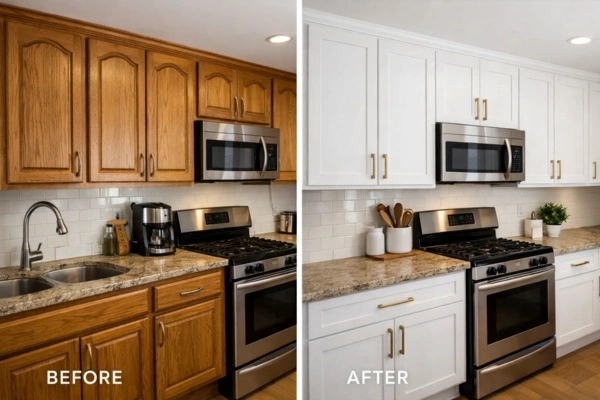
4. Reface Instead of Replace
Full kitchen cabinet replacement is one of the biggest line items in any remodel. But the cabinet boxes themselves are usually fine. Swapping out just the doors, adding new hardware, and painting or refinishing the frames can save thousands. Pull-out inserts for existing cabinets cost a fraction of a full gut renovation and often solve the “not enough storage” problem just as well.
5. Mix High and Low Materials Strategically
Spend on the things people touch and see every day. Countertops, faucets, cabinet hardware. Save on the things they don’t. You don’t need premium underlayment or designer switch plates. Laminate countertops run $20–$40 per square foot and last 10–15 years. Quartz costs $60–$120 per square foot but lasts 25+ years. Pick based on how long you plan to stay in the home, not based on what looks good on a renovation show.
6. Shop Floor Models and Scratch-and-Dent
Appliance retailers, big-box stores, and outlet centers regularly sell floor models and slightly damaged units at 30–50% off. A small dent on the side of a refrigerator that gets pushed against a wall? Nobody will ever see it. Time your major purchases around holiday sales (Memorial Day, Black Friday, Labor Day) for additional markdowns.

7. Visit Salvage Yards and Habitat ReStores
Hundreds of independently run Habitat ReStores sell donated building materials at steep discounts. You can find cabinets, fixtures, doors, and hardware for a fraction of retail. One caveat: many contractors won’t install homeowner-supplied or salvaged materials because of liability concerns. Clarify this upfront before you buy.
8. Get an Architect Consultation (Not Full Plans)
You probably don’t need a full set of architectural drawings. But a one-time design consultation, usually available for a flat fee, can save you serious money. A good architect will sketch two or three layout options that solve your space problem without expensive structural changes. You can then take those sketches to a builder or drafting service for formal construction drawings at a much lower cost.
9. Donate What You Tear Out
Before you throw everything in a dumpster, call your local Habitat for Humanity. Some industry estimates suggest roughly 85% of a house’s materials are reusable. Donating old fixtures, cabinets, and building materials keeps them out of landfills and may qualify you for a tax deduction. It also saves on disposal costs, which can add up faster than most homeowners expect.
10. Lock Your Scope and Resist Change Orders
This is where most budgets actually blow up. Not on materials. Not on labor. On scope creep.
The 2025 NARI/NAR Remodeling Impact Report found that 92% of homeowners said they’d remodel more if cost weren’t a factor. That desire is what drives the “while we’re at it” additions that push projects 20–30% over budget. Every change order costs money, not just for the new work, but for the delay and disruption to the existing schedule. Set your scope before day one. Write it down. Stick to it.

What’s the Real Cost Difference Between DIY and Hiring a Pro?
Going full DIY saves 30–60% on labor, but the trade-offs are real. Professional work comes with warranties and a team that knows how to keep your project on track. DIY projects often take twice as long, and mistakes can void manufacturer warranties on materials.
For most homeowners, the sweet spot is a hybrid approach. Hire pros for electrical, plumbing, and structural work. Handle demolition, painting, cleanup, and material pickup yourself. That “sweat equity” can shave 10–15% off the total project cost without putting you at risk.
| Factor | DIY | Professional |
| Labor Savings | 30–60% | None |
| Timeline | 2x longer typical | 2–6 months |
| Warranty | Often voided | Included |
| Permit Handling | Your responsibility | Usually handled |
One Takeaway to Remember
Saving money on a home remodel in 2026 comes down to planning, not penny-pinching. The homeowners who stay on budget are the ones who set a realistic number upfront, build in a 15–20% contingency, resist scope creep, and make smart trade-offs between DIY labor and professional expertise. Get those four things right and the rest of the tips on this list become a lot easier to execute.
FAQs
How much should I budget for unexpected costs in a home remodel?
Plan for 15–20% of your total budget as a contingency fund. According to contractor forums and Angi’s 2026 data, many remodel projects overrun by 20–30% when structural surprises, outdated wiring, or plumbing problems surface behind walls. A 10% cushion isn’t enough for most renovations.
What’s the real cost difference between DIY and hiring a contractor?
DIY remodeling typically saves 30–60% on labor costs, but professional work comes with warranties and faster timelines. Most pros complete a remodel in 2–6 months, while DIY projects often take twice as long. The best approach for most homeowners is a hybrid: hire licensed pros for electrical and plumbing, handle demo and painting yourself.
How can I save money on a home remodel without sacrificing quality?
Focus on planning. Lock your project scope before work begins, keep fixtures in their current locations to avoid plumbing costs, use stock-size materials, and reface cabinets instead of replacing them. These moves consistently save thousands without reducing the quality of the finished result.
Are mid-range materials better than budget options for saving money long-term?
In most cases, yes. Laminate countertops cost $20–$40 per square foot but last 10–15 years. Quartz runs $60–$120 per square foot and lasts 25+ years. If you plan to stay in your home for more than a decade, mid-range materials usually cost less per year of use than budget alternatives that need earlier replacement.
How do tariffs affect home remodel costs in 2026?
Ongoing tariffs on lumber and imported materials have added an estimated 5–15% to remodeling costs since late 2025, according to IBISWorld research. Domestic alternatives and salvaged materials can offset some of this increase, but homeowners should factor tariff-driven price bumps into their 2026 budgets.
What home remodel projects have the highest ROI?
Exterior projects tend to recover the most cost at resale. The 2025 NARI/NAR Remodeling Impact Report found that a new steel front door recovers 100% of its cost. Closet renovations recover about 83%, and fiberglass front doors about 80%. Kitchen and bathroom remodels score high on homeowner satisfaction but typically recover less than they cost.
What permits add hidden costs to a home remodel?
Structural, electrical, and plumbing permits often run $1,000–$5,000 or more depending on your municipality. Skipping permits to save money is a gamble that can result in fines, forced removal of work, and major problems when you sell. Always check your local requirements before starting work.

Michael Vale has over 5 years of experience helping clients improve their business visibility on Google. He combines his love for teaching with his entrepreneurial spirit to develop innovative marketing strategies. Inspired by the big AI wave of 2023, Michael Vale now focuses on staying updated with the latest AI tools and techniques. He is committed to using these advancements to deliver great results for his clients, keeping them ahead in the competitive online market.