
14 Questions To Ask Before Hiring a Remodeling Contractor In 2026
The most important questions to ask before hiring a remodeling contractor cover licensing, insurance, project experience, communication, and cost control. Americans spent roughly $603 billion on home remodeling in 2024 according to NARI’s 2025 Remodeling Impact Report, and that number keeps climbing. With that much money moving through the industry, the gap between a great contractor and a bad one can cost you tens of thousands of dollars. These 14 questions help you tell the difference before you sign anything.
Asking the right questions before hiring a remodeling contractor means checking credentials, understanding how a company runs its projects, and getting real answers about money. The questions below are split into two phases: what to research online before you ever pick up the phone, and what to ask face-to-face during a consultation. I’ve watched homeowners skip both phases and regret it. Don’t be that person.
This article won’t cover how to design your remodel or choose materials. That’s a different conversation. This is about vetting the people you’re trusting with your home and your budget.

What Should You Look for When Researching Contractors Online?
Start by checking contractor websites, reviews, and social media before you reach out. You can eliminate half your list in 20 minutes of online research if you know what to look for.
Ask yourself these questions while browsing:
Does this contractor specialize in your type of project (kitchen, bathroom, basement, whole-home)? A company that does everything from decks to commercial buildouts probably doesn’t do any of it exceptionally well. Look at their portfolio and see if they’ve done work that looks like yours. Check whether their website looks professional and explains their process clearly. Read their Google reviews, and pay close attention to how they respond to negative ones. A company that gets defensive or ignores complaints is showing you how they’ll treat you when something goes wrong. And check how easy it is to contact them. If you can’t get a response during the sales process, imagine how hard it’ll be during construction.
What Should You Ask During a Contractor Consultation?
Once you’ve narrowed your list to two or three candidates, it’s time for deeper conversations. These are the questions that separate good contractors from great ones.
1. Have You Done Projects Like Ours?
This is the single most important question on the list, and most people don’t push hard enough on it. Don’t just ask “do you do kitchens?” Ask how many kitchens they’ve completed in the last 12 months. Ask if they’ve worked on homes built in the same era as yours. A 1960s ranch has different framing, wiring, and plumbing than a 2005 colonial. The NAHB reports that the median age of U.S. homes is now 41 years, which means your contractor will almost certainly be working with aging infrastructure.
A residential remodeler and a new-construction builder are different specialists. I’ve seen homeowners hire builders who’d never opened up an existing wall, and the results were ugly. Make sure you’re hiring someone whose experience matches your specific project.
2. What Does Your Process Look Like From Start to Finish?
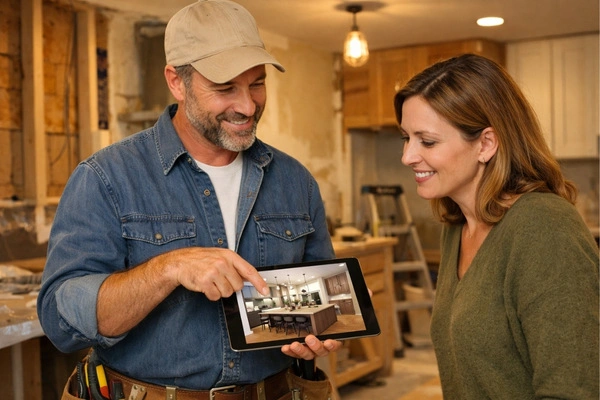
A contractor who can’t explain their process in plain language probably doesn’t have a reliable one. You want to hear a clear sequence: initial consultation, design, selections, permitting, construction, final walkthrough. If they stumble through this answer or get vague, move on.
The best remodeling companies use a design-build model, meaning they handle everything from initial concepts through construction under one roof. This approach cuts down on miscommunication between designers and builders, which is where most budget overruns and delays originate.
3. Who Will I Be Working With on This Project?
Remodeling means strangers in your home for weeks. You deserve to know who those people are. Ask if they use in-house crews or subcontractors. Ask how long their subs have been working with them. High turnover on a contractor’s sub list is a red flag.
According to a 2025 AGC workforce survey, 92% of construction firms report difficulty hiring skilled workers. That shortage is real, and it means some contractors are using whoever they can find rather than crews they trust. A team you can meet in advance is a team you can trust in your home.
4. Do You Handle Design, Permits, and Material Selection?
Some contractors handle everything. Others leave you to coordinate with separate designers, architects, and suppliers on your own. If the answer is “we do it all,” you’re likely talking to a design-build firm, which is the model I recommend for most homeowners. It keeps one company accountable for the entire project.
If they don’t offer these services, make sure you understand exactly what falls on you. Pulling permits yourself, for example, sounds simple until an inspection fails because the application was filled out wrong.
5. What Are Your Work Hours On Site?
This sounds like a minor detail until you realize crews show up at 7 a.m. on a Tuesday while you’re trying to get your kids out the door. Ask when the workday starts and ends. Ask what happens with pets. Ask if you need to be home during the work.
6. Are You Licensed and Insured?
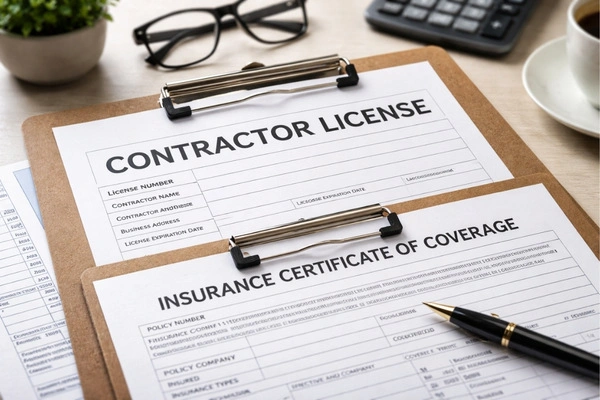
Licensing requirements vary by state and even by county. Don’t assume your contractor has what they need. Ask to see their license number and look it up yourself. Then ask for proof of general liability insurance and workers’ compensation coverage. If a contractor doesn’t carry workers’ comp and someone gets hurt on your property, you could be on the hook. This isn’t a scare tactic. It’s happened to homeowners I’ve worked with.
7. How Many Active Projects Are You Running Right Now?
Here’s a contrarian take: a contractor who says “we can start next week” might actually be a worse sign than one who’s booked out three months. The best remodelers stay busy. If they have zero projects going, ask why. A contractor with steady work typically has better systems and more reliable crews. Just make sure “busy” doesn’t mean “stretched so thin your project gets neglected.”
8. What Challenges Do You See With Our Project?
This is a test question. If the contractor says “no challenges at all,” they either haven’t looked closely enough or they’re telling you what you want to hear. Every project has something. Older homes can hide knob-and-tube wiring, outdated plumbing, or structural issues that don’t show up until demo day. Industry data suggests unforeseen structural problems can add 20–50% to a project’s cost.
A good contractor will be honest about potential issues and explain how they plan around them.
9. How Will We Stay in Touch During the Project?
Communication breakdowns are the number-one cause of homeowner frustration during remodels. Ask who your main point of contact will be. Ask how often you’ll get updates (daily? weekly?). Ask what tools they use, whether that’s email, phone calls, or a project management app.
If they give a vague answer like “just call whenever,” that’s not a communication plan. That’s a recipe for missed messages and growing resentment.
10. How Do You Handle Unexpected Problems During Construction?
No amount of planning can eliminate every surprise. A remodeling team with a solid process will have a defined procedure for handling change orders when hidden issues pop up. They should be able to explain how they document the problem, price the fix, and get your approval before spending a dime.

11. How Do You Keep Project Costs Under Control?
Budget is the biggest source of stress in any remodel. According to the 2025 Zonda Cost vs. Value Report, a midrange bathroom remodel runs about $26,138 nationally, and a minor kitchen remodel averages $28,458. Those are big numbers, and they can climb fast if your contractor doesn’t have a cost-control system.
Ask which costs are fixed and which are estimates. Ask about their typical change-order rate. And here’s what most articles won’t tell you: the old advice to “always get three bids” is less useful than people think. Bids vary because scopes vary. A low bid often hides change orders that blow up later. Focus on the detail in the bid, not just the bottom number.
Ask what contingency percentage they recommend. The standard for remodels is 15–20% of total project cost, and any contractor who tells you otherwise is setting you up for sticker shock.
12. What’s the Payment Schedule?
Never pay for a full project upfront. A standard payment structure ties payments to milestones: a deposit to begin, progress payments as phases are completed, and a final payment after the walkthrough. Ask exactly how each phase is billed and what happens if you need extra time on a payment.
Deposits above 30% of total project cost before work starts should raise your eyebrows. That’s a sign the contractor may have cash-flow problems.
13. How Do You Keep the Workspace Clean and Safe?
Your home is not a construction site (until it is). A quality contractor will explain how they protect finished areas from dust and debris, where they’ll store tools and materials, and how they’ll leave things at the end of each workday. They should also address safety, especially if you have kids or pets.
I always tell homeowners to ask about end-of-day cleanup specifically. The contractors who take this question seriously are the ones who respect your home.

14. What Makes Your Company Different From the Rest?
This is where you learn about culture, not just credentials. Every contractor frames and drywalls. But how they treat clients, solve problems, and stand behind their work is where the real differences show up. Look for specifics. “We treat every home like it’s our own” is a cliché. “We assign a dedicated project manager who sends you a photo update every day by 4 p.m.” is a system.
The right contractor is someone whose process matches how you like to work. Someone who communicates the way you prefer and whose marketing presence and reputation align with what you’ve experienced in person. Trust your gut, but only after you’ve done the homework above.
FAQs
How many bids should I get before hiring a remodeling contractor?
Most advice says three bids, but the number matters less than the detail in each bid. Two thorough, itemized proposals are more useful than five vague ones. Focus on whether each bid breaks down labor, materials, and allowances so you can compare scope, not just price.
What’s a normal deposit for a remodeling project?
A standard deposit typically falls between 10% and 30% of the total project cost. Anything above 30% before work begins is a warning sign. Payments should be tied to project milestones, not front-loaded before construction starts.
How do I verify a contractor’s license and insurance?
Look up their license number through your state’s licensing board website. For insurance, ask the contractor’s insurer to send a certificate of insurance directly to you. Confirm it includes both general liability and workers’ compensation coverage. Don’t just take a contractor’s word for it.
What questions to ask before hiring a remodeling contractor about hidden costs?
Ask what percentage of their projects experience change orders, what their average change-order rate is, and what contingency budget they recommend. Most experienced remodelers suggest setting aside 15–20% of your total budget for unexpected issues. Older homes (the national median age is 41 years per NAHB) tend to have more surprises behind the walls.
Should I hire a design-build contractor or manage designers separately?
For most homeowners, design-build is the better option. It puts one company in charge of design and construction, which reduces miscommunication and keeps timelines tighter. Managing separate designers, architects, and builders yourself adds coordination work and increases the risk of costly errors.
How long does a typical home remodel take?
Timelines vary by scope. A bathroom remodel might take 5–8 weeks, while a full kitchen or whole-home renovation can stretch 3–6 months. NAHB expects residential remodeling activity to grow roughly 3% in 2026, which means contractors are busy and lead times may be longer than usual. Ask about current scheduling availability early.
What’s the biggest red flag when hiring a remodeling contractor?
Refusing to provide a written contract is the single biggest red flag. Beyond that, watch for unusually low bids (they often lead to change orders), pressure to sign quickly, and inability to provide recent references. If a contractor gets defensive when you ask basic questions, that tells you how they’ll handle conflict during your project.

Michael Vale has over 5 years of experience helping clients improve their business visibility on Google. He combines his love for teaching with his entrepreneurial spirit to develop innovative marketing strategies. Inspired by the big AI wave of 2023, Michael Vale now focuses on staying updated with the latest AI tools and techniques. He is committed to using these advancements to deliver great results for his clients, keeping them ahead in the competitive online market.