
5 Home Remodeling Mistakes That Blow Budgets In 2026 (And How To Dodge Them)
Most home remodeling mistakes share one thing in common: they’re completely avoidable. The five biggest ones are skipping proper planning, underestimating costs, hiring the cheapest contractor, renovating rooms out of order, and ignoring post-project maintenance. Any single one of these can add 20–50% to your final bill.
The U.S. home remodeling market hit roughly $503 billion in 2024, according to Harvard’s Joint Center for Housing Studies. That number is projected to climb past $524 billion by early 2026. With that kind of money changing hands, you’d think homeowners would slow down and plan carefully. Most don’t.
I’ve watched families pour $60,000 into a kitchen remodel only to discover they needed $8,000 in electrical panel upgrades nobody budgeted for. I’ve seen brand-new tile floors ripped out because someone forgot to run plumbing lines first. These aren’t rare disasters. They happen on roughly 1 in 3 projects.
Home remodeling mistakes are preventable errors in planning, budgeting, contractor selection, project sequencing, or maintenance that turn a renovation into a money pit. The fix isn’t complicated, but it does require slowing down before you speed up.
This article won’t cover DIY-specific mistakes or cosmetic design choices. We’re focused on the structural, financial, and logistical errors that cost real money on contractor-led projects.
Jumping Into Demolition Without a Finished Plan
A remodel without a finished scope of work is just expensive improvisation. And improvisation during construction costs roughly 20–30% more than planned work, according to a McKinsey analysis of large construction projects. Residential work follows the same pattern on a smaller scale.
Why does a detailed scope of work save you money?
Every change you make after demolition starts costs more than the same decision made on paper. A scope of work pins down room layouts, material selections, timeline milestones, permit requirements, and temporary living arrangements before anyone picks up a hammer.
Without that documentation, contractors guess. And contractors who guess bill you for the difference.
The scope should include a line-item budget, specific material brands and models (not just “granite counters” but which granite at which price per square foot), and a realistic timeline with buffer days built in. Permit requirements vary by city, so check with your local building department before the project starts, not after you’ve already torn out a load-bearing wall.
Which upgrades actually pay you back?
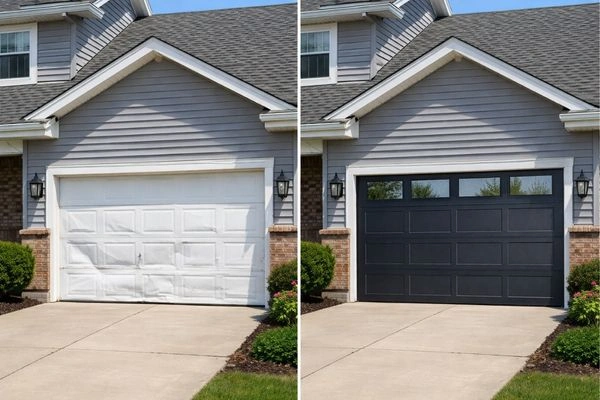
Not all remodeling projects return equal value. The 2025 Cost vs. Value Report from Zonda and Remodeling Magazine found that garage door replacement returned 267.7% of cost at resale ($4,672 cost, $12,507 in added value). Steel entry door replacement came in at 216.4%. Both are curb-appeal projects.
Interior projects tell a different story. A midrange minor kitchen remodel recovers 90–100% of cost. Upscale major kitchen remodels? Closer to 30–50%. Bathrooms land somewhere in between, with midrange projects recovering 70–80%.
The contrarian take here: most people over-invest in kitchens and under-invest in exteriors. If you’re remodeling to sell within five years, a $5,000 garage door and a $2,500 entry door will outperform a $40,000 kitchen renovation on a pure ROI basis every time.
But if you’re staying put for a decade or more, ROI matters less than daily function. Storage solutions, better traffic flow, and energy-efficient windows won’t show up in resale calculators, but they’ll change how you live in the space.
Getting contractors on the same page before day one
Your first meeting with a contractor should feel like an interview, not a sales pitch. Share your budget ceiling (not your target, your ceiling), your must-have features, and your non-negotiables on timeline.
Good contractors ask about your lifestyle before they talk about materials. How do you use the kitchen? Do you have kids who need a functional bathroom during construction? Are you working from home and need noise-free hours?
Get references from recent clients with projects similar to yours. Ask those references one specific question: “Did the final cost match the original quote within 15%?” If the answer is no more than once, move on.
Written contracts aren’t optional. They protect both sides. And regular progress check-ins (weekly, at minimum) catch small problems before they become $5,000 surprises.
Getting the Budget Wrong in 2026
Homeowners underestimate remodeling costs by 20–50% on average. A Hippo Insurance survey found that 38% of homeowners underestimated how much their project would cost, and 34% reported going over budget because of it. The three budget killers are insufficient contingency funds, hidden costs behind walls, and vague contractor quotes.
What is the 30% contingency rule?
The 30% rule means adding 30% to your base construction budget for surprises. Not 10%. Not 15%. Thirty percent.
For a $50,000 kitchen remodel, that means budgeting $65,000 total. The extra $15,000 covers structural surprises behind drywall, material price changes during long projects, code updates that require extra work, and the design changes you’ll almost certainly make mid-project.
I know 30% sounds aggressive. I’ve seen too many projects stall at 80% completion because the homeowner budgeted 10% contingency and ran out of money when the electrician found aluminum wiring behind the kitchen wall. An unfinished project is worth less than the home you started with.
NARI published a January 2026 piece on budgeting traps for remodelers, and the biggest one applies to homeowners too: treating the budget as a one-time exercise instead of a living document you revisit every two weeks during construction.
Where do hidden costs show up in kitchens and bathrooms?
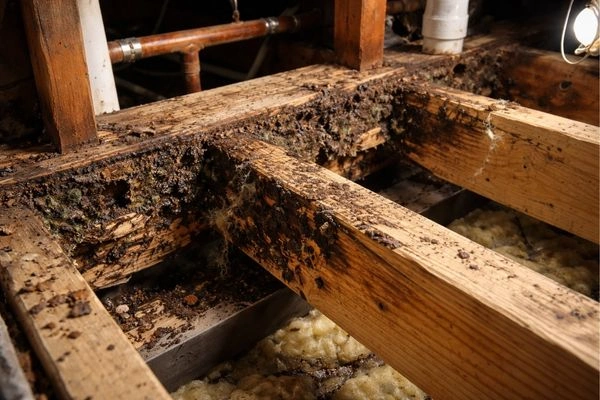
Kitchens and bathrooms hide the most expensive surprises because they involve water, electricity, and structural loads all in the same space.
Common kitchen surprises and their typical cost ranges:
- Electrical panel upgrades for new appliances ($1,500–$3,000)
- Plumbing relocation for island sinks ($2,000–$4,000)
- Subfloor reinforcement for heavy stone countertops ($500–$2,500)
Common bathroom surprises:
- Shower pan replacement from hidden leaks ($800–$1,500)
- Ventilation fan installation or replacement ($300–$800)
- Floor joist repair from long-term water damage ($1,000–$5,000)
Permits add cost too. Kitchen permits run $150–$500 depending on your city. Bathroom permits range from $100–$300. Some municipalities require separate electrical and plumbing permits on top of the general building permit.
How do you spot an incomplete contractor quote?
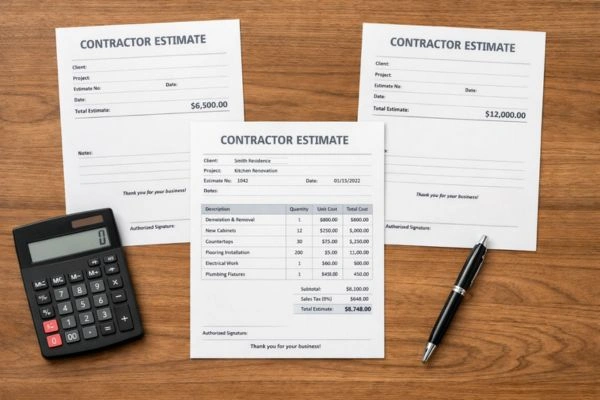
The cheapest quote is almost always the most incomplete one. A proper estimate breaks down materials by specific brand, model, and quantity. It lists labor by task with hourly rates. It includes all permit fees, a clear start and completion date, and a defined process for pricing change orders.
| Quote Component | What a Complete Quote Includes |
| Materials | Specific brands, models, quantities, and cost per unit |
| Labor | Hours per task with hourly or per-task rates |
| Permits | All required permits with actual fee amounts |
| Timeline | Start date, milestone dates, completion date |
| Change orders | Written process for how additions get priced and approved |
| Cleanup | Dumpster rental, debris removal, final cleaning fees |
Get three quotes minimum. But don’t just compare bottom-line numbers. Compare what’s included. A $35,000 quote that covers cleanup, permits, and premium materials is a better deal than a $28,000 quote that leaves those as add-ons.
Watch for vague allowances. A “granite countertop allowance” of $40 per square foot might only cover builder-grade stone. Premium granite runs $80–$120 per square foot. That gap adds up fast on a 40-square-foot kitchen island.
Why the Cheapest Contractor Is the Most Expensive Home Remodeling Mistake
Picking a contractor based on the lowest bid is the single most repeated mistake in this industry. And I get why people do it. The bids come in, you see a $15,000 spread between the highest and lowest, and it feels irresponsible not to save that money. But the low bid almost always means corners get cut, materials get downgraded, or extras get billed later.
The skilled labor shortage makes this worse. The Home Builders Institute reported in fall 2025 that residential construction lost 26,100 jobs over 12 months, and the industry needs roughly 723,000 new workers annually. Wages for non-supervisory home building workers rose 9.2% in mid-2025 alone. If a contractor is dramatically cheaper than everyone else, ask yourself how they’re staffing the job.

What to look for beyond the price tag
Start with license and insurance verification. Active licenses, current liability coverage, and workers’ compensation insurance are non-negotiable. If a worker gets hurt on your property and the contractor doesn’t carry workers’ comp, you’re exposed.
Ask for photos of completed projects similar to yours. Good contractors keep detailed portfolios. Contact at least three recent references and ask about work quality, schedule accuracy, and how problems were handled.
Pay attention to communication speed during the bidding process. If a contractor takes two weeks to return your call before they have your money, imagine how responsive they’ll be after they do.
Written warranties matter. Reputable contractors back their work with 1–10 year warranties depending on the project scope. That confidence tells you something about how they build.
Does local experience matter for remodeling quality?
Yes, and more than most people realize.
Local contractors know your area’s building codes and permit requirements. They know which inspectors care about what. They have supplier relationships that get materials delivered faster (and sometimes cheaper). They understand how regional weather affects project scheduling and material choices.
But the biggest advantage is reputation. A contractor who lives and works in your community depends on word-of-mouth referrals. That’s a stronger quality incentive than any contract clause. They can’t afford a string of unhappy clients in a market where everyone knows everyone.
Proximity also matters for warranty work. When something needs fixing six months after completion, a local contractor can be at your door the same week. A contractor who drove two hours for the original job? Good luck getting them back.
How value-driven contractors protect your investment
The best remodeling contractors don’t compete on price. They compete on transparency, material quality, and long-term performance.
Value-driven contractors use proven material brands with documented lifespans. They maintain trained crews (not rotating subcontractors from job to job). They create detailed project timelines and communicate weekly, sometimes daily, with homeowners. And they bring you into the process rather than keeping you in the dark until the final invoice.
The 2025 AGC Workforce Survey found that 45% of construction firms reported project delays from skilled labor shortages. Contractors who invest in their own teams are less likely to get caught in that bottleneck. Ask how long their lead carpenter has been with them. That answer tells you a lot about how the project will go.
Renovating Rooms in the Wrong Order
Project sequencing isn’t glamorous, but getting it wrong is expensive. I’ve watched homeowners install $8,000 in floor tile only to have an electrician cut through it two weeks later to run new wiring. That’s double the material cost and double the labor. All because nobody mapped the order of operations before work started.
The right sequence for a whole-home remodel
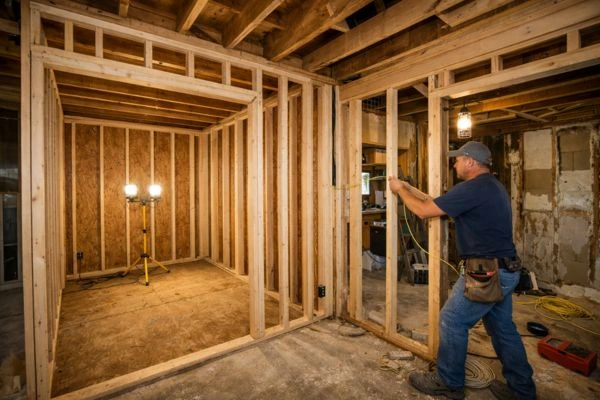
Renovation follows a specific order, and skipping steps creates cascading problems. The pattern holds for nearly every residential project:
- Structural changes (walls, floors, ceilings)
- Major systems (plumbing, electrical, HVAC)
- Insulation and drywall
- Flooring installation
- Paint and trim
- Fixtures and appliances
Structural work goes first because it defines the bones of every room. Plumbing comes before electrical because pipes are harder to reroute than wires. Drywall closes everything up, so all rough-in work must pass inspection before it goes on.
One exception: hardwood floors. Install them after painting to prevent dust from settling in the finish. But install tile and vinyl before paint to avoid damage to the new flooring from painter’s equipment.
How poor scheduling wastes your money
Bad sequencing creates a domino effect. If the framing isn’t done, the electrician can’t start. If the electrician can’t start, the insulation crew gets bumped. Every delay ripples through every trade that follows.
Material ordering is another scheduling trap. Custom cabinets take 6–10 weeks for fabrication. If you order them after demolition instead of before, your project sits idle for two months while you wait. That idle time still costs money in contractor overhead, temporary housing (if you’ve moved out), and carrying costs on any construction loan.
Weather adds another layer for projects with exterior components. Smart scheduling builds in indoor tasks as backup when outdoor work gets rained out.
Keeping trades coordinated so nobody rips out finished work
Trade coordination is where project management earns its money. The order goes structural first, then plumbing, then electrical, then HVAC. Each trade needs to finish and pass inspection before the next one starts.
Critical coordination points that get missed:
- Electrical panels need unblocked access for safety inspections
- Plumbing vents must line up with planned roof penetrations
- Any changes to load-bearing walls need structural engineering approval first
- Floor joist modifications affect both plumbing and electrical routing
The fix is simple but rare: weekly coordination meetings with all trades present. When the plumber moves a drain line, the electrician needs to know before routing wires through that same cavity. A good general contractor manages this communication automatically. A mediocre one lets you discover the conflict after both trades have finished.
Ignoring Maintenance After the Remodel Is Done
The remodel is done, the contractor is gone, and the house looks incredible. And then most homeowners forget that their new investment needs regular care to stay that way. I’ve walked into homes three years after a $100,000 renovation where the grout was cracking, the caulk was peeling, and water damage had started behind a shower wall. All preventable with $200 in annual maintenance.

How much should you budget for upkeep each year?
Set aside 1–3% of your remodel cost annually for maintenance and small repairs. On a $50,000 project, that’s $500–$1,500 per year. Build that number into your household budget the same month construction wraps up.
Create a written maintenance schedule within the first 30 days after your remodel finishes. Annual tasks include checking caulk around tubs and showers, testing GFCI outlets in wet areas, inspecting grout for cracking, and cleaning exhaust fans.
Some materials need more frequent attention. Natural stone countertops need resealing every 12–18 months. Hardwood floors may need refinishing every 5–7 years. Keep the product spec sheets your contractor gives you. They contain the exact care instructions for everything installed in your home.
Save every warranty document. Homeowners lose these constantly, and missing a warranty window means paying for repairs the contractor would have covered for free.

Kitchen and bathroom maintenance that prevents expensive repairs
Daily kitchen maintenance is mostly a habit. Wipe down countertops with the right cleaner for your material (stone cleaner for granite, mild soap for quartz). Clean appliances by the book. Stainless steel cleaner will damage painted or matte finishes.
Check under sinks monthly for slow leaks. New plumbing connections sometimes develop small drips in the first year. A drip you catch early costs nothing to fix. A drip you ignore for six months costs $1,000–$5,000 in water damage and mold remediation.
Bathroom maintenance is all about moisture control. Run exhaust fans during every shower and for 30 minutes after. Re-caulk high-wear areas every 1–2 years. Old caulk lets water seep behind tile and into wall cavities where damage is invisible until it’s severe.
Check toilet bases for movement or rocking. Even small movements can break the wax seal and send water into your subfloor. Monthly grout inspection takes five minutes and can save thousands.
Planning future upgrades during your current remodel
The smartest move most homeowners skip: planning ahead while the walls are already open.
Installing extra electrical capacity now, even if you don’t need it today, costs a fraction of adding circuits after the drywall is closed. Families with young children should consider accessibility features (blocking for future grab bars, wider doorways) that’ll matter in 15–20 years.
Stage large projects so your home stays livable. Remodel one bathroom while keeping another functional. If you’re working with a team that plans ahead, they’ll map this out for you during the design phase.
Keep detailed records of paint colors, tile lot numbers, and fixture model numbers. Matching materials later is nearly impossible without this information. A simple spreadsheet saves future headaches.
The five home remodeling mistakes covered here (poor planning, budget errors, cheap contractors, wrong sequencing, and skipped maintenance) account for the majority of renovation disasters. Every one of them has a fix that costs nothing but time and attention upfront. Don’t rush. Don’t cheap out. And don’t assume the project ends when the contractor leaves.
FAQs
How much should I set aside for unexpected costs during a remodel?
Budget a 30% contingency on top of your base construction estimate. On a $50,000 project, that means having $65,000 available. The most common budget-busting surprises are structural issues behind walls, electrical upgrades, and plumbing problems discovered during demolition. Homeowners who budget only 10–15% for contingencies frequently end up with unfinished projects.
Does hiring the cheapest contractor actually save money?
Almost never. Low bids typically mean thinner margins, which leads to material substitutions, less experienced crews, or surprise change orders once work begins. A Hippo Insurance survey found that 34% of homeowners went over budget partly because of inaccurate upfront estimates. Spend the extra time vetting contractors on references, warranty terms, and communication quality rather than choosing the lowest number.
What home remodeling mistakes waste the most money?
Skipping a finished scope of work and renovating rooms out of sequence are the two costliest errors. Poor planning leads to budget overruns of 20–30%, according to McKinsey research on construction projects. Bad sequencing (like installing tile before running new electrical lines) doubles both material and labor costs in the affected areas.
Which remodeling projects have the best return on investment in 2026?
Curb-appeal projects dominate ROI rankings. The 2025 Cost vs. Value Report shows garage door replacement returning 267.7% and steel entry doors returning 216.4%. Interior projects return less: midrange minor kitchens recover 90–100%, while upscale major kitchens drop to 30–50%. If resale is your goal, invest in the exterior first.
How do labor shortages affect remodeling timelines right now?
Significantly. The AGC’s 2025 Workforce Survey found 45% of construction firms experienced project delays from labor shortages. The Home Builders Institute estimates the industry needs 723,000 new workers annually. Expect projects to take 20–50% longer than quoted timelines, and book contractors 3–6 months in advance to secure a spot on their schedule.
How do I protect my remodel investment after the project is done?
Create a maintenance schedule within 30 days of completion and set aside 1–3% of your project cost annually for upkeep. Reseal natural stone countertops every 12–18 months, re-caulk wet areas every 1–2 years, and check under sinks monthly for slow leaks. Keep all warranty paperwork organized, as many homeowners miss free repairs simply because they lost the documentation.
Should I get a home warranty after remodeling?
A contractor warranty on workmanship is more valuable than a general home warranty for recently remodeled areas. NAHB’s 2024 warranty guidance recommends structured warranty programs that clearly define what’s covered and for how long. Ask your contractor for a written warranty of 1–5 years on labor and verify that material warranties are registered in your name.

Michael Vale has over 5 years of experience helping clients improve their business visibility on Google. He combines his love for teaching with his entrepreneurial spirit to develop innovative marketing strategies. Inspired by the big AI wave of 2023, Michael Vale now focuses on staying updated with the latest AI tools and techniques. He is committed to using these advancements to deliver great results for his clients, keeping them ahead in the competitive online market.