
Home Remodeling Vs Home Renovation: Key Differences
Home remodeling vs home renovation is one of those questions that sounds simple until you’re $15,000 deep into a project and realize you signed up for the wrong thing. A renovation updates what’s already there. A remodel changes the structure or purpose of the space. That single distinction determines your budget, your timeline, whether you need permits, and how much value you’ll add to your property.
Home remodeling changes a room’s layout, structure, or function, while home renovation refreshes or restores a space without altering its footprint or purpose. Remodeling costs 2 to 3 times more than renovating and almost always requires permits, but it also delivers bigger changes in how you use your home day to day.
I’ve watched homeowners burn through months of planning because they thought swapping countertops was a “remodel.” It’s not. The confusion affects who you hire, what permits you pull, and what your insurance covers.
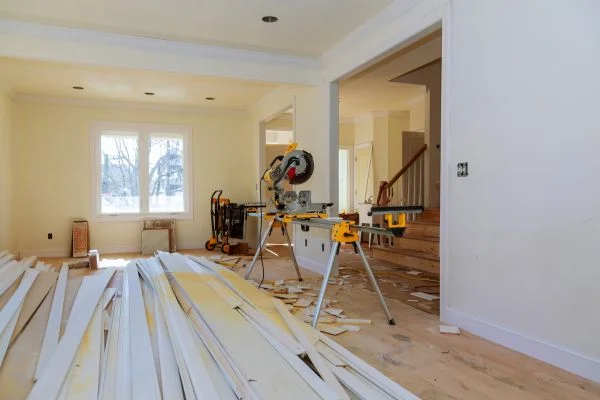
What Do Home Remodeling and Home Renovation Actually Mean?
The words get thrown around like they’re the same thing. They aren’t.
Home Renovation
A home renovation updates or restores an existing space without changing its layout or purpose. You’re improving what’s already there. New paint, updated light fixtures, refinished hardwood floors, and fresh bathroom tile. The bones of the room stay exactly where they are.
Think of it this way. If your kitchen still functions as a kitchen and you’re just making it look better, that’s a renovation. The 2025 Cost vs. Value Report from Zonda shows a garage door replacement (average $4,672) returned roughly 267% at resale. No walls moved. No plumber called.
Home Remodeling
A home remodel changes the structure, layout, or purpose of a space. Knocking out a wall to create an open floor plan, converting a basement into a guest suite, and expanding a bathroom by moving plumbing lines.
The cost difference is real. According to Angi’s 2025 data, a midrange major kitchen remodel runs about $82,793 nationally. A midrange bathroom remodel averages $26,138. You’re paying for structural engineering, licensed trades, and work that local code enforcement wants to inspect.
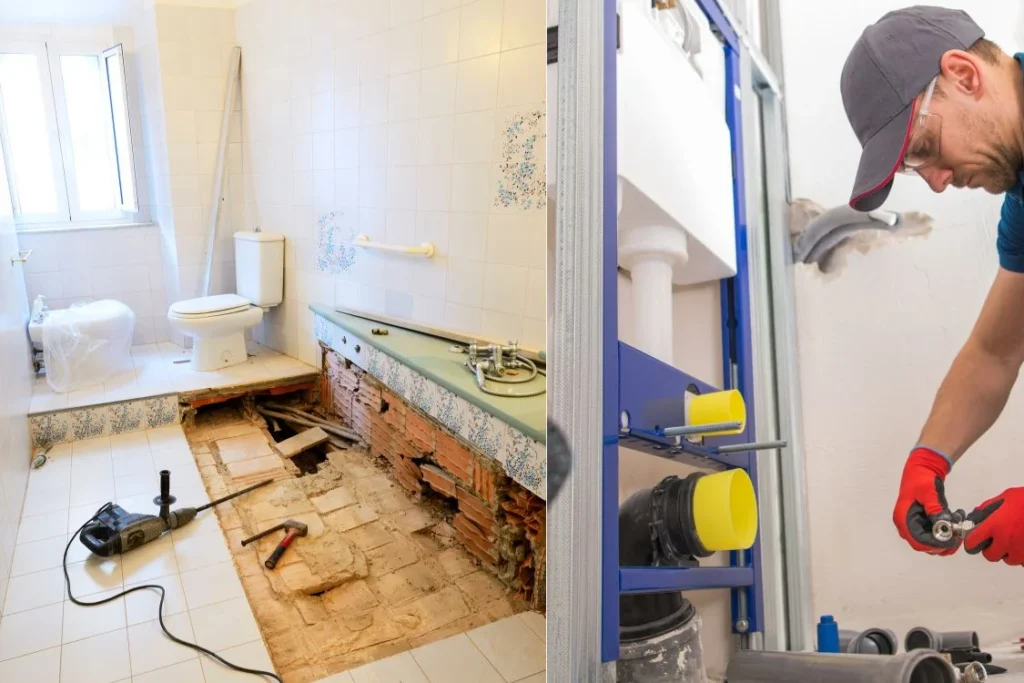
Examples of Remodeling vs Renovation Projects
A quick side-by-side makes this concrete.
Remodeling examples:
- Converting a basement into a living space or guest bedroom
- Removing walls to create an open-concept floor plan
- Expanding a bathroom by relocating plumbing and moving walls
- Turning a formal dining room into a home office with built-in cabinetry
Renovation examples:
- Replacing outdated plumbing fixtures in a bathroom
- Refinishing hardwood floors throughout the home
- Updating paint, light fixtures, and hardware in the kitchen
- Swapping out an old garage door for a modern, insulated one
The gray area catches people off guard. Replacing every cabinet in your kitchen without touching the layout? Renovation. Moving the sink to the opposite wall? Remodel. The line is a structural change, not a price tag.

What Are the Key Differences Between Remodeling and Renovation?
Definitions help, but the practical differences are what actually matter when you’re making decisions.
Scope of the Project
Remodeling projects are bigger by definition. They involve changes to the room’s physical structure. That means architects or engineers, contractor crews, and timelines measured in months rather than weekends. NAHB reported in February 2026 that 128,000 remodeling firms now operate in the U.S. (up from 69,000 in 2000), and that growth tracks directly with demand for structural work.
Renovations are surface-level upgrades. New flooring, fresh countertops, updated fixtures. Many are projects a skilled homeowner can handle over a long weekend with basic tools.
How Do Costs and Property Value Compare?
This is where most people’s ears perk up. Here’s a real comparison using 2025 national data:
| Project Type | Category | Average Cost | Typical ROI |
| Garage door replacement | Renovation | $4,672 | 267.7% |
| Steel entry door replacement | Renovation | $2,435 | 216.4% |
| Minor kitchen remodel (midrange) | Renovation/Light Remodel | $28,458 | 113% |
| Bathroom remodel (midrange) | Remodel | $26,138 | ~80% |
| Major kitchen remodel (midrange) | Remodel | $82,793 | 51% |
Here’s the contrarian take nobody wants to hear. Bigger remodels don’t automatically mean bigger returns. Minor exterior and renovation-style projects consistently outperform large interior remodels on ROI. A $4,672 garage door gives you nearly 268% back. An $82,793 kitchen remodel gives you about 51%. If your primary goal is resale value, the smart money is often on a series of targeted renovations rather than one massive remodel.
That said, ROI isn’t the only reason people remodel. If your family outgrew the house and you need a fourth bedroom, no amount of fresh paint fixes that.
Do You Need a Building Permit?
Structural remodeling almost always requires permits. If you’re moving load-bearing walls, rerouting plumbing, or modifying the floor plan, your local building department wants to know. Skipping permits to save time is one of the most expensive mistakes homeowners make. Unpermitted structural work can trigger fines, insurance claim denials, and five-figure remediation costs when you sell. I’ve seen it happen to clients who thought nobody would notice. The buyer’s inspector always notices.
Most cosmetic renovations (painting, fixture swaps, flooring) don’t require permits. But if your renovation involves electrical or plumbing work, check with your local building department first. States adopting the 2024 IECC are tightening requirements for “substantial improvements,” so even some renovation projects now trigger compliance rules.
Structural vs Cosmetic Changes
Remodeling means structural change. You’re reworking the layout, removing load-bearing walls, and adding features that require heavy reconfiguration. This is where engineering stamps, load calculations, and licensed contractors become non-negotiable.
Renovations are cosmetic. New flooring, fresh countertops, updated fixtures in a bathroom that keeps its same footprint. Most experienced DIYers can handle basic renovations with the right tools and some patience. Professional installations grew 28% between 2021 and 2023, according to Harvard’s Joint Center for Housing Studies, while DIY spending actually dropped 2%. That tells you something about where the market is heading.

How Do You Choose Between a Remodel and a Renovation?
Start with your actual problem, not the solution you’ve already imagined.
- What’s driving the project? If your family has grown and you need more space, a renovation won’t cut it. You need a remodel. But if your 1990s kitchen just looks tired and the layout works fine, a renovation saves you tens of thousands.
- What’s your realistic budget? The national average for a whole-house remodel is roughly $52,170, with high-end projects running $190,000+ (Angi, 2025). Always add 10 to 20% for contingencies. Owners of pre-1940 homes spend 50% more on improvements because of hidden plumbing and electrical issues (JCHS, 2025).
- How much time do you have? Remodels take months. Renovations can happen in weeks. If you’re listing the house in spring, a $5,000 renovation delivers better return per dollar than a rushed $80,000 remodel.
- Are you staying or selling? Remodel for the life you want in the house. Renovate for the return at closing.

Tips for a Successful Home Improvement Project
Set a Realistic Budget
Pin down your number before you call a single contractor. Include 10 to 20% for surprises. The median household spent around $20,000 on home improvements in 2024 (Houzz/Statista via Fixr), down from $24,000 in 2023. Material costs remain high due to tariff pressures (ABC, February 2026). Plan for today’s prices, not last year’s.
Check Local Building Codes
Your building department isn’t the enemy. Reach out before you start, not after an inspector flags unpermitted work. Many states now enforce 2024 IECC standards requiring efficiency upgrades for qualifying alterations.
Hire the Right Contractor
For anything structural, hire licensed and insured professionals with a track record in your area. Ask for references, proof of insurance and bonding, and what their contingency plan is for hidden conditions behind your walls. Contractors who invest in a professional online presence tend to run more accountable operations. Those basics prevent most of the horror stories you hear about.
Keep Your Goals in Focus
If your goal is resale value, stick with high-ROI projects like kitchen and bath updates. If you’re aging in place, invest in accessibility features (wider doorways, grab bars, curbless showers). If you just want a better-looking home office, don’t let scope creep turn a weekend project into a three-month ordeal.
Be Honest About What You Can Handle
Both remodeling and renovating will disrupt your routine. Remodels disrupt it more. Dust, noise, displaced kitchens, contractor schedules that shift. A renovation you actually finish beats a remodel you abandon halfway through.
When it comes to home remodeling vs home renovation, the best choice depends on your goals, budget, and timeline. Pick the project that solves your actual problem, hire the right people, and don’t skip the permit.
FAQs
Do I need permits for a home renovation vs a remodel?
Most cosmetic renovations (painting, new fixtures, flooring) don’t require permits. Remodeling projects that involve structural changes, layout modifications, or rerouting plumbing and electrical lines almost always do. Skipping permits on structural work can result in fines, insurance claim denials, and remediation costs exceeding $10,000 when you sell.
Which has better ROI, remodeling or renovation?
Renovation-style projects typically deliver stronger ROI. The 2025 Cost vs. Value Report shows a garage door replacement returning 267.7% and a steel entry door returning 216.4%. A major midrange kitchen remodel, by contrast, recoups about 51% of its $82,793 average cost. Minor and exterior projects consistently outperform large interior remodels at resale.
How much more does remodeling cost than renovation?
Remodeling generally costs 2 to 3 times more than renovating the same space. According to Angi’s 2025 data, the national average for a whole-house remodel is roughly $52,170, with high-end projects exceeding $190,000. A cosmetic renovation of the same home might run $15,000 to $30,000.
Can I DIY a renovation but not a remodel?
For most cosmetic renovations (paint, hardware, flooring), yes. Structural remodeling requires licensed professionals for safety, code compliance, and warranty coverage. Harvard’s JCHS found that professional installations grew 28% between 2021 and 2023, while DIY spending dropped 2%, which signals homeowners are increasingly leaving complex work to the pros.
Does remodeling increase property taxes more than renovation?
It can. Structural remodeling that increases assessed value (adding square footage, converting unfinished space) often triggers a property tax reassessment. Cosmetic renovations like new paint, fixtures, or flooring rarely trigger reappraisals. Rules vary by county, so check with your local tax assessor before starting a major remodel.
What are the hidden costs of remodeling an older home?
Plumbing and electrical surprises are the big ones. Contractor forums and JCHS data both indicate that owners of pre-1940 homes spend 50% or more on improvements compared to newer homes. Unexpected overages of $20,000 to $50,000 are common when opening walls in older construction. Always budget 10 to 20% for contingencies.
How long does a home remodel take compared to a renovation?
Most renovations wrap up in days to a few weeks. A midrange bathroom remodel typically takes 4 to 8 weeks. A major kitchen remodel can run 3 to 6 months, depending on permit timelines, material lead times, and contractor availability. NAHB’s 2026 data notes 128,000 active remodeling firms in the U.S., but skilled labor shortages continue to extend project timelines.

Michael Vale has over 5 years of experience helping clients improve their business visibility on Google. He combines his love for teaching with his entrepreneurial spirit to develop innovative marketing strategies. Inspired by the big AI wave of 2023, Michael Vale now focuses on staying updated with the latest AI tools and techniques. He is committed to using these advancements to deliver great results for his clients, keeping them ahead in the competitive online market.