
What Is The Most Expensive Part Of Remodeling A House In 2026?
Labor is the most expensive part of remodeling a house. It eats 30-50% of your total budget on virtually every project. But that’s the short answer. The full picture depends on what you’re remodeling, because an upscale primary suite addition now averages $351,613 nationally while a midrange bathroom remodel runs closer to $26,138 (according to the 2025 Cost vs. Value Report).
The most expensive part of remodeling a house is labor, which runs 30-50% of total project costs. Kitchen and bathroom renovations follow closely because they require specialized plumbing, electrical work, and premium materials. Structural changes like room additions carry the highest absolute dollar amounts, with upscale suite additions averaging over $350,000 nationally in the 2025 Cost vs. Value Report.
I’ve worked with remodeling companies for over a decade, and the pattern repeats. Homeowners budget for cabinets and countertops but get blindsided by what’s behind the drywall. This guide covers where your money actually goes, backed by 2025-2026 data. We won’t get into cosmetic upgrades like paint or landscaping. Those are real costs, but they’re not what breaks budgets.
How Much Does Labor Really Cost in a Full Remodel?
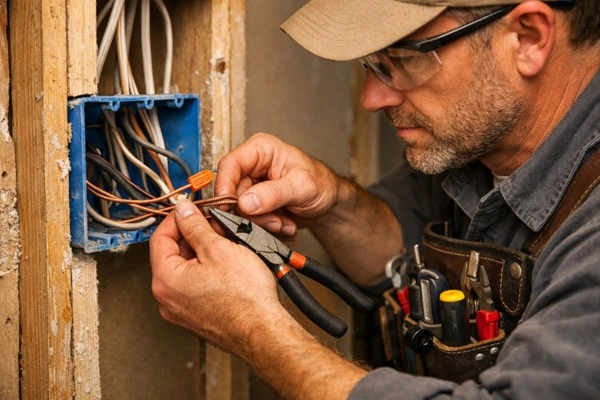
Labor is the single biggest line item in any remodel, running 30-50% of total project costs. And it’s climbing.
NAHB reported roughly 300,000 open construction jobs as of December 2025. The residential sector needs about 740,000 new workers annually just to keep up with retirements and demand. BLS data from January 2026 shows residential construction wages climbed 3.5-9.2% year-over-year. Fewer workers, higher bids. Simple math.
Licensed electricians, plumbers, and structural engineers command the highest rates because their work requires permits and inspections. You can’t legally DIY most of it, and fixing bad electrical work costs more than doing it right the first time.
Here’s what most cost guides leave out: labor compounds. A general contractor managing three or four licensed subcontractors adds markup on each trade’s rate. That’s how labor creeps toward 50% of total spend on complex projects. If you’re working with an experienced remodeling team, they’ll break this out line by line in your estimate so nothing stays buried.
Why Do Kitchen and Bathroom Remodels Cost the Most Per Square Foot?
Kitchens and bathrooms cost the most per square foot because they combine skilled trade labor with premium materials. Every other room is mostly walls, floors, and paint. Kitchens and bathrooms add plumbing, electrical, gas lines, ventilation, and water-resistant everything.
What Does a Kitchen Remodel Actually Cost in 2026?
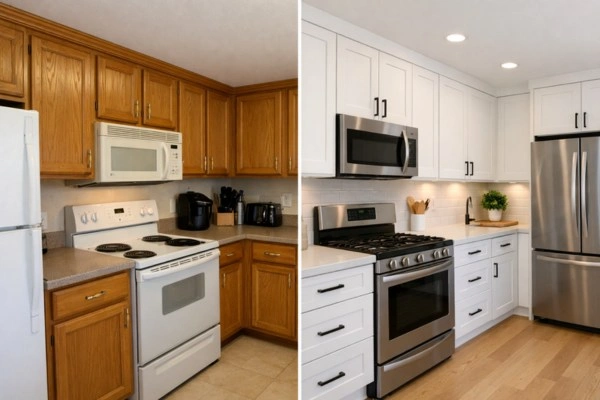
A midrange major kitchen remodel averages $82,793 nationally. An upscale version runs $164,104 (2025 Cost vs. Value Report). Now here’s the number that should change how you plan: ROI. A minor midrange kitchen remodel returns 113% at resale. A major upscale kitchen returns just 36%.
That “kitchens always pay for themselves” line you’ve heard repeated for years? It’s wrong. It holds for minor remodels under $30,000. Past the $80,000-$160,000 range, you’re spending for lifestyle, not equity. That’s fine if you know it. Most homeowners don’t find out until they sell.
Cabinetry takes the biggest bite of any kitchen budget, followed by countertops and appliances. But the hidden cost driver is what happens when you move plumbing or electrical lines. NKBA data from Q3 2025 shows tariffs pushed consumer prices up 4.6% year-over-year, with lighting and vanities hit hardest. If you’re planning a 2026 kitchen remodel, expect material costs to be noticeably higher than quotes from even 12 months ago.
How Much Should You Budget for a Bathroom Remodel?
A midrange bathroom remodel averages $26,138 with an 80% ROI. Upscale versions jump to $81,612 but return only 42% at resale.
Bathrooms are deceptively expensive per square foot. Contractors consistently report $200-$400 per square foot for small bathrooms once plumbing, electrical, and permits are included. A 40-square-foot bathroom starts at $8,000-$16,000 before any luxury fixtures.
Spa features like heated floors, rainfall showers, and freestanding tubs look great on Instagram. I’ve seen homeowners spend $50,000 on a bathroom that adds $20,000 in resale value. Know the gap before you commit.
How Can Structural Work and Additions Double Your Budget?
Structural work is where remodel costs jump from expensive to staggering. Removing a load-bearing wall requires engineering plans, permits, and steel beam installation. Adding square footage brings foundation work, roofing, and utility extensions.
The 2025 Cost vs. Value Report puts the costliest remodeling project nationally at an upscale primary suite addition: $351,613 on average. More than double an upscale kitchen. And its ROI? Just 18%.
| Project | Average Cost | ROI |
| Upscale Primary Suite Addition | $351,613 | 18% |
| ADU (660 sq ft) | $166,406 | 41% |
| Upscale Kitchen Remodel | $164,104 | 36% |
| Major Midrange Kitchen | $82,793 | 51% |
| Upscale Bath Remodel | $81,612 | 42% |
| Midrange Bath Remodel | $26,138 | 80% |
| Minor Midrange Kitchen | $28,458 | 113% |
Source: 2025 Cost vs. Value Report (Zonda Media / JLC)
Most articles about the most expensive part of remodeling a house focus on kitchens. The data says additions are the bigger budget risk. If you plan to stay 10+ years, the math can work. If you might sell within five years, an addition rarely pays back.
Do Premium Materials Actually Pay for Themselves?
Sometimes. But less often than the showroom sales pitch suggests.
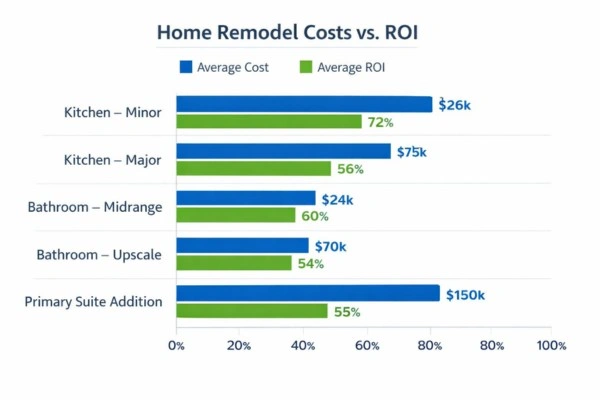
Fiber-cement siding costs $21,485 and returns 114% at resale. Vinyl siding costs $17,950 and returns 97%. The premium material wins on both durability and payback. Vinyl windows ($22,073, 76% ROI) beat wood windows ($26,781, 70% ROI) on cost and return.
The pattern across the 2025 data is clear: mid-grade materials with proven durability outperform both budget and luxury options. Marble countertops look incredible, but they don’t recoup their cost premium over quartz at resale in most markets.
Tariffs are making material choices harder in 2026. NKBA reports that 28% of kitchen and bath firms saw their worst margin declines on record in 2025, with supplier costs up 6.1%. Those increases land on homeowners planning renovations this year. Ask your contractor how current tariffs affect their material pricing before you finalize selections.
Permits, Inspections, and the Code Surprises Nobody Warns You About
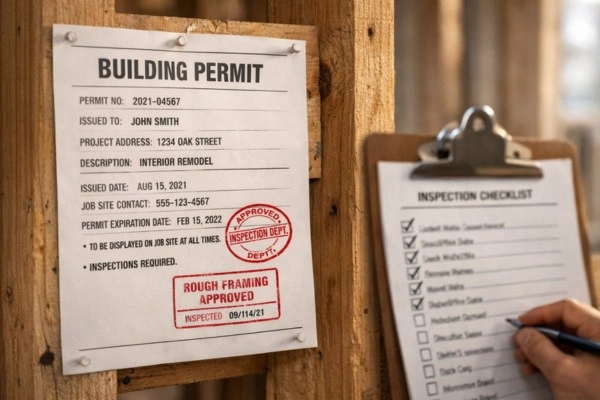
Permits and inspections run a few hundred to several thousand dollars depending on project scope. That cost is predictable. The one that isn’t? Mandatory code upgrades.
When contractors open walls in older homes, they regularly find outdated wiring, non-compliant plumbing, or thin insulation that must be brought to current code before inspection. This can add 10-20% to your total budget with zero notice.
New building codes are raising the bar. California’s 2025 Title 24 (effective January 2026) added electrification, wildfire resilience, and energy requirements for renovations. New York’s updated codes include similar rules. Even outside those states, local code trends are moving the same direction.
The question nobody asks their contractor before demo day: “What code upgrades are likely once we open these walls, and what will they cost?” Get that answer in writing. It might be the most important line in your contract.
How Do You Pick the Right Remodeling Team Without Overpaying?
The most expensive mistake in remodeling isn’t any single material or room. It’s hiring the wrong contractor.
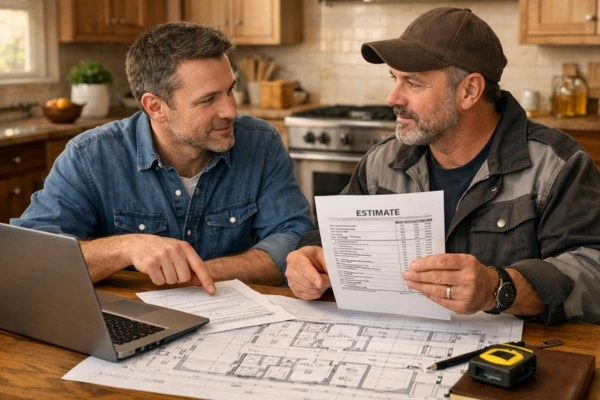
Accepting the lowest bid is the fastest path to overruns. Experienced contractors price in realistic timelines, contingency, and code compliance. Budget contractors often don’t, and the gap shows up as change orders that can tack 20-50% onto your original number. I’ve watched $80,000 projects balloon past $120,000 because the initial bid was unrealistically low.
Before you sign, ask for proof of insurance and bonding for the full project value. Ask about their plan for hidden issues. Ask who pulls permits and whether that fee is included. These aren’t aggressive questions. They’re the bare minimum when you’re spending tens of thousands of dollars. And if you’re a remodeling company looking to attract the right homeowners, partnering with a marketing team that knows your industry can make the difference between tire-kickers and qualified leads.
The most expensive part of remodeling a house isn’t one line item. It’s the gap between what homeowners expect and what the project actually costs. Labor, kitchens, bathrooms, and structural work carry the biggest price tags. But the real budget killers are the surprises: code upgrades behind drywall, tariff-driven material spikes, and underpriced bids that balloon into change orders. Plan for the hidden costs first.
FAQs
What is the most expensive remodeling project in 2026?
An upscale primary suite addition is the costliest remodeling project nationally, averaging $351,613 according to the 2025 Cost vs. Value Report. It also has one of the lowest returns at just 18% ROI. Most homeowners assume kitchens top the list, but additions carry higher absolute costs.
How much of a remodel budget goes to labor?
Labor typically accounts for 30-50% of your total remodeling budget. NAHB data from 2025 shows roughly 300,000 open construction jobs nationwide, and the residential sector needs about 740,000 new workers annually. That shortage has pushed construction wages up 3.5-9.2% year-over-year, making labor the single biggest cost driver.
Does a kitchen remodel pay for itself at resale?
It depends on the scope. A minor midrange kitchen remodel ($28,458) returns 113% at resale, making it one of the highest-ROI projects available. But a major upscale kitchen ($164,104) returns only 36%. The bigger your kitchen spend, the less you recoup when selling.
How are tariffs affecting remodeling costs in 2026?
NKBA reported that tariffs drove consumer prices up 4.6% year-over-year as of Q3 2025, with supplier costs rising 6.1%. Lighting and vanities saw the biggest hits. About 28% of kitchen and bath firms experienced their worst margin declines on record, and those increases are being passed to homeowners.
What hidden costs surprise homeowners during a remodel?
The most common surprise is mandatory code upgrades discovered when walls are opened. Outdated wiring, non-compliant plumbing, and insufficient insulation must be brought to current code before inspection. This regularly adds 10-20% to the project budget. California’s 2025 Title 24 and New York’s 2025 codes have raised requirements even further.
Is it cheaper to remodel an existing bathroom or add a new one?
Remodeling is almost always cheaper. A midrange bathroom remodel averages $26,138 with an 80% ROI. Adding a new midrange bathroom costs $60,645 with just a 53% ROI. The addition costs more than double and returns significantly less at resale.
How much contingency should I budget for a remodel?
Experienced contractors recommend setting aside 10-20% of your total budget for unexpected costs. On a $100,000 remodel, that means $10,000-$20,000 held in reserve. Common contingency triggers include hidden water damage, code-required upgrades, and material price changes between estimate and purchase.

Michael Vale has over 5 years of experience helping clients improve their business visibility on Google. He combines his love for teaching with his entrepreneurial spirit to develop innovative marketing strategies. Inspired by the big AI wave of 2023, Michael Vale now focuses on staying updated with the latest AI tools and techniques. He is committed to using these advancements to deliver great results for his clients, keeping them ahead in the competitive online market.