
14 Home Remodel Design Trends for 2026 (And What They Actually Cost)
Home remodel design trends for 2026 come down to two competing forces: homeowners want personalized, high-end spaces, but they’re watching every dollar. The Houzz 2025 renovation survey of nearly 11,000 homeowners found that 54% completed a project in 2024. Median small-kitchen remodels hit $35,000 (up 9% year over year) and small primary baths reached $17,000 (up 13%).
The trends below aren’t pulled from Pinterest mood boards. They’re what our remodeling marketing team sees being built and priced for clients right now. Some add real value. A few are expensive mistakes in the wrong neighborhood. I’ll tell you which is which.
Home remodel design trends in 2026 center on outdoor living extensions, spa bathrooms, multi-use rooms, kitchen personalization (including coffee stations and range alcoves), bold historical paint colors, aging-in-place features, and artisan materials. The U.S. home improvement market totals roughly $603 billion, with kitchen and bath renovations driving the highest per-project spend.
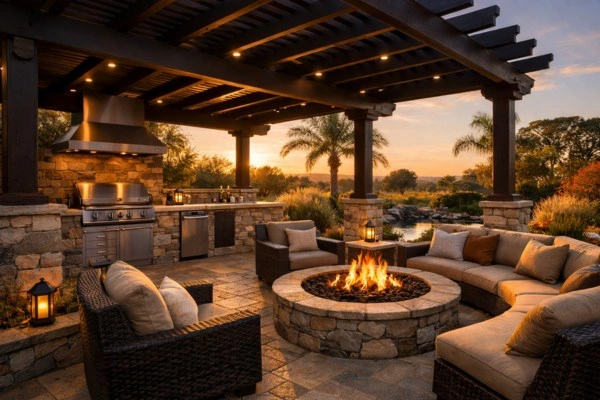
1. Why Are Outdoor Living Spaces the Fastest-Growing Remodel?
Outdoor areas deliver more usable square footage per dollar than most interior remodels. A 2025 Fixr industry survey found 56% of pros named cohesive indoor-outdoor design the biggest outdoor trend this year. We’re finishing full outdoor kitchens with plumbed sinks, built-in fire feature seating, and covered structures that extend usable seasons by two or three months.
Fair warning: outdoor kitchens in cold climates need freeze-proof plumbing. Skipping that turns a $25,000 project into a $35,000 repair within two winters. If you’re a remodeling contractor, knowing the details that separate good outdoor builds from bad ones is also what sets your business apart online.
2. Multi-Use Rooms That Actually Work
Homes still need to pull double duty. The NKBA’s 2025 survey of 523 pros highlighted multifunctional spaces as a top priority for the next three years. A kitchen island with built-in outlets and task lighting handles homework, remote work, and meal prep in the same footprint. We’ve built hidden offices behind bookcase doors in primary suites. It solves the “I need a workspace that disappears” problem.
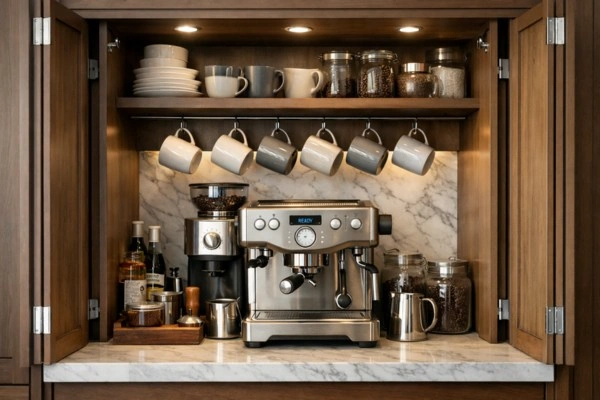
3. Kitchen Coffee Stations and Beverage Bars
Dedicated beverage stations keep guests out of the prep zone. The best versions feature pocket cabinet doors that hide the coffee maker, mugs, and supplies. Higher-end setups add plumbed water and an under-counter fridge. The budget runs $2,000–8,000 depending on whether you’re retrofitting or building new. A minor midrange kitchen remodel averages $28,458 nationally per the 2025 Cost vs. Value Report, so a coffee station is a small slice of the total.
4. Is a Range Alcove Worth the Investment?
Yes, if your layout supports it. Range alcoves keep cooking tools and spices within arm’s reach while creating a focal wall with a statement hood and stone backsplash. The cost premium over a standard range wall is $3,000–7,000 in extra cabinetry and stone. On a $55,000+ large kitchen remodel (the Houzz 2025 median), that’s a small percentage for a feature that changes the room’s entire look.
5. What Do Ceiling Treatments Add to a Room?
More than most homeowners expect. Coffered ceilings, wood paneling, and applied molding show up in about one out of four projects we quote. They work best in rooms with 9-foot ceilings or higher. In standard 8-foot rooms, a heavy coffered design makes things feel cramped. Stick with plank or shiplap treatments at that height.
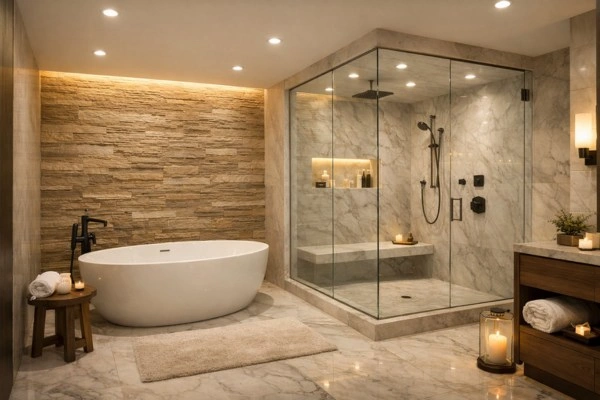
6. Spa Bathrooms: More Than a Passing Trend in 2026
Cool whites and grays, textured accent walls, recessed niches, and freestanding soaking tubs are now standard requests. The Houzz 2025 data showed small primary bath remodels at a $17,000 median (up 13%). High-end starts at $45,000. A midrange bath remodel recoups about 80% at resale per the 2025 Cost vs. Value data, solid for a project you’ll use every day.
7. Shower Rooms and Walk-In Wet Areas
Shower rooms combine an oversized walk-in shower with a freestanding tub inside the same glass-enclosed wet area. Rain showerheads, natural stone, and linear drains are the common spec. The biggest mistake? Skimping on waterproofing. Budget an extra $1,500–3,000 for proper membrane work. Without it, you’ll be ripping tiles in three years.
8. Mudroom and Laundry Room Upgrades
Mudrooms are getting the same design attention as kitchens. Shaker-style cabinetry, patterned tile floors, and built-in bench seating with cubbies make these rooms earn their square footage. We’ve been specifying sage green and navy cabinetry because it hides scuffs better than white and NKBA color trend data backs up the staying power of these tones.
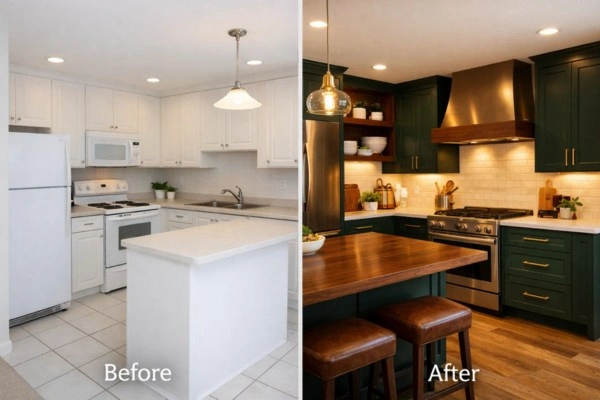
9. Why Are Bold, Historical Paint Colors Back?
The all-white interior is losing ground. Contractors consistently report white kitchens date fast and show every fingerprint. The NKBA’s 2025 data confirms the shift, with warm woods and saturated tones replacing cool grays. Rich jewel tones, deep greens, and saturated blues pop against natural materials like brick and walnut. Pair a deeply colored island with light countertops and natural wood accents. The contrast is striking without being trendy in a way that’ll feel dated in five years.
10. Sustainability Starts With What You Don’t Tear Out
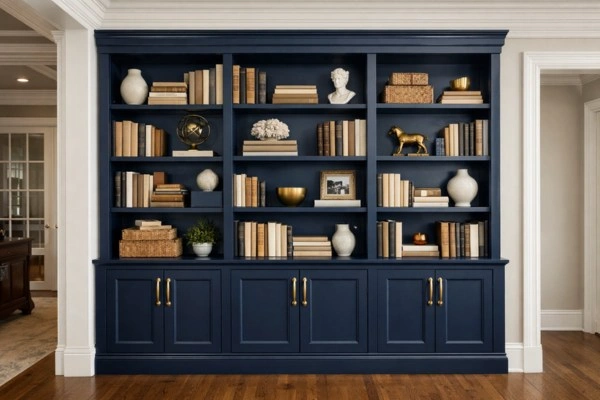
Contrarian take: the most sustainable remodel skips the demolition. Older homes often have built-ins and millwork that cost a fortune to replicate. Harvard’s JCHS found energy-related projects made up 34% of owner improvements ($139 billion in 2023). But energy upgrades and preservation aren’t mutually exclusive. We’ve refreshed original built-ins for under $2,000. Replacing them runs $8,000–15,000. Keep what’s good, fix what’s broken. Remodelers who specialize in preservation work can build a strong niche, and ranking for those services locally brings in the right clients.
11. Woven and Mesh Cabinet Doors
Rattan and metal mesh inserts add texture and allow airflow (great for stereo equipment or anything generating heat). Natural cane fits transitional spaces. Metal mesh suits modern rooms. Expect $150–400 per door panel. Small upgrade, outsized visual impact.
12. How Does Aging-in-Place Design Affect Your 2026 Remodel?
Consider a curbless shower even if you don’t need one today. It looks modern and clean, and it’s the top aging-in-place request. First-floor primary suites, wider doorways, and lever handles don’t look like “accessible design” anymore. They look like a good design that avoids a second expensive remodel later.
13. Transitional Design: Classic Meets Modern
The NKBA reported 69% of designers expect transitional styles to lead over three years. That tracks with our work: black cabinetry mixed with natural oak, saturated islands against light countertops. We cover this style frequently on our remodeling industry blog because it keeps winning with both homeowners and appraisers. The financial case is strong. A minor kitchen remodel returns about 113% at resale. A major upscale gut job? Just 51%. Transitional design makes the math work because you don’t have to tear everything out.
14. Artisan Elements and Local Craftsmanship
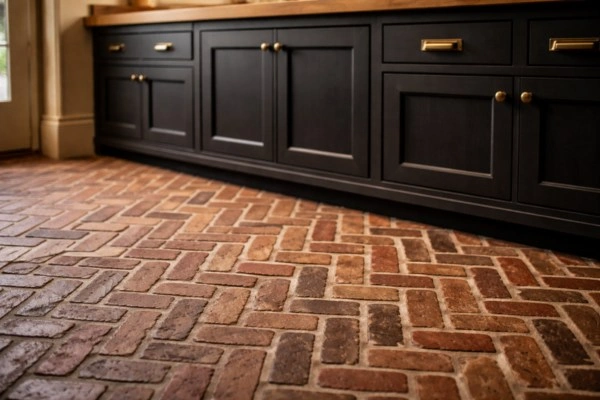
Hand-crafted tiles, live-edge shelving, natural stone, and real brick in herringbone patterns turn a renovation into a home with a story. Local craftspeople who stand behind their work are worth the premium. With tariff pressures on imported cabinets rising in 2026, local sourcing often matches import pricing while delivering shorter lead times and better warranties.
Pick the Trends That Match Your Budget
Not every home remodel design trend belongs in your project. The biggest mistake in 2026 is over-improving your neighborhood. A major kitchen at $82,793 recoups 51% in a mid-market area. A minor remodel at $28,458 returns 113%. Pick what fits your home’s value and your daily life. If you’re a remodeling pro looking to turn these trends into leads, reach out to our team or learn how working with a team that knows your local market is the fastest way to avoid expensive marketing regrets.
FAQs
What are the biggest home remodel design trends for 2026?
The top home remodel design trends for 2026 include outdoor living extensions, spa-inspired bathrooms, multi-use rooms, dedicated kitchen coffee stations, range alcoves, bold historical paint colors, aging-in-place features, and artisan materials. The Houzz 2025 survey of nearly 11,000 homeowners confirmed kitchens and baths as the top renovation categories, with 54% of homeowners completing a project in 2024.
How much does a kitchen remodel cost in 2026?
A minor midrange kitchen remodel averages $28,458 nationally with a 112.9% ROI at resale, per the 2025 Cost vs. Value Report. The Houzz 2025 survey found the median small-kitchen remodel hit $35,000 (up 9% year over year), while large kitchen remodels held steady around $55,000. High-end upscale kitchens start at $150,000.
Which home remodel projects have the best return on investment?
Curb-appeal projects lead 2026 ROI rankings. Garage door replacement recoups 267.7% ($4,672 cost, $12,507 resale value). Steel entry door replacement returns 216.4%. A minor kitchen remodel returns 112.9%. Major upscale kitchen remodels recoup only about 51%, making smaller targeted upgrades the better financial play.
Are white kitchens still popular in 2026?
White kitchens are losing ground. The NKBA’s 2025 survey of 523 industry professionals showed a clear shift toward warm woods, saturated cabinet colors, and mixed-material designs. Contractors consistently report that all-white kitchens date faster than expected and are hard to maintain in high-traffic homes.
What aging-in-place features should I include in a 2026 remodel?
Curbless showers, wider doorways (36 inches minimum), lever-style handles, comfort-height toilets, and first-floor primary suites are the most-requested aging-in-place features. The JCHS 2025 report found homeowners aged 65+ drove 27% of all improvement spending at $110 billion.
How do labor shortages affect remodeling costs in 2026?
The construction industry needs 349,000 new workers in 2026 per the Associated Builders and Contractors. Industry data shows 3–6 month delays and 20%+ cost overruns tied to labor availability. Booking early and locking in contractor schedules is now standard advice.
Should I hire a professional or DIY my home remodel?
Professionals handle 84% of all remodeling spending. Per the JCHS 2025 report, professional projects average $7,800 versus $2,600 for DIY. Pros deliver code compliance, manufacturer warranties, and faster timelines. DIY carries higher risk of code violations and lower resale value.

Michael Vale has over 5 years of experience helping clients improve their business visibility on Google. He combines his love for teaching with his entrepreneurial spirit to develop innovative marketing strategies. Inspired by the big AI wave of 2023, Michael Vale now focuses on staying updated with the latest AI tools and techniques. He is committed to using these advancements to deliver great results for his clients, keeping them ahead in the competitive online market.